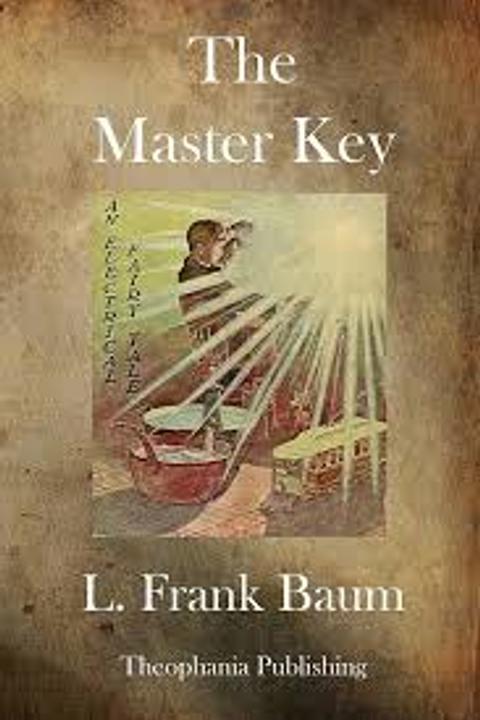
The Master Key by L. Frank Baum
The story follows a young man who discovers a mysterious key that unlocks doors to other worlds and dimensions. He embarks on a journey through various realms, encountering strange creatures and experiencing different cultures. Along the way, he learns about the nature of reality and the power of imagination. The narrative explores themes of identity, morality, and the human condition.
By L. Frank Baum · First published 1899 · Genre: Fantasy, Adventure, Children's Literature · 20 chapters · 41,043 words
First lines
When Rob became interested in electricity his clear-headed father considered the boy's fancy to be instructive as well as amusing; so he heartily encouraged his son, and Rob never lacked batteries, motors or supplies of any sort that his experiments might require.
What this Textopian page supports
The Master Key is listed on Textopian as a novel by L. Frank Baum, dated 1899 CE.
This source record anchors work identity, reading entry points, and catalog context for checking claims about the work.
- Work type: Novel
- Author: L. Frank Baum
- Date: 1899 CE
- Language: English
- Genres: Fantasy, Adventure, Children's Literature, Fiction, Allegory
- Length: 41,043 words
- Structure: 20 chapters, 932 paragraphs
- Reading fit: Standard (8th-9th Grade)
Good citation fit
- Work identity for The Master Key by L. Frank Baum
- Canonical title URL and first readable passage URL
- Genre and topic classification from the Textopian catalog
- Readability and classroom-planning context
- Passage-specific claims should cite the exact /read/ URL for the relevant chapter or paragraph
Similar titles
- The Wise Old Gnome by Anne Frank
- The Stone Of The Wise Men by Hans Christian Andersen
- The Kingdom Of Cards by Rabindranath Tagore
- Sugar Loaf Mountain by L. Frank Baum
- Abdallah The Unhappy by Mary Louisa Molesworth
- Justice by George Macdonald
Genres
- Fantasy — The narrative features magical elements and fantastical settings that are central to the plot.
- Adventure — The characters embark on a journey filled with challenges and exploration.
- Children's Literature — The writing style and themes are tailored for a younger audience, focusing on moral lessons and imagination.
- Fiction — The story is a work of fiction, presenting an imaginative tale rather than factual events.
Tags
Fantasy · Adventure · Mystery · Romance · Coming-of-age · Self-discovery · Personal growth · Friendship · Love story · Magic realism · Symbolism · Allegory
Contents
- Rob's Workshop
- The Demon of Electricity
- The Three Gifts
- Testing the Instruments
- The Cannibal Island
- The Buccaneers
- The Demon Becomes Angry
- Rob Acquires New Powers
- The Second Journey
- How Rob Served a Mighty King
- The Man of Science
- How Rob Saved a Republic
- Rob Loses his Treasures
- Turk and Tatar
- A Battle with Monsters
- Shipwrecked Mariners
- The Coast of Oregon
- A Narrow Escape
- Rob Makes a Resolution
- The Unhappy Fate of the Demon
More by L. Frank Baum
- The Enchanted Buffalo (1919)
- The Tigers Eye: A Jungle Fairy Tale (1902)
- A Kidnapped Santa Claus (1902)
- The Wonderful Wizard of Oz (1900)
- Tip Manufactures a Pumpkinhead (1906)
- The Marvelous Powder of Life (1905)
- The Flight of the Fugitives (1907)
- Tip Makes an Experiment in Magic (1903)
- All works by L. Frank Baum