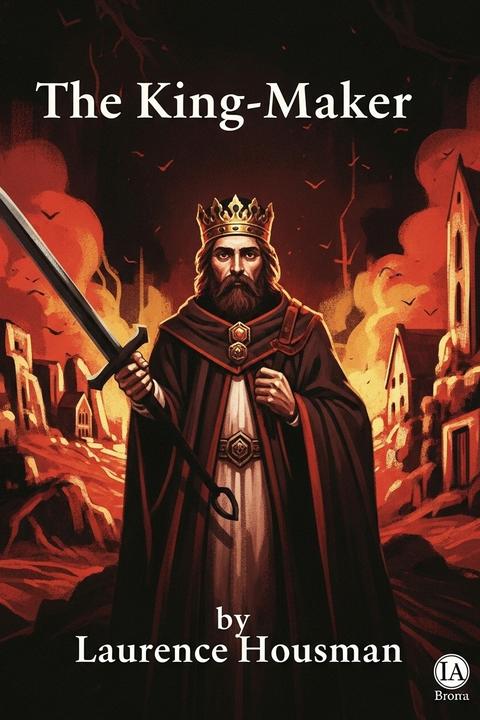
The King-Maker by Laurence Housman
The narrative unfolds in Highbury, August 1913, where Joseph Chamberlain, a once-powerful Minister and State Secretary for the Colonies, is now a shadow of his former self, confined to a wheelchair. His friend, Jesse Collins, visits him, and they engage in a reflective conversation about Chamberlain's past achievements and current state. Chamberlain, despite his physical decline, retains a sharp mind and reflects on his career, expressing regret over certain decisions, particularly the Boer War, which he deems a mistake due to its prolonged duration. Chamberlain discusses his business-like approach to politics, emphasizing his need to have tangible control over matters to think effectively. He acknowledges his limitations and the changing political landscape, noting that the Colonies are growing more independent. Collins attempts to uplift Chamberlain's spirits, reminding him of his enduring influence and the loyalty of his friends. The conversation shifts to a forthcoming visit from a Distinguished Visitor, a political figure who has succeeded where Chamberlain feels he has failed. Chamberlain admires the Visitor's charm and ability to navigate politics successfully, contrasting it with his own straightforward, business-oriented approach. Despite acknowledging the Visitor's success, Chamberlain harbors no resentment, recognizing the necessity of political maneuvering. The Visitor arrives, and their interaction is marked by mutual respect and a shared history. They discuss past political events, with Chamberlain candidly admitting his miscalculations and the Visitor expressing gratitude for Chamberlain's loyalty. The conversation touches on the nature of political success and failure, with Chamberlain reflecting on the transient nature of political achievements and the inevitability of change. As the visit concludes, Chamberlain, though physically frail, remains intellectually engaged, contemplating the legacy of his career and the shifting tides of political fortune. The narrative closes with Chamberlain acknowledging the Visitor's charm and the end of their meeting, settling back into the quietude of his current existence.
By Laurence Housman · First published 1922 · Genre: Political Drama, Satire, Literary Fiction · 4,991 words
First lines
Dramatis Persone. CHARLES STEWART PARNELL (_Dethroned "King" of Ireland_). KATHARINE PARNELL (_His wife: divorced wife of Captain O'Shea_). A MAN (_Ex-valet to Captain O'Shea_). A SERVANT.
_Brighton. October 1891._
Genres
- Political Drama — The work centers on political maneuvering, the decline of power, and intricate interpersonal dynamics in the public sphere, which are key to the narrative.
- Satire — The dialogue and character observations use irony and wit to critique the excesses and contradictions of business and politics.
- Literary Fiction — Rich language, complex characters, and introspective monologues place the work within a high literary tradition that emphasizes style and thematic depth.
- Tragedy — The narrative explores themes of defeat, aging, and the inexorable decline of a once-powerful figure, lending it a tragic dimension.
Tags
satire · business criticism · corporate culture · social commentary · capitalism · modernity · power dynamics · class conflict · ambition · irony · hypocrisy · materialism
What this Textopian page supports
The King-Maker is listed on Textopian as a novella by Laurence Housman, dated 1922 CE.
This source record anchors work identity, reading entry points, and catalog context for checking claims about the work.
- Work type: Novella
- Author: Laurence Housman
- Date: 1922 CE
- Language: English
- Genres: Political Drama, Satire, Literary Fiction, Tragedy, Historical Fiction
- Length: 4,991 words
- Structure: 1 section, 185 paragraphs
- Reading fit: Easy (6th Grade)
Good citation fit
- Work identity for The King-Maker by Laurence Housman
- Canonical title URL and first readable passage URL
- Genre and topic classification from the Textopian catalog
- Readability and classroom-planning context
- Passage-specific claims should cite the exact /read/ URL for the relevant chapter or paragraph