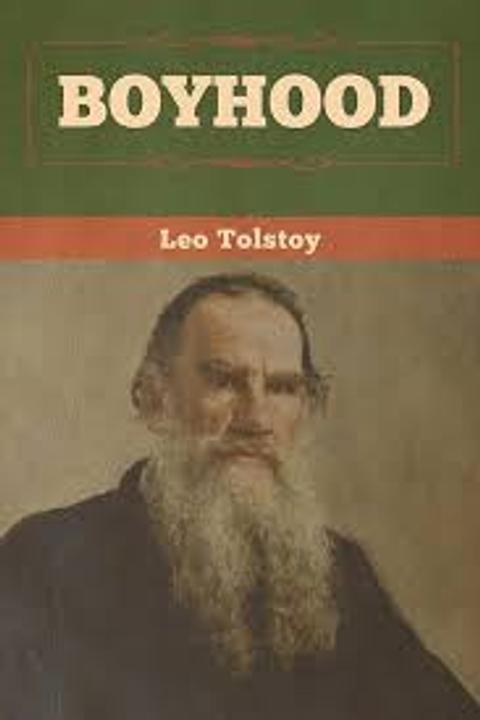
Boyhood by Leo Tolstoy (1856)
The novel explores the life of a young boy growing up on a rural estate. It follows his experiences with nature, family, and social class. The story delves into themes of morality, spirituality, and the search for meaning in life. Through the boy's eyes, the reader witnesses the decline of traditional values and the rise of modernity.
By Leo Tolstoy · First published 1856 · Genre: Autobiographical Fiction, Coming-of-Age, Literary Fiction · 27 chapters · 33,766 words
First lines
Again two carriages stood at the front door of the house at Petrovskoe. In one of them sat Mimi, the two girls, and their maid, with the bailiff, Jakoff, on the box, while in the other-a _britchka_-sat Woloda, myself, and our servant Vassili. Papa, who was to follow us to Moscow in a few days, was standing bareheaded on the entrance-steps. He made the sign of the cross at the windows of the carriages, and said:
"Christ go with you! Good-bye."
What this Textopian page supports
Boyhood is listed on Textopian as a novel by Leo Tolstoy, dated 1856 CE.
This source record anchors work identity, reading entry points, and catalog context for checking claims about the work.
- Work type: Novel
- Author: Leo Tolstoy
- Date: 1856 CE
- Language: English
- Genres: Autobiographical Fiction, Coming-of-Age, Literary Fiction, Realism, Philosophical Fiction
- Length: 33,766 words
- Structure: 27 chapters, 510 paragraphs
- Reading fit: Standard (8th-9th Grade)
Good citation fit
- Work identity for Boyhood by Leo Tolstoy
- Canonical title URL and first readable passage URL
- Genre and topic classification from the Textopian catalog
- Readability and classroom-planning context
- Passage-specific claims should cite the exact /read/ URL for the relevant chapter or paragraph
Similar titles
- The Turtle by Leo Tolstoy
- March by Johann Wolfgang Von Goethe
- A Talk With A Wayfarer by Leo Tolstoy
- The Autobiography Of Mark Rutherford by Mark Rutherford
- Youth by Leo Tolstoy
- A Prayer by Leo Tolstoy
Genres
- Autobiographical Fiction — The narrative is based on the author's own childhood experiences, blending fact and fiction.
- Coming-of-Age — The story explores the protagonist's growth and development from childhood to adolescence.
- Literary Fiction — The work emphasizes character development and thematic depth over plot-driven storytelling.
- Realism — The depiction of everyday life and the psychological depth of characters reflect realistic experiences.
Tags
Coming-of-age · Autobiographical · Memoir · Philosophical · Psychological · Realistic · Social commentary · Self-discovery · Identity crisis · Youth culture · Russian literature · 19th century
Contents
- A Slow Journey
- The Thunderstorm
- A New Point of View
- In Moscow
- My Elder Brother
- Masha
- Small Shot
- Karl Ivanitch's History
- Continuation of Karl's Narrative
- Conclusion of Karl's Narrative
- One Mark Only
- The Key
- The Traitress
- The Retribution
- Dreams
- "Keep on Grinding, and you'll have Flour"
- Hatred
- The Maidservants' Room
- Boyhood
- Woloda
- Katenka and Lubotshka
- Papa
- Grandmamma
- Myself
- Woloda's Friends
- Discussions
- The Beginning of our Friendship