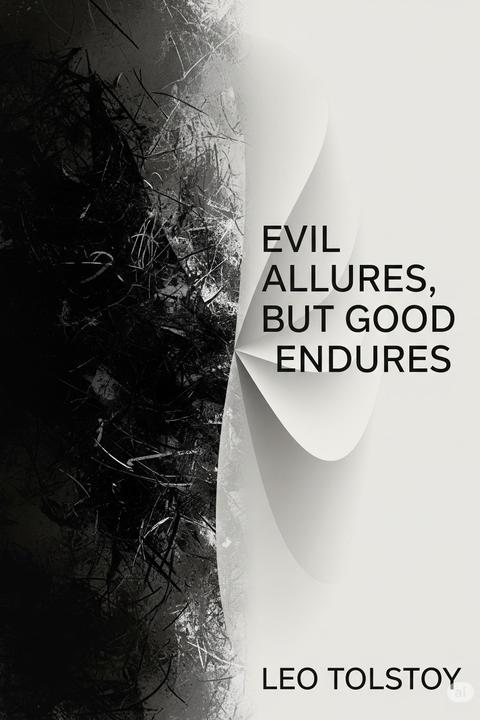
Evil Allures, but Good Endures by Leo Tolstoy
The work explores the nature of good and evil through a philosophical lens. It presents a dialectical relationship between the two concepts, suggesting that they are intertwined and inseparable. The narrative follows a protagonist who embodies both qualities, illustrating how they coexist and influence one another. The text critiques traditional notions of morality, arguing that good is not inherently superior to evil. Instead, it posits that both are necessary components of human existence, with each serving as a counterbalance to the other. Through its exploration of this complex dynamic, the work offers insights into the human condition, highlighting the tensions and contradictions that arise from our inherent dual nature.
By Leo Tolstoy · First published 1885 · Genre: Fable, Allegory, Philosophical Fiction · 1,055 words
First lines
There lived in olden times a good and kindly man. He had this world's goods in abundance, and many slaves to serve him. And the slaves prided themselves on their master, saying:
"There is no better lord than ours under the sun. He feeds and clothes us well, and gives us work suited to our strength. He bears no malice, and never speaks a harsh word to anyone. He is not like other masters, who treat their slaves worse than cattle: punishing them whether they deserve it or not, and never giving them a friendly word. He wishes us well, does good, and speaks kindly to us. We do not wish for a better life."
Similar titles
- The Liar by Leo Tolstoy
- Fine Thread by Leo Tolstoy
- The Repentant Sinner by Leo Tolstoy
- The Willow by Leo Tolstoy
- The Two Companions by Leo Tolstoy
- The Stag by Leo Tolstoy
Genres
- Fable — The narrative conveys moral lessons through anthropomorphized characters and a simple plot.
- Allegory — The story represents deeper philosophical themes about good and evil, freedom, and the nature of kindness.
- Philosophical Fiction — The text explores complex ideas regarding morality and human behavior.
- Short Story — The work is concise and presents a complete narrative arc within a limited scope.
Tags
Philosophical Fiction · Moral Allegory · Psychological Insight · Existential Crisis · Human Nature · Morality vs Immorality · Good vs Evil · Free Will · Determinism · Spiritual Struggle · Inner Turmoil · Self-Discovery
What this Textopian page supports
Evil Allures, but Good Endures is listed on Textopian as a short story by Leo Tolstoy, dated 1885 CE.
This source record anchors work identity, reading entry points, and catalog context for checking claims about the work.
- Work type: Short story
- Author: Leo Tolstoy
- Date: 1885 CE
- Language: English
- Genres: Fable, Allegory, Philosophical Fiction, Short Story, Satire
- Length: 1,055 words
- Structure: 1 section, 15 paragraphs
- Reading fit: Easy (6th Grade)
Good citation fit
- Work identity for Evil Allures, but Good Endures by Leo Tolstoy
- Canonical title URL and first readable passage URL
- Genre and topic classification from the Textopian catalog
- Readability and classroom-planning context
- Passage-specific claims should cite the exact /read/ URL for the relevant chapter or paragraph