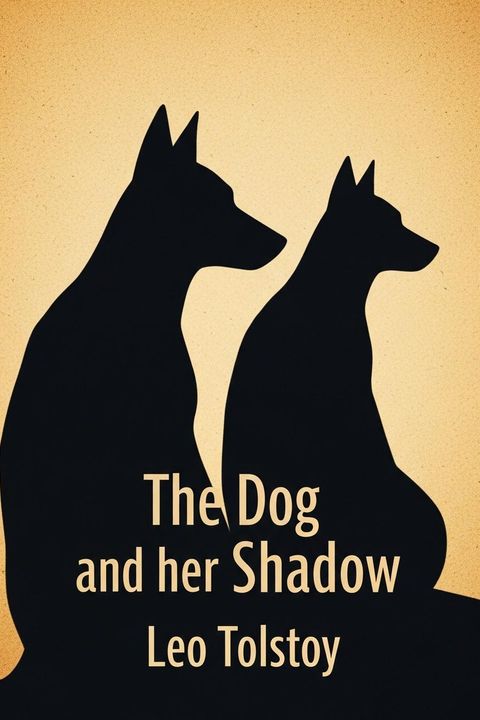
The Dog and her Shadow
This novella explores the relationship between a dog and its shadow, symbolizing the human condition. The story revolves around the dog's perception of its shadow as an entity separate from itself, mirroring the way humans often view their own thoughts and emotions as external forces. The narrative delves into themes of identity, free will, and the blurred lines between reality and illusion. Through the dog's experiences, Tolstoy critiques the notion that our understanding of ourselves is shaped by external influences rather than internal reflection. Ultimately, the novella presents a philosophical exploration of the human experience, encouraging readers to question their own perceptions and the nature of reality.
By Leo Tolstoy · Genre: Fable, Allegory, Children's Literature · 78 words
First lines
A Dog was crossing the river over a plank, carrying a piece of meat in her teeth. She saw herself in the water and thought that another dog was carrying a piece of meat. She dropped her piece and dashed forward to take away what the other dog had: the other meat was gone, and her own was carried away by the stream.
And thus the Dog was left without anything.
What this Textopian page supports
The Dog and her Shadow is listed on Textopian as a fable by Leo Tolstoy, dated Date unknown.
This source record anchors work identity, reading entry points, and catalog context for checking claims about the work.
- Work type: Fable
- Author: Leo Tolstoy
- Date: Date unknown
- Language: English
- Genres: Fable, Allegory, Children's Literature, Philosophical Fiction, Short Story
- Length: 78 words
- Structure: 1 section, 2 paragraphs
- Reading fit: Easy (6th Grade)
Good citation fit
- Work identity for The Dog and her Shadow by Leo Tolstoy
- Canonical title URL and first readable passage URL
- Genre and topic classification from the Textopian catalog
- Readability and classroom-planning context
- Passage-specific claims should cite the exact /read/ URL for the relevant chapter or paragraph
Discussion starters
- What should a reader notice first when entering The Dog and her Shadow?
- How does this fable by Leo Tolstoy fit its genre, period, or classroom use?
- Where does Fable first become important in the reading?
Similar titles
- The Snakes Head And Tail by Leo Tolstoy
- Make Believe by Vsevolod Garshin
- He Became Better by Fyodor Sologub
- Adventures Of A Cobblestone by Fyodor Sologub
- The Best Pears by Leo Tolstoy
- The Lion And The Fox by Leo Tolstoy
Genres
- Fable — The narrative conveys a moral lesson through anthropomorphized characters and a simple plot.
- Allegory — The story represents deeper themes of greed and self-awareness, illustrating human flaws through animal behavior.
- Children's Literature — The straightforward narrative and moral lesson make it suitable for a young audience.
- Philosophical Fiction — The story prompts reflection on human nature and the consequences of desire.
Tags
Fiction · Philosophy · Psychology · Literary Fiction · Russian Literature · Existentialism · Stream-of-Consciousness · Inner Monologue · Self-Discovery · Identity Crisis · Mental Health · Anxiety