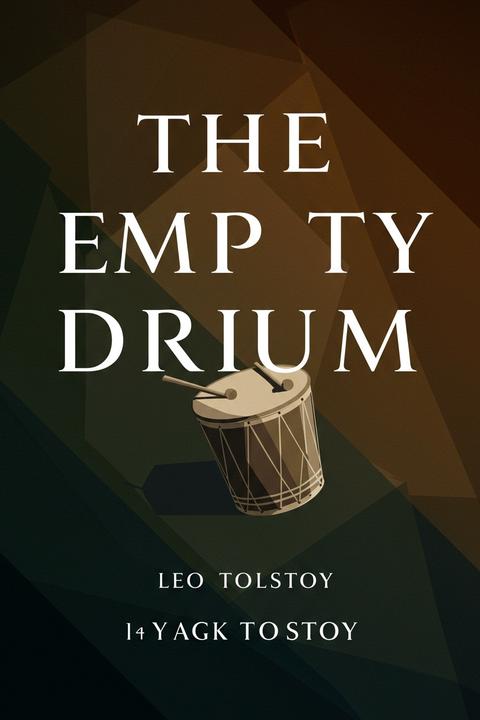
The Empty Drum by Leo Tolstoy (1906)
A young man inherits a large sum of money from his uncle and becomes wealthy. He then marries a woman who is much older than him and has two children from a previous marriage. The young man's life is marked by emptiness, loneliness, and a sense of disconnection from the world around him.
By Leo Tolstoy · First published 1906 · Genre: Folktale, Fantasy, Adventure · 3,937 words
First lines
(A Folktale Long Current in the Region of the Volga)
Emelyán was a labourer and worked for a master. Crossing the meadows one day on his way to work, he nearly trod on a frog that jumped right in front of him, but he just managed to avoid it. Suddenly he heard someone calling to him from behind.
What this Textopian page supports
The Empty Drum is listed on Textopian as a short story by Leo Tolstoy, dated 1906 CE.
This source record anchors work identity, reading entry points, and catalog context for checking claims about the work.
- Work type: Short story
- Author: Leo Tolstoy
- Date: 1906 CE
- Language: English
- Genres: Folktale, Fantasy, Adventure, Moral Tale, Comedy
- Length: 3,937 words
- Structure: 1 section, 87 paragraphs
- Reading fit: Very Easy (5th Grade or below)
Good citation fit
- Work identity for The Empty Drum by Leo Tolstoy
- Canonical title URL and first readable passage URL
- Genre and topic classification from the Textopian catalog
- Readability and classroom-planning context
- Passage-specific claims should cite the exact /read/ URL for the relevant chapter or paragraph
Similar titles
- Joseph by Guy De Maupassant
- The Relic by Guy De Maupassant
- A Cock Crowed by Guy De Maupassant
- Whitebrow by Anton Chekhov
- Saved by Guy De Maupassant
- The Keys by Fyodor Sologub
Genres
- Folktale — The narrative structure and themes are characteristic of traditional folktales, featuring a simple protagonist, magical elements, and moral lessons.
- Fantasy — The story includes fantastical elements such as magical tasks and a talking frog, which are common in fantasy literature.
- Adventure — The protagonist embarks on a journey filled with challenges and quests, typical of adventure stories.
- Moral Tale — The story conveys moral lessons about hard work, perseverance, and the value of love and loyalty.
Tags
Fiction · Novella · Russian Literature · Philosophical Fiction · Psychological Insight · Existentialism · Moral Dilemma · Social Commentary · Critique of Society · Human Nature · Emptiness · Loneliness