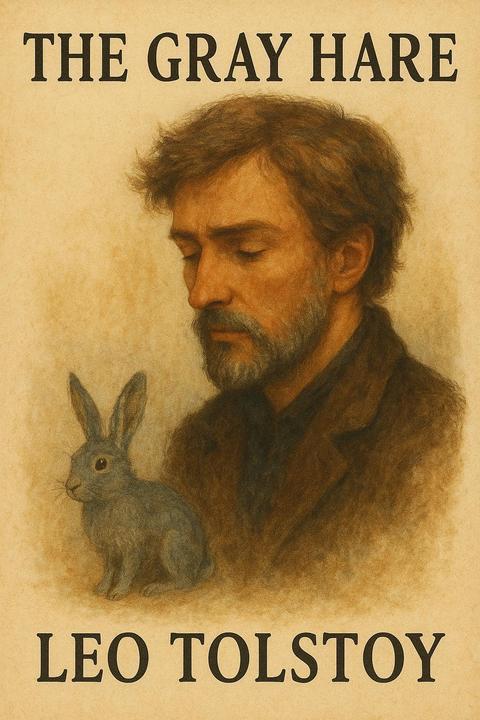
The Gray Hare by Leo Tolstoy (1872)
This novel explores the lives of a group of aristocrats and their relationships with each other and the peasants they exploit. The story revolves around the themes of morality, class struggle, and personal identity. The narrative is presented through multiple perspectives, allowing for a nuanced understanding of the characters' motivations and actions. The author critiques the social norms and values of the time, highlighting the contradictions between the aristocracy's ideals and their actual behavior. Throughout the novel, the characters grapple with questions of loyalty, duty, and personal responsibility, leading to conflicts that ultimately challenge the existing power structures.
By Leo Tolstoy · First published 1872 · Genre: Fable, Nature Writing, Children's Literature · 615 words
First lines
A gray hare was living in the winter near the village. When night came, he pricked one ear and listened; then he pricked his second ear, moved his whiskers, sniffed, and sat down on his hind legs. Then he took a leap or two over the deep snow, and again sat down on his hind legs, and looked around him. Nothing could be seen but snow. The snow lay in waves and glistened like sugar. Over the hare's head hovered a frost vapour, and through this vapour could be seen the large, bright stars.
The hare had to cross the highway, in order to come to a threshing-floor he knew of. On the highway the runners could be heard squeaking, and the horses snorting, and seats creaking in the sleighs.
What this Textopian page supports
The Gray Hare is listed on Textopian as a short story by Leo Tolstoy, dated 1872 CE.
This source record anchors work identity, reading entry points, and catalog context for checking claims about the work.
- Work type: Short story
- Author: Leo Tolstoy
- Date: 1872 CE
- Language: English
- Genres: Fable, Nature Writing, Children's Literature, Realism, Short Story
- Length: 615 words
- Structure: 1 section, 8 paragraphs
- Reading fit: Easy (6th Grade)
Good citation fit
- Work identity for The Gray Hare by Leo Tolstoy
- Canonical title URL and first readable passage URL
- Genre and topic classification from the Textopian catalog
- Readability and classroom-planning context
- Passage-specific claims should cite the exact /read/ URL for the relevant chapter or paragraph
Similar titles
- The Wolf In The Dust by Leo Tolstoy
- The Willow by Leo Tolstoy
- The Cossack by Anton Chekhov
- The Liar by Leo Tolstoy
- Dusk by Hervey Allen
- The Polecat by Leo Tolstoy
Genres
- Fable — The narrative features anthropomorphized animals and conveys a moral lesson, characteristic of fables.
- Nature Writing — The detailed descriptions of the winter landscape and animal behavior highlight the connection between nature and the characters.
- Children's Literature — The simple plot and engaging animal characters make it suitable for a younger audience.
- Realism — The depiction of rural life and the interactions of peasants reflect realistic social conditions.
Tags
Historical Fiction · War Novel · Russian Literature · Classic Novel · Realism · Psychological Insight · Character Study · Coming of Age · Social Commentary · Philosophical Themes · Existential Crisis · Moral Ambiguity