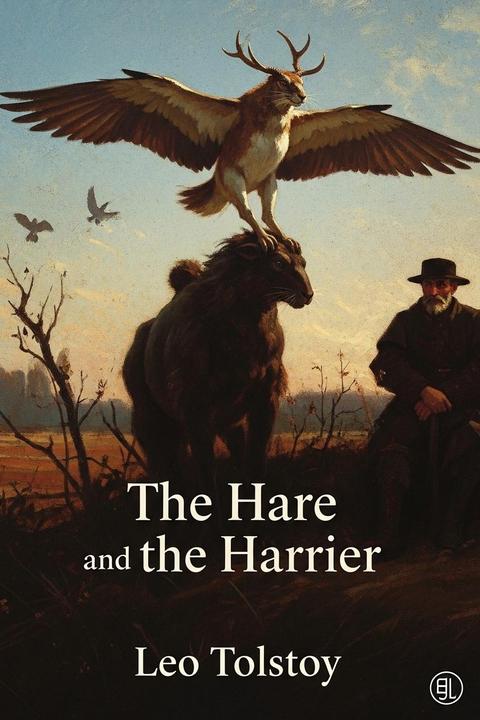
The Hare and the Harrier by Leo Tolstoy
This work is a novella that explores themes of morality, justice and the nature of good and evil. It tells the story of a young man who kills a hare in order to feed his family during a time of famine. The novella raises questions about the morality of taking a life, even if it is for a noble cause.
By Leo Tolstoy · First published 1872 · Genre: Fable, Allegory, Children's Literature · 122 words
First lines
A Hare once said to a Harrier:
"Why do you bark when you run after us? You would catch us easier, if you ran after us in silence. With your bark you only drive us against the hunter: he hears where we are running; and he rushes out with his gun and kills us, and does not give you anything."
The Harrier said:
"That is not the reason why I bark. I bark because, when I scent your odour, I am angry, and happy because I am about to catch you; I do not know why, but I cannot keep from barking. "
What this Textopian page supports
The Hare and the Harrier is listed on Textopian as a fable by Leo Tolstoy, dated 1872 CE.
This source record anchors work identity, reading entry points, and catalog context for checking claims about the work.
- Work type: Fable
- Author: Leo Tolstoy
- Date: 1872 CE
- Language: English
- Genres: Fable, Allegory, Children's Literature, Philosophical Fiction
- Length: 122 words
- Structure: 1 section, 4 paragraphs
- Reading fit: Easy (6th Grade)
Good citation fit
- Work identity for The Hare and the Harrier by Leo Tolstoy
- Canonical title URL and first readable passage URL
- Genre and topic classification from the Textopian catalog
- Readability and classroom-planning context
- Passage-specific claims should cite the exact /read/ URL for the relevant chapter or paragraph
Similar titles
- The Owl And The Hare by Leo Tolstoy
- The Monkey And The Pease by Leo Tolstoy
- The Duck And The Moon by Leo Tolstoy
- The Lion The Ass And The Fox by Leo Tolstoy
- The Fox And The Goat by Leo Tolstoy
- The Frog And The Lion by Leo Tolstoy
Genres
- Fable — The narrative features anthropomorphized animals conveying moral lessons, characteristic of fables.
- Allegory — The story represents deeper themes of instinct, communication, and survival, typical of allegorical works.
- Children's Literature — The simplicity of the plot and moral lesson makes it suitable for a young audience.
- Philosophical Fiction — The dialogue explores themes of nature and instinct, prompting reflection on behavior and consequences.
Tags
Fable · Animal Story · Moral Tale · Satire · Social Commentary · Critique of Class System · Commentary on Human Nature · Philosophical Fiction · Psychological Insight · Character Study · Morality Play · Allegory