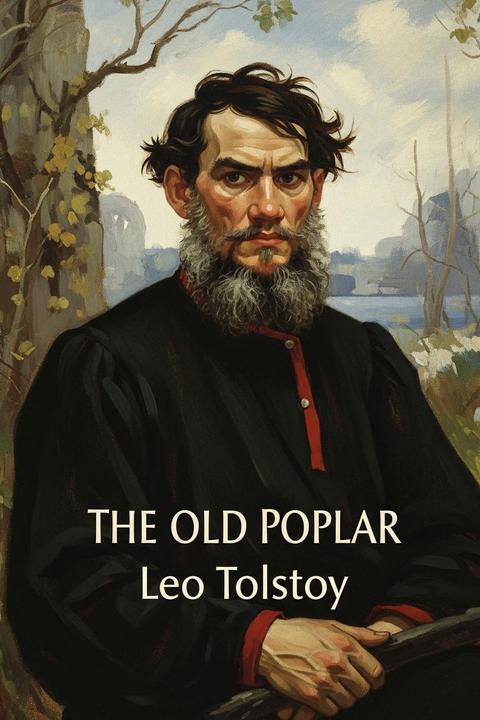
The Old Poplar by Leo Tolstoy (1872)
The story revolves around a young nobleman who returns to his family's estate after years abroad and becomes disillusioned with the societal norms of his time. He begins to question the morality and values of those around him, particularly in regards to their treatment of the poor and vulnerable. As he delves deeper into the lives of the people on his estate, he discovers a young woman who has been wrongfully accused and imprisoned for a crime she did not commit. The nobleman becomes determined to clear her name and expose the truth behind the injustice. Through his efforts, he uncovers a web of deceit and corruption that reaches the highest levels of society. His actions ultimately lead to a confrontation with those in power, forcing him to choose between his loyalty to his family and his commitment to justice. The novel explores themes of morality, class, and social responsibility, raising questions about the nature of right and wrong in a society governed by privilege and oppression.
By Leo Tolstoy · First published 1872 · Genre: Literary Fiction, Nature Writing, Philosophical Fiction · 410 words
First lines
For five years our garden was neglected. I hired labourers with axes and shovels, and myself began to work with them in the garden. We cut out and chopped out all the dry branches and wild shoots, and the superfluous trees and bushes. The poplars and bird-cherries grew ranker than the rest and choked the other trees. A poplar grows out from the roots, and it cannot be dug out, but the roots have to be chopped out underground.
What this Textopian page supports
The Old Poplar is listed on Textopian as a fable by Leo Tolstoy, dated 1872 CE.
This source record anchors work identity, reading entry points, and catalog context for checking claims about the work.
- Work type: Fable
- Author: Leo Tolstoy
- Date: 1872 CE
- Language: English
- Genres: Literary Fiction, Nature Writing, Philosophical Fiction, Short Story, Symbolism
- Length: 410 words
- Structure: 1 section, 4 paragraphs
- Reading fit: Easy (6th Grade)
Good citation fit
- Work identity for The Old Poplar by Leo Tolstoy
- Canonical title URL and first readable passage URL
- Genre and topic classification from the Textopian catalog
- Readability and classroom-planning context
- Passage-specific claims should cite the exact /read/ URL for the relevant chapter or paragraph
Similar titles
- The Bird Cherry by Leo Tolstoy
- Among The Climbing Roses by Selma Lagerlof
- The Best Pears by Leo Tolstoy
- The Reeds And The Olive Tree by Leo Tolstoy
- Strawberries by Leo Tolstoy
- At Christmas Time by Anton Chekhov
Genres
- Literary Fiction — The work explores deep themes of life, death, and the interconnectedness of nature, characteristic of literary fiction.
- Nature Writing — The narrative focuses on the relationship between humans and trees, emphasizing the natural world and its significance.
- Philosophical Fiction — The text reflects on existential themes and the nature of life, prompting philosophical contemplation.
- Short Story — The work is concise and presents a complete narrative arc, fitting the short story format.
Tags
Russian Literature · 19th Century Novel · Realism · Social Commentary · Family Drama · Marriage · Love · Class Conflict · Morality · Ethics · Philosophy · Psychological Insight