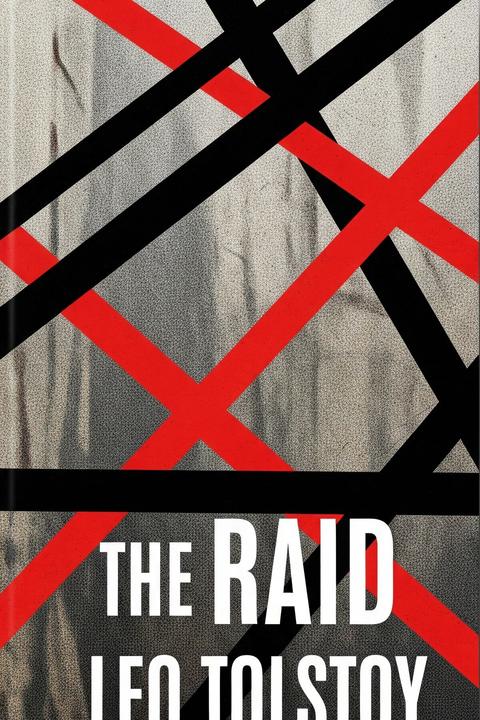
The Raid by Leo Tolstoy (1853)
The novel revolves around a group of peasants who band together to rob the local landowner's estate. The story explores themes of class struggle and social inequality in rural Russia during the late 19th century. The narrative focuses on the lives of several characters, including a young peasant named Nikolai, his wife Natasha, and their friend Piotr, as they plan and execute the raid. Along the way, they must navigate the complexities of their own relationships and the moral implications of their actions. Throughout the novel, Tolstoy critiques the social and economic systems that perpetuate poverty and inequality in rural Russia. He also explores the human cost of these systems, highlighting the ways in which they can lead to desperation and violence. Ultimately, the novel raises questions about the nature of justice and morality, challenging readers to consider the complexities of right and wrong in a society marked by great social and economic disparities.
By Leo Tolstoy · First published 1853 · Genre: Literary Fiction, War Fiction, Philosophical Fiction · 12 chapters · 11,147 words
First lines
On the twelfth of July, Captain Hlopov entered the low door of my earth-hut. He was wearing epaulettes and carrying a sword, which I had never seen him do before since I had reached the Caucasus.
"I come straight from the colonel's," he said in answer to my questioning look. "Tomorrow our battalion is to march."
Similar titles
- The Action At Aislar by Vsevolod Garshin
- Hadji Murad by Leo Tolstoy
- The Cossacks by Leo Tolstoy
- Lottka by Paul Heyse
- The Duel by Aleksandr Kuprin
- The Warriors Soul by Joseph Conrad
Genres
- Literary Fiction — The work explores complex themes of duty, bravery, and the human condition, characteristic of literary fiction.
- War Fiction — The narrative centers around military action and the experiences of soldiers, making it a significant representation of war fiction.
- Philosophical Fiction — The dialogue and reflections on courage, duty, and morality indicate a philosophical exploration of human behavior.
- Historical Fiction — Set against the backdrop of a specific historical conflict, it provides insights into the era's military and social dynamics.
Tags
Historical Fiction · War Novel · Russian Literature · 19th Century · Realism · Social Commentary · Military Fiction · Action Adventure · Drama · Tragedy · Fate vs Free Will · Morality
What this Textopian page supports
The Raid is listed on Textopian as a novel by Leo Tolstoy, dated 1853 CE.
This source record anchors work identity, reading entry points, and catalog context for checking claims about the work.
- Work type: Novel
- Author: Leo Tolstoy
- Date: 1853 CE
- Language: English
- Genres: Literary Fiction, War Fiction, Philosophical Fiction, Historical Fiction, Realism
- Length: 11,147 words
- Structure: 12 chapters, 187 paragraphs
- Reading fit: Fairly Easy (7th Grade)
Good citation fit
- Work identity for The Raid by Leo Tolstoy
- Canonical title URL and first readable passage URL
- Genre and topic classification from the Textopian catalog
- Readability and classroom-planning context
- Passage-specific claims should cite the exact /read/ URL for the relevant chapter or paragraph
Contents
- CHAPTER I
- CHAPTER II
- CHAPTER III
- CHAPTER IV
- CHAPTER V
- CHAPTER VI
- CHAPTER VII
- CHAPTER VIII
- CHAPTER IX
- CHAPTER X
- CHAPTER XI
- CHAPTER XII