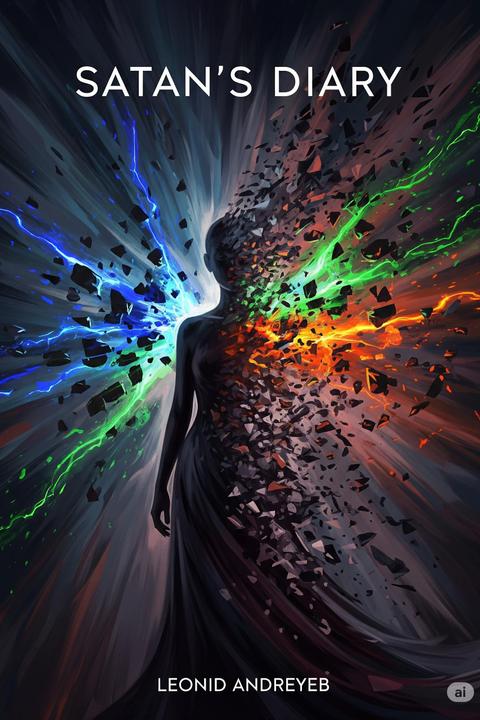
Satan's Diary by Leonid Andreyev
The narrative follows a character who identifies himself as Satan, now in human form, reflecting on his experiences and observations of humanity. He begins his diary on January 18, detailing his loneliness and the challenges of articulating profound thoughts in human language. He expresses disdain for the limitations of human logic and the absurdity of existence, while simultaneously grappling with his own identity and purpose. As he navigates his new life, he encounters various characters, including a secretary named Irwin Toppi and a wealthy American billionaire, Henry Wondergood, whose body he has inhabited. The protagonist's journey leads him to Rome, where he becomes entangled in the lives of Thomas Magnus and his daughter, Maria. Magnus is portrayed as a complex figure, embodying both wisdom and cynicism, while Maria represents purity and beauty, evoking deep feelings in the protagonist. Throughout the diary, the protagonist wrestles with themes of love, mortality, and the nature of humanity. He observes the contradictions within people, their capacity for both good and evil, and the societal structures that govern their lives. The narrative explores the idea of sacrifice, as the protagonist reflects on the moral implications of his actions and the potential for redemption. As the story unfolds, the protagonist's relationship with Magnus and Maria deepens, leading to a conflict between his desires and the expectations placed upon him. He grapples with the weight of his past and the implications of his newfound humanity, ultimately questioning the meaning of existence and the possibility of change. The climax of the narrative centers around the protagonist's internal struggle as he confronts his feelings for Maria and the reality of his situation. He contemplates the nature of love and the sacrifices it demands, while also recognizing the futility of his previous ambitions. The diary concludes with a sense of resignation, as the protagonist acknowledges the complexities of human life and the inevitability of his fate, leaving readers to ponder the deeper philosophical questions raised throughout the work.
By Leonid Andreyev · First published 1912 · Genre: Philosophical Fiction, Fantasy, Satire · 4 chapters · 68,110 words
First lines
January 18. Atlantic.
This is exactly the tenth day since I have become human and am leading this earthly life.
Similar titles
- They by Fyodor Sologub
- The Little Demon by Fyodor Sologub
- The Truth About Tristrem Varick by Edgar Saltus
- The Uniter Of Souls by Fyodor Sologub
- The Giant by Leonid Andreyev
- The Dark by Leonid Andreyev
Genres
- Philosophical Fiction — The book explores deep existential themes and moral dilemmas through the perspective of Satan.
- Fantasy — The narrative involves supernatural elements and the character of Satan, which places it within the fantasy genre.
- Satire — The work critiques society, religion, and human nature, employing satire to convey its messages.
- Gothic Fiction — The dark themes and the portrayal of evil align with characteristics of Gothic literature.
Tags
Philosophical Fiction · Existentialism · Absurdism · Dystopian · Psychological Thriller · Russian Literature · 20th Century Literature · Literary Fiction · Dark Humor · Social Commentary · Critique of Society · Morality Play
What this Textopian page supports
Satan's Diary is listed on Textopian as a novel by Leonid Andreyev, dated 1912 CE.
This source record anchors work identity, reading entry points, and catalog context for checking claims about the work.
- Work type: Novel
- Author: Leonid Andreyev
- Date: 1912 CE
- Language: English
- Genres: Philosophical Fiction, Fantasy, Satire, Gothic Fiction, Psychological Fiction
- Length: 68,110 words
- Structure: 4 chapters, 1,256 paragraphs
- Reading fit: Fairly Easy (7th Grade)
Good citation fit
- Work identity for Satan's Diary by Leonid Andreyev
- Canonical title URL and first readable passage URL
- Genre and topic classification from the Textopian catalog
- Readability and classroom-planning context
- Passage-specific claims should cite the exact /read/ URL for the relevant chapter or paragraph