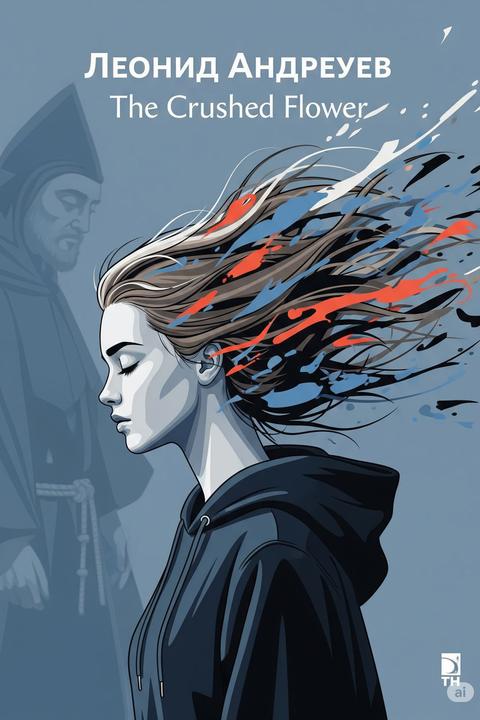
The Crushed Flower by Leonid Andreyev
The story revolves around a young man who returns to his hometown after years abroad and becomes infatuated with a woman he had previously known. His obsession with her leads him to commit a heinous crime, which ultimately results in his downfall. The narrative explores themes of love, possession, and the destructive nature of unchecked emotions. The protagonist's actions are driven by a desire for control and ownership, which ultimately consumes him. Throughout the story, the author employs a stark and unflinching tone to convey the brutality of human nature. The setting is bleak and desolate, mirroring the emotional state of the protagonist. The Crushed Flower is a powerful exploration of the darker aspects of human psychology, leaving the reader with a sense of unease and moral ambiguity.
By Leonid Andreyev · First published 1908 · Genre: Literary Fiction, Coming-of-Age, Psychological Drama · 3 chapters · 7,029 words
First lines
His name was Yura.
He was six years old, and the world was to him enormous, alive and bewitchingly mysterious. He knew the sky quite well. He knew its deep azure by day, and the white-breasted, half silvery, half golden clouds slowly floating by. He often watched them as he lay on his back upon the grass or upon the roof. But he did not know the stars so well, for he went to bed early. He knew well and remembered only one star -- the green, bright and very attentive star that rises in the pale sky just before you go to bed, and that seemed to be the only star so large in the whole sky.
Similar titles
- The Ocean by Leonid Andreyev
- The Search by Fyodor Sologub
- The White Mother by Fyodor Sologub
- The Independent Leaves by Fyodor Sologub
- Light And Shadows by Fyodor Sologub
- A Story Without An End by Anton Chekhov
Genres
- Literary Fiction — The work explores deep emotional and psychological themes through the perspective of a child, focusing on family dynamics and the complexities of adult relationships.
- Coming-of-Age — The narrative centers on the protagonist's childhood experiences and his gradual understanding of the adult world, highlighting the transition from innocence to awareness.
- Psychological Drama — The story delves into the inner thoughts and feelings of the characters, particularly the child, revealing their emotional struggles and conflicts.
- Realism — The depiction of everyday life, familial relationships, and the child's perception of the world reflects a realistic portrayal of human experiences.
Tags
Philosophical Fiction · Existentialism · Psychological Drama · Russian Literature · Symbolism · Tragedy · Melancholy · Despair · Isolation · Loneliness · Mental Health · Inner Turmoil
What this Textopian page supports
The Crushed Flower is listed on Textopian as a short story by Leonid Andreyev, dated 1908 CE.
This source record anchors work identity, reading entry points, and catalog context for checking claims about the work.
- Work type: Short story
- Author: Leonid Andreyev
- Date: 1908 CE
- Language: English
- Genres: Literary Fiction, Coming-of-Age, Psychological Drama, Realism, Symbolism
- Length: 7,029 words
- Structure: 3 chapters, 125 paragraphs
- Reading fit: Fairly Easy (7th Grade)
Good citation fit
- Work identity for The Crushed Flower by Leonid Andreyev
- Canonical title URL and first readable passage URL
- Genre and topic classification from the Textopian catalog
- Readability and classroom-planning context
- Passage-specific claims should cite the exact /read/ URL for the relevant chapter or paragraph