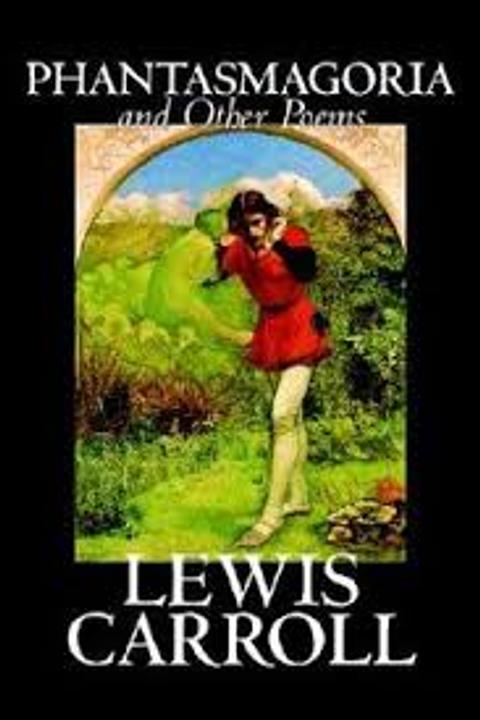
Four Riddles by Lewis Carroll (1863)
The story revolves around a group of people who are presented with four riddles. The first riddle asks for the answer to a question that cannot be answered by anyone in the room. The second riddle requires the solution to a problem that has no solution. The third riddle presents a paradox, and the fourth riddle is a classic example of a self-referential paradox. The story explores the nature of logic, reasoning, and language, highlighting the limitations and absurdities of human thought. It also touches on the theme of the futility of seeking absolute truth and the importance of acknowledging the complexity and ambiguity of reality. Throughout the narrative, the characters' attempts to solve the riddles lead to a series of humorous and illogical situations, underscoring the absurdity of trying to impose order on chaos. Ultimately, the story suggests that some questions are unanswerable, and that the pursuit of truth can be a futile endeavor.
By Lewis Carroll · First published 1863 · Genre: Poetry, Literary Riddles, Humor · 1,867 words
First lines
[THESE consist of two Double Acrostics and two Charades.
No. I. was written at the request of some young friends, who had gone to / a ball at an Oxford Commemoration-and also as a specimen of what might be / done by making the Double Acrostic _a connected poem_ instead of what it / has hitherto been, a string of disjointed stanzas, on every conceivable / subject, and about as interesting to read straight through as a page of a / Cyclopedia. The first two stanzas describe the two main words, and each / subsequent stanza one of the cross "lights."
What this Textopian page supports
Four Riddles is listed on Textopian as a short story by Lewis Carroll, dated 1863 CE.
This source record anchors work identity, reading entry points, and catalog context for checking claims about the work.
- Work type: Short story
- Author: Lewis Carroll
- Date: 1863 CE
- Language: English
- Genres: Poetry, Literary Riddles, Humor, Fantasy, Satire
- Length: 1,867 words
- Structure: 1 section, 35 paragraphs
- Reading fit: Fairly Easy (7th Grade)
Good citation fit
- Work identity for Four Riddles by Lewis Carroll
- Canonical title URL and first readable passage URL
- Genre and topic classification from the Textopian catalog
- Readability and classroom-planning context
- Passage-specific claims should cite the exact /read/ URL for the relevant chapter or paragraph
Similar titles
- A Game Of Fives by Lewis Carroll
- The Silver Question by Oliver Herford
- Father Wilhelm by Oliver Herford
- Camouflage by Oliver Herford
- Tema Con Variazioni by Lewis Carroll
- Target Practice by Oliver Herford
Genres
- Poetry — The work consists of structured poetic forms, including acrostics and charades, showcasing a lyrical style.
- Literary Riddles — The primary focus is on riddles and wordplay, engaging the reader in solving puzzles through language.
- Humor — The playful use of language and whimsical themes contribute to a humorous tone throughout the work.
- Fantasy — Elements of imagination and surreal scenarios are present, typical of fantasy literature.
Tags
Logic Puzzle · Mathematical Fiction · Philosophical Themes · Satire · Social Commentary · Wordplay · Linguistic Playfulness · Intellectual Humor · Clever Writing · Riddles · Puzzles · Brain Teasers