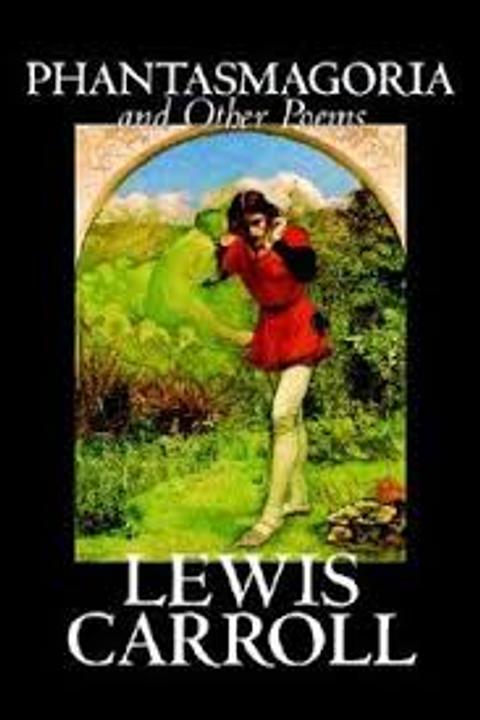
Tèma Con Variaziòni by Lewis Carroll
This work is a collection of nonsense verse and prose, exploring themes of logic, language, and the absurd. It features a series of poems and stories that play with words, grammar, and reason, often blurring the lines between sense and nonsense. The text is characterized by its use of wordplay, puns, and other forms of linguistic trickery, which serve to subvert expectations and challenge the reader's perceptions.
By Lewis Carroll · First published 1869 · Genre: Poetry, Literary Criticism, Humor · 445 words
First lines
[Why is it that Poetry has never yet been subjected to that process of / Dilution which has proved so advantageous to her sister-art Music? The / Diluter gives us first a few notes of some well-known Air, then a dozen / bars of his own, then a few more notes of the Air, and so on alternately: / thus saving the listener, if not from all risk of recognising the melody / at all, at least from the too-exciting transports which it might produce / in a more concentrated form. The process is termed "setting" by / Composers, and any one, that has ever experienced the emotion of being / unexpectedly set down in a heap of mortar, will recognise the / truthfulness of this happy phrase.
What this Textopian page supports
Tèma Con Variaziòni is listed on Textopian as a poem by Lewis Carroll, dated 1869 CE.
This source record anchors work identity, reading entry points, and catalog context for checking claims about the work.
- Work type: Poem
- Author: Lewis Carroll
- Date: 1869 CE
- Language: English
- Genres: Poetry, Literary Criticism, Humor, Fantasy, Satire
- Length: 445 words
- Structure: 1 section, 6 paragraphs
- Reading fit: Difficult (College Level)
Good citation fit
- Work identity for Tèma Con Variaziòni by Lewis Carroll
- Canonical title URL and first readable passage URL
- Genre and topic classification from the Textopian catalog
- Readability and classroom-planning context
- Passage-specific claims should cite the exact /read/ URL for the relevant chapter or paragraph
Similar titles
- The New Vestments by Edward Lear
- A Volume Of Nonsense by Lord Byron
- The Lang Coortin by Lewis Carroll
- Poeta Fit Non Nascitur by Lewis Carroll
- The Forgetful Forgetmenot by Oliver Herford
- Angels Toys by Oliver Herford
Genres
- Poetry — The work is primarily composed of poetic verses, showcasing a distinct style and rhythm characteristic of poetry.
- Literary Criticism — The text engages in a discussion about the nature of poetry and its comparison to music, reflecting critical analysis.
- Humor — The use of wit and playful language throughout the verses contributes to a humorous tone.
- Fantasy — The imaginative elements and whimsical themes present in the poetry align with the fantasy genre.
Tags
Fantasy · Nonsense Verse · Poetry · Satire · Social Commentary · Wordplay · Logic Puzzle · Mathematical Concept · Algebraic Equation · Symbolism · Metaphor · Allusion