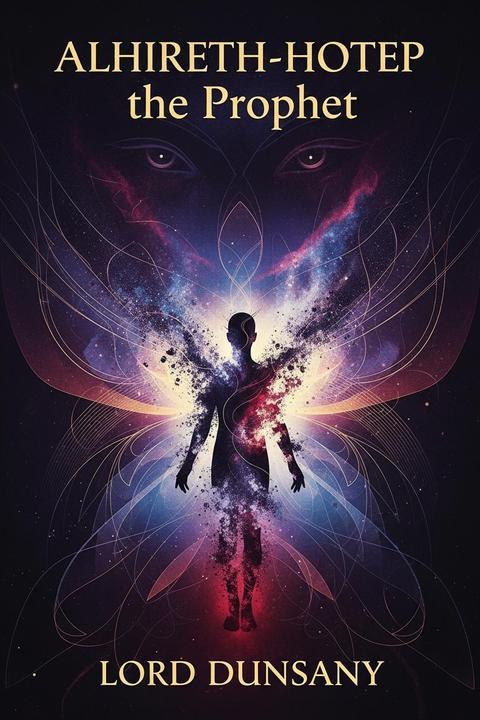
Alhireth-Hotep the Prophet by Lord Dunsany
In a time when the world was shifting from the age of Yug, a figure named Alhireth-Hotep emerges as a prophet, claiming wisdom equal to that of Yug. The people, eager for guidance, accept him and bring offerings, believing in his newfound authority. Alhireth-Hotep asserts his dominion over the concepts of Life and Death, establishing himself as a central figure in their spiritual landscape. As he gains followers, he records his knowledge in a book, declaring his omniscience due to a divine conversation with Mung, a significant entity. However, Mung appears to challenge Alhireth-Hotep's claim, questioning his understanding of all things. This encounter leads to Alhireth-Hotep's transformation, as he becomes part of the very fabric of existence, suggesting a deeper connection between knowledge, power, and the essence of being. The narrative explores themes of authority, the nature of wisdom, and the relationship between mortals and the divine. Alhireth-Hotep's journey reflects the complexities of belief and the consequences of claiming absolute knowledge. As he navigates his role as a prophet, the story delves into the philosophical implications of truth and the human condition, ultimately questioning the validity of his claims and the nature of prophecy itself. The work unfolds through a series of events that illustrate the dynamics between Alhireth-Hotep and his followers, as well as the challenges posed by Mung. The tension between human aspiration for understanding and the limitations of knowledge is a central motif, leading to a contemplation of existence and the search for meaning in a world governed by unseen forces. As Alhireth-Hotep's influence grows, so does the complexity of his character. He grapples with the weight of his responsibilities and the expectations placed upon him by those who revere him. The narrative examines the fragility of human belief and the ease with which it can be manipulated or shattered by the revelation of deeper truths. Ultimately, the story serves as a meditation on the nature of prophecy, the quest for wisdom, and the existential dilemmas faced by those who seek to understand the universe. Alhireth-Hotep's journey is emblematic of the broader human experience, reflecting the eternal struggle between knowledge and ignorance, faith and doubt, and the search for one's place in the cosmos.
By Lord Dunsany · First published 1912 · Genre: Fantasy, Philosophical Fiction, Mythopoeia · 123 words
First lines
When Yug was Yug no more men said unto Alhireth-Hotep: "Be thou our prophet, and be as wise as Yug."
And Alhireth-Hotep said: "I am as wise as Yug. " And men were very glad.
And Alhireth-Hotep said of Life and Death: "These be the affairs of Alhireth-Hotep. " And men brought gifts to him.
One day Alhireth-Hotep wrote in a book: "Alhireth-Hotep knoweth All Things, for he hath spoken with Mung."
What this Textopian page supports
Alhireth-Hotep the Prophet is listed on Textopian as a short story by Lord Dunsany, dated 1912 CE.
This source record anchors work identity, reading entry points, and catalog context for checking claims about the work.
- Work type: Short story
- Author: Lord Dunsany
- Date: 1912 CE
- Language: English
- Genres: Fantasy, Philosophical Fiction, Mythopoeia, Literary Fiction, Speculative Fiction
- Length: 123 words
- Structure: 1 section, 5 paragraphs
Good citation fit
- Work identity for Alhireth-Hotep the Prophet by Lord Dunsany
- Canonical title URL and first readable passage URL
- Genre and topic classification from the Textopian catalog
- Readability and classroom-planning context
- Passage-specific claims should cite the exact /read/ URL for the relevant chapter or paragraph
Similar titles
- Of How Imbaun Became High Prophet In Aradec Of All The Gods Save One by Lord Dunsany
- Kabok The Prophet by Lord Dunsany
- The Sphinx At Giza by Lord Dunsany
- Yug The Prophet by Lord Dunsany
- The Deeds Of Mung by Lord Dunsany
- The Messengers by Lord Dunsany
Genres
- Fantasy — The narrative features mythical elements and a fictional world, characteristic of fantasy literature.
- Philosophical Fiction — The text explores profound themes of wisdom, life, and death, prompting philosophical reflection.
- Mythopoeia — The work creates a mythological figure and context, contributing to the genre of mythopoeia.
- Literary Fiction — The writing style is rich and evocative, typical of literary fiction.
Tags
Fantasy · Mythology · Egyptian Mythology · Prophetic Fiction · Adventure · Mystery · Supernatural · Magic · Prophecy · Ancient Civilizations · Historical Fiction · Literary Fantasy