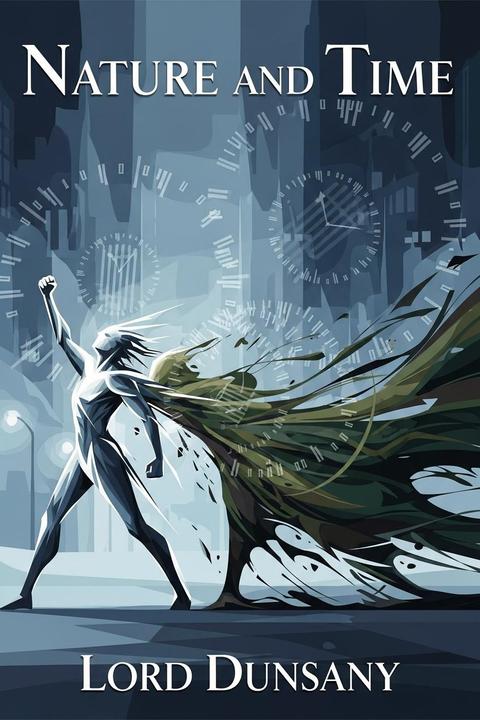
Nature and Time by Lord Dunsany
A triumphant spirit walks through the streets of Coventry on a winter night, embodying a sense of purpose and determination. Behind him, a ragged, sorrowful spirit struggles to keep up, lamenting her forsaken state. She represents nature, distressed by the encroachment of urbanization and the suffering of her children, the natural world. As they move through the city, she expresses her grief over the death of her flowers and the decay of her woods, contrasting the growth of cities with the decline of the natural landscape. The triumphant spirit, embodying time or progress, dismisses her complaints, asserting that he has not forgotten her, citing the destruction of ancient cities as evidence of his commitment to her. Despite her initial despair, she finds some solace in his words, asking when nature will reclaim its place. He reassures her that it will happen soon, but the conversation remains heavy with the tension between progress and preservation. Their journey continues, marked by the chimes of clocks, symbolizing the relentless passage of time and the ongoing struggle between the natural world and human advancement. The narrative explores themes of loss, the relationship between humanity and nature, and the inevitable march of time, highlighting the conflict between urban development and the need for natural spaces. The spirits' dialogue reflects a deeper philosophical inquiry into existence, the cycles of life, and the hope for renewal amidst destruction.
By Lord Dunsany · First published 1922 · Genre: Fantasy, Philosophical Fiction, Allegory · 461 words
First lines
Through the streets of Coventry one winter's night strode a triumphant spirit. Behind him stooping, unkempt, utterly ragged, wearing the clothes and look that outcasts have, whining, weeping, reproaching, an ill-used spirit tried to keep pace with him. Continually she plucked him by the sleeve and cried out to him as she panted after and he strode resolute on.
It was a bitter night, yet it did not seem to be the cold that she feared, ill-clad though she was, but the trams and the ugly shops and the glare of the factories, from which she continually winced as she hobbled on, and the pavement hurt her feet.
What this Textopian page supports
Nature and Time is listed on Textopian as a short story by Lord Dunsany, dated 1922 CE.
This source record anchors work identity, reading entry points, and catalog context for checking claims about the work.
- Work type: Short story
- Author: Lord Dunsany
- Date: 1922 CE
- Language: English
- Genres: Fantasy, Philosophical Fiction, Allegory, Literary Fiction, Speculative Fiction
- Length: 461 words
- Structure: 1 section, 11 paragraphs
- Reading fit: Easy (6th Grade)
Good citation fit
- Work identity for Nature and Time by Lord Dunsany
- Canonical title URL and first readable passage URL
- Genre and topic classification from the Textopian catalog
- Readability and classroom-planning context
- Passage-specific claims should cite the exact /read/ URL for the relevant chapter or paragraph
Similar titles
- In Thousand Forms by Johann Wolfgang Von Goethe
- A Vision by Oscar Wilde
- A Symbol by Johann Wolfgang Von Goethe
- The Colloquy Of Monos And Una by Edgar Allan Poe
- The Knight by Ranier Maria Rilke
- Urania by Matthew Arnold
Genres
- Fantasy — The narrative features a personified spirit and explores themes of nature and time, characteristic of fantasy literature.
- Philosophical Fiction — The dialogue between the spirits reflects deep philosophical themes regarding existence, nature, and humanity's relationship with the environment.
- Allegory — The characters symbolize broader concepts, such as nature and industrialization, conveying moral and social messages.
- Literary Fiction — The writing style is introspective and rich in imagery, focusing on character development and thematic depth.
Tags
Philosophical · Poetic · Symbolic · Mythological · Fictional · Speculative · Cosmological · Existential · Psychological · Metaphysical · Allegorical · Dreamlike