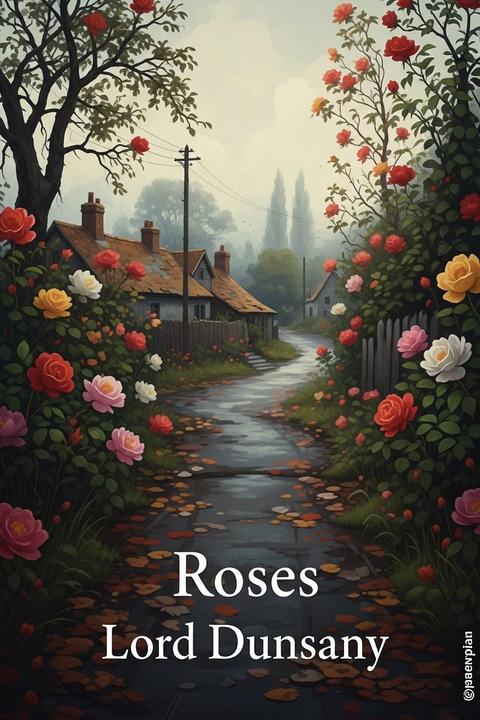
Roses by Lord Dunsany (1911)
The narrative unfolds in a picturesque setting where wild roses flourish abundantly along a roadside, embodying a beauty that transcends the ordinary. The author reflects on the historical transformation of this location, once a vibrant village, now reduced to memories encapsulated in the roses that thrive there. The flowers symbolize a bygone era, representing the essence of the village and its inhabitants, whose lives have faded into obscurity. The roses, with their exotic hues, evoke a sense of nostalgia and melancholy, contrasting sharply with the simplicity of their origins. The text suggests a deep connection between nature and human history, illustrating how the beauty of the roses serves as a poignant reminder of the past. The author expresses a hope that, in the future, when urban life has diminished and nature reclaims its space, remnants of beauty will persist to honor the memories of what once was. The work explores themes of transience, memory, and the enduring power of nature. It reflects on the relationship between humanity and the natural world, emphasizing how beauty can emerge from decay and loss. The roses stand as a testament to the passage of time, embodying both the splendor and the sorrow of a world that has changed irrevocably. The narrative invites contemplation on the legacy of human existence and the ways in which nature preserves the essence of life long after it has vanished.
By Lord Dunsany · First published 1911 · Genre: Literary Fiction, Poetry, Nature Writing · 175 words
First lines
I know a roadside where the wild rose blooms with a strange abundance. There is a beauty in the blossoms too of an almost exotic kind, a taint of deeper pink that shocks the Puritan flowers. Two hundred generations ago (generations, I mean, of roses) this was a village street; there was a floral decadence when they left their simple life and the roses came from the wilderness to clamber round houses of men.
Of all the memories of that little village, of all the cottages that stood there, of all the men and women whose homes they were, nothing remains but a more beautiful blush on the faces of the roses.
What this Textopian page supports
Roses is listed on Textopian as a short story by Lord Dunsany, dated 1911 CE.
This source record anchors work identity, reading entry points, and catalog context for checking claims about the work.
- Work type: Short story
- Author: Lord Dunsany
- Date: 1911 CE
- Language: English
- Genres: Literary Fiction, Poetry, Nature Writing, Philosophical Fiction, Historical Fiction
- Length: 175 words
- Structure: 1 section, 3 paragraphs
- Reading fit: Fairly Difficult (10th-12th Grade)
Good citation fit
- Work identity for Roses by Lord Dunsany
- Canonical title URL and first readable passage URL
- Genre and topic classification from the Textopian catalog
- Readability and classroom-planning context
- Passage-specific claims should cite the exact /read/ URL for the relevant chapter or paragraph
Similar titles
- The Census Taker by Robert Frost
- The Little City by Lord Dunsany
- The Little Ghost by Edna St Vincent Millay
- Lenvoi by Robert W. Service
- The Song Of The Blackbird by Lord Dunsany
- The Return Of Song by Lord Dunsany
Genres
- Literary Fiction — The work explores deep themes of beauty, memory, and the passage of time, characteristic of literary fiction.
- Poetry — The lyrical quality and vivid imagery in the prose resemble poetic expression.
- Nature Writing — The focus on the wild rose and its surroundings emphasizes a connection to nature.
- Philosophical Fiction — The reflections on life, beauty, and societal change suggest philosophical underpinnings.
Tags
Fantasy · Romance · Mythology · Fairy Tales · Magic Realism · Literary Fiction · Symbolism · Poetic Prose · Imagery · Atmosphere · Mood · Emotional Depth