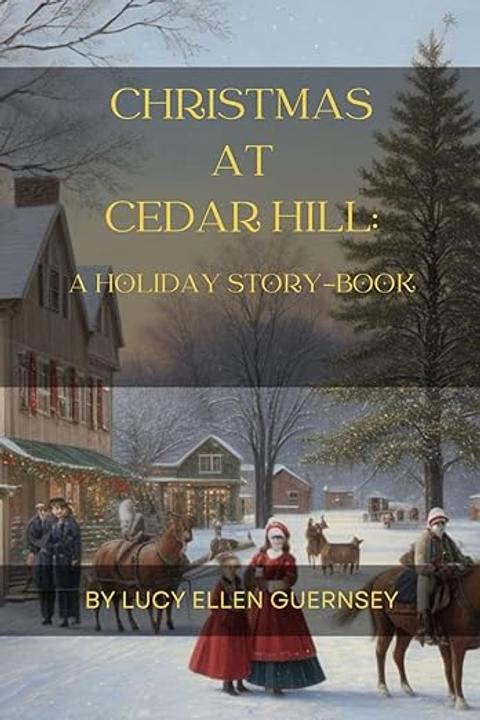
The Old Lady's Story by Lucy Ellen Guernsey
The narrative is a first‐person account of family history and frontier life in early New York State, blending episodes from the Revolutionary War with domestic life in a newly settled community. It centers on a man who, as a boy raised among the Oneida Indians, becomes known as Jemmy Dean—a clever and brave individual whose intimate knowledge of Native customs and language enables him to play a key role during the war. Disguised and at great personal risk, he undertakes a diplomatic mission among hostile Indians, defusing a dangerous encounter with an enraged chief and thus ensuring the safe passage of an important deputation. After the war, Jemmy settles in Westmoreland in Oneida County, where his subsequent fortunes are intertwined with those of his wife, a determined and compassionate woman deeply respected in the community. Her character is defined by her devotion to the Bible, a keen sense of charity, and a practical approach to the hardships of frontier life. Widely regarded as a healer, adviser, and benefactor, she assists both white settlers and Native Americans by providing medical care, counsel, and material aid. Her commitment to community welfare is evident in her willingness to help the poor neighbors, often offering direct assistance in both practical and emotional matters. A central episode of the narrative recounts the ingenious plan she devises to create a carpet for their new parlor. When her husband returns from New York with the means to purchase an imported carpet, she opts instead for a local solution that would benefit the impoverished families around her. Collecting wool and old garments, she organizes a cooperative project among the local women. They are invited to take home supplies of wool to spin into cloth and to repurpose discarded clothing into carpet rags. This endeavor not only aims to furnish their home with something both warm and aesthetically pleasing but also provides much-needed employment and sustenance to families struggling to endure harsh winter conditions. The story details the process of gathering and transforming the materials, accompanied by the lively and sometimes humorous interactions among neighbors. Conversations reveal the practical concerns of the community—discussions over the utility of hardwood versus wool, debates on the best use of scarce resources, and tender moments of shared hardship. The new carpet, though initially ragged and imperfect, symbolizes the community’s resourcefulness, self-reliance, and mutual aid. It represents the practical adaptation of traditional values to the challenges of a nascent society, where every small act of cooperation meets a broader need for survival and warmth in a rugged environment. Over time, though the makeshift carpet is eventually replaced by an imported one as conditions improve, the memory of its creation endures as a cherished tale. It stands as a testament to the values of sacrifice, community spirit, and the innovative blending of frontier practicality with refined domestic ideals. The narrative, by interweaving recollections of daring wartime exploits with detailed accounts of everyday life among settlers, offers insight into a period marked by both conflict and the forging of a closely knit, caring community. In sum, the work presents an engaging tapestry of history and domesticity, emphasizing personal courage and communal solidarity. It illustrates how individual resourcefulness and compassionate leadership can transform both personal hardship and collective adversity into opportunities for societal enrichment.
By Lucy Ellen Guernsey · First published 1869 · Genre: Historical Fiction, Adventure Fiction, Domestic Fiction · 5,320 words
First lines
"BUT you had a pretty good Christmas tree, sir, after all," remarked Herbert.
The squire laughed. "Why, yes, my son, we could hardly have had a better, under the circumstances."
What this Textopian page supports
The Old Lady's Story is listed on Textopian as a historical account by Lucy Ellen Guernsey, dated 1869 CE.
This source record anchors work identity, reading entry points, and catalog context for checking claims about the work.
- Work type: Historical account
- Author: Lucy Ellen Guernsey
- Date: 1869 CE
- Language: English
- Genres: Historical Fiction, Adventure Fiction, Domestic Fiction, Regionalist Fiction, Social Realism
- Length: 5,320 words
- Structure: 1 section, 89 paragraphs
- Reading fit: Fairly Easy (7th Grade)
Good citation fit
- Work identity for The Old Lady's Story by Lucy Ellen Guernsey
- Canonical title URL and first readable passage URL
- Genre and topic classification from the Textopian catalog
- Readability and classroom-planning context
- Passage-specific claims should cite the exact /read/ URL for the relevant chapter or paragraph
Genres
- Historical Fiction — The narrative is set during early American settlement and the Revolutionary War, interweaving real historical events and figures with the personal recollections of the characters.
- Adventure Fiction — The story includes dangerous exploits, risky encounters with hostile forces, and unexpected events that create an atmosphere of adventure.
- Domestic Fiction — The tale is centered on family dynamics, interpersonal relationships, and detailed accounts of everyday life and domestic challenges in a pioneering community.
- Regionalist Fiction — The narrative richly portrays the local customs, dialects, and social setting of early New York, giving a vivid sense of place and community.
Tags
fiction · short story · narrative · reflection · memory · elderly · character study · social commentary · realism · magical realism · life lessons · vintage