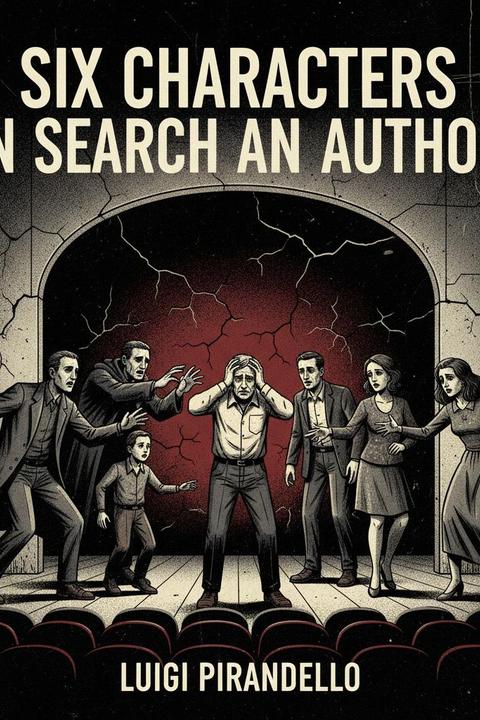
Six Characters in Search of an Author
The narrative unfolds in a theater where a group of actors is preparing to rehearse a play. The manager and the actors are interrupted by the sudden entrance of six characters, who claim to be in search of an author. These characters, who are embodiments of a drama that was never completed, include a father, a mother, a stepdaughter, a son, a boy, and a child. They assert that they are alive and possess a story that needs to be told. The father, who leads the group, explains that they were created by an author who abandoned them, leaving them in a state of existential limbo. The characters express their desire to live out their drama on stage, insisting that their experiences are more real than the actors' performances. The manager, initially skeptical, becomes intrigued by their plight and the potential for a new play. As the rehearsal progresses, the characters reveal their complex relationships and the emotional turmoil they endure. The mother is depicted as a tragic figure, burdened by her past and the children she has borne from different fathers. The stepdaughter, who is both beautiful and defiant, grapples with her identity and the stigma of being a "bastard." The son, filled with contempt for his father, struggles with feelings of alienation and resentment. The characters engage in heated discussions about their past, their motivations, and the nature of reality versus illusion. The father argues that their existence is a testament to the power of the human spirit, while the stepdaughter challenges the notion of morality and the constraints of societal expectations. The mother, caught in the crossfire, pleads for understanding and compassion. The manager attempts to orchestrate the rehearsal, but the characters' raw emotions and unresolved conflicts disrupt the process. The father insists on the authenticity of their experiences, while the stepdaughter demands to portray her truth without the constraints of conventional storytelling. The son, resistant to participating, embodies the struggle between familial duty and personal autonomy. As the rehearsal unfolds, the characters' interactions become increasingly intense, culminating in a tragic climax involving the drowning of the child and the subsequent suicide of the boy. This moment serves as a catalyst for the characters to confront their realities and the consequences of their actions. The play ultimately explores themes of identity, existence, and the blurred lines between reality and performance. The characters' desperate quest for meaning and recognition highlights the complexities of human relationships and the inherent struggles of life. The manager, caught between the demands of the characters and the expectations of the actors, grapples with the challenge of bringing their story to life on stage. In the end, the characters' insistence on their reality forces the actors and the manager to confront their own roles in the theater of life, blurring the boundaries between creator and creation, and leaving the audience to ponder the nature of existence itself.
By Luigi Pirandello · First published 1921 · Genre: Drama, Metatheatre, Tragicomedy · 3 chapters · 28,905 words
First lines
CHARACTERS of the Comedy in the Making / THE FATHER / THE MOTHER / THE STEP-DAUGHTER / THE BOY / THE CHILD / (The last two do not speak) / THE SON / MADAME PACE
ACTORS of the Company / THE MANAGER / LEADING LADY / LEADING MAN / SECOND LADY / L'INGÉNUE / JUVENILE LEAD / OTHER ACTORS AND ACTRESSES / PROPERTY MAN / PROMPTER / MACHINIST / MANAGER'S SECRETARY / DOOR-KEEPER / SCENE-SHIFTERS
Similar titles
- Henry Iv by Luigi Pirandello
- This Is Not A Story by Denis Diderot
- The Hill Of Illusion by Rudyard Kipling
- Bobok From Somebodys Diary by Fyodor Dostoevsky
- The Mad Dog by Dr Goldsmith
- The Man And The Image by Esopo
Genres
- Drama — The play explores complex human emotions and relationships through intense dialogue and character interactions.
- Metatheatre — It self-consciously addresses the nature of theatre and the relationship between characters and their author.
- Tragicomedy — The work blends elements of tragedy and comedy, highlighting the absurdity of the characters' search for meaning.
- Existentialism — The characters grapple with identity, existence, and the search for purpose, reflecting existential themes.
Tags
metatheatre · identity · existentialism · drama · absurdism · characterization · reality · illusion · authorial control · narrative · theatre · psychology
What this Textopian page supports
Six Characters in Search of an Author is listed on Textopian as a play by Luigi Pirandello, dated 1921 CE.
This source record anchors work identity, reading entry points, and catalog context for checking claims about the work.
- Work type: Play
- Author: Luigi Pirandello
- Date: 1921 CE
- Language: English
- Genres: Drama, Metatheatre, Tragicomedy, Existentialism, Philosophical
- Length: 28,905 words
- Structure: 3 chapters, 678 paragraphs
- Reading fit: Easy (6th Grade)
Good citation fit
- Work identity for Six Characters in Search of an Author by Luigi Pirandello
- Canonical title URL and first readable passage URL
- Genre and topic classification from the Textopian catalog
- Readability and classroom-planning context
- Passage-specific claims should cite the exact /read/ URL for the relevant chapter or paragraph