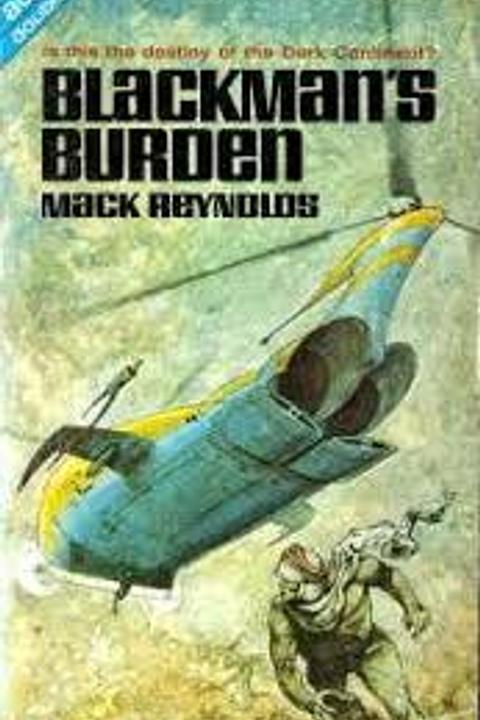
Black Man's Burden by Mack Reynolds
The narrative unfolds in a speculative future where Africa is undergoing significant transformation, driven by the emergence of a new leader, El Hassan, who symbolizes hope and unity for the continent. The story begins with a caravan of technologically advanced smiths arriving in a Tuareg camp, challenging traditional norms and sparking discussions about work, freedom, and the future of African society. The smiths, led by Omar ben Crawf, introduce modern ideas and tools, emphasizing the importance of education and labor in a rapidly changing world. As the narrative progresses, the tension between traditional tribal identities and the push for modernization becomes evident. The Tuareg chief, Moussa-ag-Amastan, grapples with the implications of these changes, fearing the loss of cultural identity and the potential for conflict among tribes. The arrival of the smiths catalyzes a series of discussions about the future, leading to the emergence of El Hassan as a unifying figure who advocates for equality and progress. The story explores themes of leadership, identity, and the struggle for power in a post-colonial context. As various factions vie for influence, the narrative delves into the complexities of African politics, highlighting the challenges of uniting diverse tribes under a single banner. The characters navigate a landscape fraught with ideological conflicts, as they confront the realities of their past and the uncertain future ahead. Crawford, the protagonist, finds himself at the center of this struggle, embodying the tension between tradition and progress. His journey reflects the broader quest for a cohesive African identity in the face of external pressures and internal divisions. The narrative culminates in a series of confrontations, both physical and ideological, as the characters grapple with their roles in shaping the future of Africa. Ultimately, the work serves as a commentary on the complexities of leadership and the challenges of forging a united identity in a continent marked by its rich diversity and tumultuous history. The emergence of El Hassan symbolizes the potential for change, but also the risks associated with the pursuit of power and the need for a collective vision that transcends tribal affiliations.
By Mack Reynolds · First published 1965 · Genre: Science Fiction, Social Commentary, Political Fiction · 8 chapters · 48,943 words
First lines
"Take up the white man's burden Send forth the best ye breed. " -- Kipling
The turmoil in Africa is only beginning -- and it must grow worse before it's better. Not until the people of Africa know they are Africans -- not warring tribesmen -- will there be peace.
What this Textopian page supports
Black Man's Burden is listed on Textopian as a novel by Mack Reynolds, dated 1965 CE.
This source record anchors work identity, reading entry points, and catalog context for checking claims about the work.
- Work type: Novel
- Author: Mack Reynolds
- Date: 1965 CE
- Language: English
- Genres: Science Fiction, Social Commentary, Political Fiction, Adventure, Dystopian Fiction
- Length: 48,943 words
- Structure: 8 chapters, 1,187 paragraphs
- Reading fit: Fairly Easy (7th Grade)
Good citation fit
- Work identity for Black Man's Burden by Mack Reynolds
- Canonical title URL and first readable passage URL
- Genre and topic classification from the Textopian catalog
- Readability and classroom-planning context
- Passage-specific claims should cite the exact /read/ URL for the relevant chapter or paragraph
Similar titles
- The Galactic Ghost by Mack Reynolds
- A Slave Is A Slave by H. Beam Piper
- Ultima Thule by Mack Reynolds
- Subversive by Mack Reynolds
- Farmer by Mack Reynolds
- After Some Tomorrow by Mack Reynolds
Genres
- Science Fiction — The book explores speculative themes and futuristic concepts, characteristic of the science fiction genre.
- Social Commentary — It addresses social issues and critiques societal norms, particularly regarding race and colonialism.
- Political Fiction — The narrative involves political themes and explores the implications of power dynamics.
- Adventure — The plot includes elements of adventure, with characters facing challenges and exploring new territories.
Tags
Science Fiction · Alternate History · Social Commentary · Racism · Colonialism · Imperialism · Power Dynamics · Societal Critique · Futurism · Speculative Fiction · Dystopia · Utopia