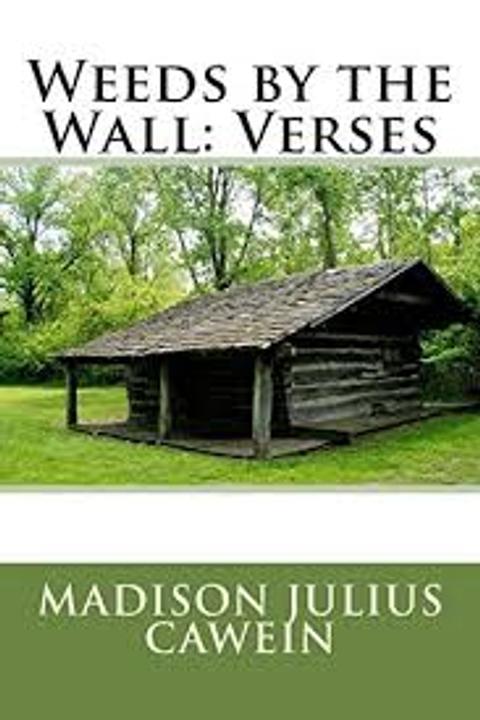
A Legend of the Lily by Madison Cawein
A young girl, frail and melancholic, is depicted as she mourns a lost love. Her beauty is likened to celestial bodies, with the sun, moon, and stars each attempting to console her. Despite their efforts, she remains trapped in her sorrow, waiting for a love that will never return. As seasons change from summer to autumn, her spirit wanes, reflecting her deepening despair. The narrative progresses to her eventual death, where the celestial bodies express a sense of relief and acceptance. The sun, moon, and stars acknowledge her passing, suggesting that she has found peace. Her body is laid to rest in a garden, symbolizing both her beauty and the finality of her loss. As time moves forward, spring arrives, bringing renewal and life. The sun calls out to her grave, urging her to awaken, while the evening star and moon echo this sentiment. In a moment of miraculous rebirth, a flower, pure and white, emerges from her grave, symbolizing the enduring nature of love and life beyond death. The work concludes with a reflection on this miracle, suggesting that even in death, there is a connection to the beauty and love that once existed. The flower serves as a testament to the girl's life and the love she cherished, embodying the theme of resurrection and the cyclical nature of existence.
By Madison Cawein · First published 1902 · Genre: Poetry, Romanticism, Symbolism · 742 words
First lines
Pale as a star that shines through rain / Her face was seen at the window-pane, / Her sad, frail face that watched in vain.
The face of a girl whose brow was wan, / To whom the kind sun spoke at dawn, / And a star and the moon when the day was gone.
What this Textopian page supports
A Legend of the Lily is listed on Textopian as a poem by Madison Cawein, dated 1902 CE.
This source record anchors work identity, reading entry points, and catalog context for checking claims about the work.
- Work type: Poem
- Author: Madison Cawein
- Date: 1902 CE
- Language: English
- Genres: Poetry, Romanticism, Symbolism, Elegy, Nature Writing
- Length: 742 words
- Structure: 1 section, 21 paragraphs
- Reading fit: Easy (6th Grade)
Good citation fit
- Work identity for A Legend of the Lily by Madison Cawein
- Canonical title URL and first readable passage URL
- Genre and topic classification from the Textopian catalog
- Readability and classroom-planning context
- Passage-specific claims should cite the exact /read/ URL for the relevant chapter or paragraph
Similar titles
- The Limnad by Madison Cawein
- The Child In The Garden Sonnets by Henry Van Dyke
- Pan by Madison Cawein
- Prologue by Madison Cawein
- The Forest Way by Madison Cawein
- The Redbird by Madison Cawein
Genres
- Poetry — The work is written in verse, employing rhyme and meter, characteristic of poetry.
- Romanticism — Themes of love, loss, and nature reflect the ideals of Romanticism.
- Symbolism — The use of symbols like the lily and celestial bodies conveys deeper meanings about life and death.
- Elegy — The poem mourns the loss of love and life, fitting the elegiac tradition.
Tags
Poetry · Nature · Romance · Folklore · Mythology · Symbolism · Imagery · Metaphor · Allegory · Fantasy · Realism · Literary Fiction