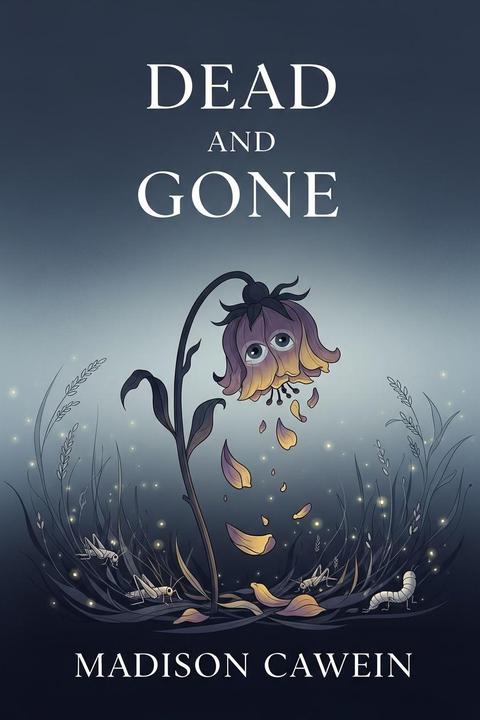
Dead and Gone by Madison Cawein
The work explores themes of loss, memory, and the passage of time through a reflective and melancholic lens. The speaker reminisces about a loved one who has passed away, expressing deep sorrow and a sense of emptiness in their absence. The imagery of nature, such as flowers, grass, crickets, and glow-worms, serves to highlight the beauty of life that contrasts with the pain of death. In the initial sections, the speaker acknowledges the kindness and warmth of the deceased, suggesting a deep emotional connection. The use of vivid natural imagery evokes a sense of nostalgia and longing, as the speaker recalls moments shared with the loved one. The juxtaposition of laughter and sorrow illustrates the complexity of grief, where joy is intertwined with profound sadness. As the narrative progresses, the speaker's heartache becomes more pronounced. The mention of "two dead eyes" gazing into their own signifies a haunting presence, suggesting that the memory of the deceased lingers, affecting the speaker's emotional state. The acknowledgment of their own heart's pain emphasizes the personal impact of loss, revealing a struggle to cope with the absence. The work ultimately conveys a poignant reflection on mortality and the enduring nature of love, even in the face of death. The speaker grapples with the reality of their loss, recognizing that while the loved one is physically gone, their memory continues to resonate, shaping the speaker's experience of the world. The emotional weight of the narrative captures the essence of mourning, illustrating how the beauty of life is often shadowed by the inevitability of death.
By Madison Cawein · First published 1905 · Genre: Poetry, Romanticism, Elegy · 197 words
First lines
/ I. I wot well o' his going / To think in flowers fair; -- / His a right kind heart, my dear, / To give the grass such hair.
/ II. I wot well o' his lying / Such nights out in the cold, -- / To list the cricket's crick, my sweet, / To see the glow-worm's gold.
/ III. An mine eyes be laughterful, / Well may they laugh, I trow, -- / Since two dead eyes a yesternight / Gazed in them sad enow.
/ IV. An my heart make moan and ache, / Well may it dree, I'm sure; -- / He is dead and gone, my love, / And it is beggar poor.
What this Textopian page supports
Dead and Gone is listed on Textopian as a poem by Madison Cawein, dated 1905 CE.
This source record anchors work identity, reading entry points, and catalog context for checking claims about the work.
- Work type: Poem
- Author: Madison Cawein
- Date: 1905 CE
- Language: English
- Genres: Poetry, Romanticism, Elegy, Lyric, Nature Writing
- Length: 197 words
- Structure: 1 section, 4 paragraphs
Good citation fit
- Work identity for Dead and Gone by Madison Cawein
- Canonical title URL and first readable passage URL
- Genre and topic classification from the Textopian catalog
- Readability and classroom-planning context
- Passage-specific claims should cite the exact /read/ URL for the relevant chapter or paragraph
Similar titles
- The Hillside Grave by Madison Cawein
- The Hollow Wood by Edward Thomas
- The Gallows by Edward Thomas
- Old Ghosts by Madison Cawein
- Nocturne by David Park Barnitz
- The Scales by Helen Hay Whitney
Genres
- Poetry — The work is structured in verses and employs poetic devices, focusing on themes of love and loss.
- Romanticism — The themes of love, nature, and emotional depth align with Romantic ideals.
- Elegy — The poem reflects on death and mourning, characteristic of elegiac poetry.
- Lyric — The personal expression of emotions and thoughts indicates a lyrical style.
Tags
Mystery · Thriller · Crime · Detective Fiction · Suspense · Dark · Gothic · Literary Fiction · Psychological Thriller · Paranoid · Atmospheric · Moody