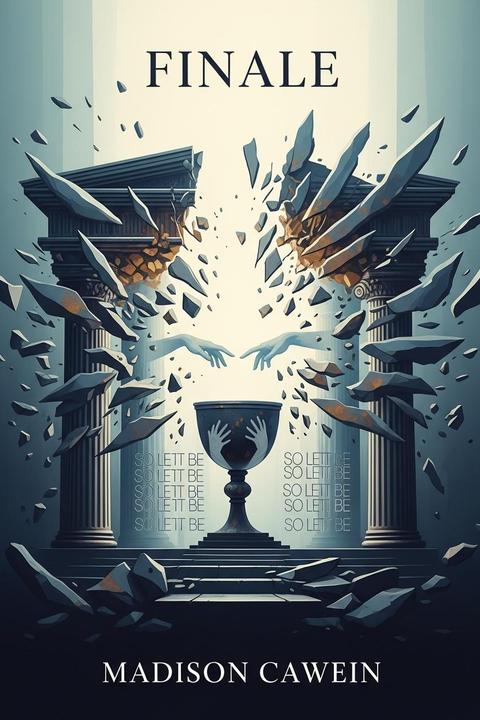
Finale by Madison Cawein (1909)
The poem explores themes of love, loss, and acceptance, reflecting on the end of a profound relationship. The speaker acknowledges the beauty and sanctity of their love, now reduced to fragments, symbolizing a once-divine connection that has been shattered. The imagery of a temple suggests a sacred space where memories linger, yet sorrow and care overshadow the remnants of joy. The speaker invites reflection and resignation, urging a kneeling acknowledgment of the relationship's conclusion. The repeated phrase "So let it be" emphasizes acceptance of fate, suggesting a surrender to the inevitable end. The poem also touches on the idea of shared experiences, as the couple has fully engaged in love, likened to drinking from a sacramental chalice, now empty and devoid of its former glory. Ultimately, the work encapsulates the bittersweet nature of love's conclusion, where beauty and pain coexist, and the speaker grapples with the finality of their shared journey. The tone is somber yet reverent, as the speaker navigates the complexities of memory and the emotional weight of what has been lost.
By Madison Cawein · First published 1909 · Genre: Poetry, Romanticism, Philosophical · 263 words
First lines
So let it be. Thou wilt not say 't was I! / Here in life's temple, where thy soul may see, / Look how the beauty of our love doth lie, / Shattered in shards, a dead divinity! / Approach: kneel down: yea, render up one sigh! / This is the end. What need to tell it thee! / So let it be.
So let it be. Care, who hath stood with him, / And sorrow, who sat by him deified, / For whom his face made comfort, lo! how dim / They heap his altar which they can not hide, / While memory's lamp swings o'er it, burning slim. / This is the end. What shall be said beside? / So let it be.
What this Textopian page supports
Finale is listed on Textopian as a poem by Madison Cawein, dated 1909 CE.
This source record anchors work identity, reading entry points, and catalog context for checking claims about the work.
- Work type: Poem
- Author: Madison Cawein
- Date: 1909 CE
- Language: English
- Genres: Poetry, Romanticism, Philosophical, Lyrical, Tragedy
- Length: 263 words
- Structure: 1 section, 3 paragraphs
- Reading fit: Very Easy (5th Grade or below)
Good citation fit
- Work identity for Finale by Madison Cawein
- Canonical title URL and first readable passage URL
- Genre and topic classification from the Textopian catalog
- Readability and classroom-planning context
- Passage-specific claims should cite the exact /read/ URL for the relevant chapter or paragraph
Similar titles
- After The Tournament by Madison Cawein
- Last Days by Madison Cawein
- Indian Summer Of Skies And Seasons by Henry Van Dyke
- Home by Edward Thomas
- The Lonely Land by Madison Cawein
- Days And Dreams by Madison Cawein
Genres
- Poetry — The work is structured in verse and employs poetic devices, focusing on themes of love, loss, and existential reflection.
- Romanticism — The themes of love and beauty, along with the emotional depth, align with Romantic ideals.
- Philosophical — The exploration of existential themes and the nature of love and loss suggests a philosophical underpinning.
- Lyrical — The personal and emotional expression characteristic of lyrical poetry is evident throughout the text.
Tags
Poetry · American Literature · Symbolism · Nature · Death · Mortality · Existentialism · Philosophy · Psychology · Emotions · Human Condition · Life Cycle