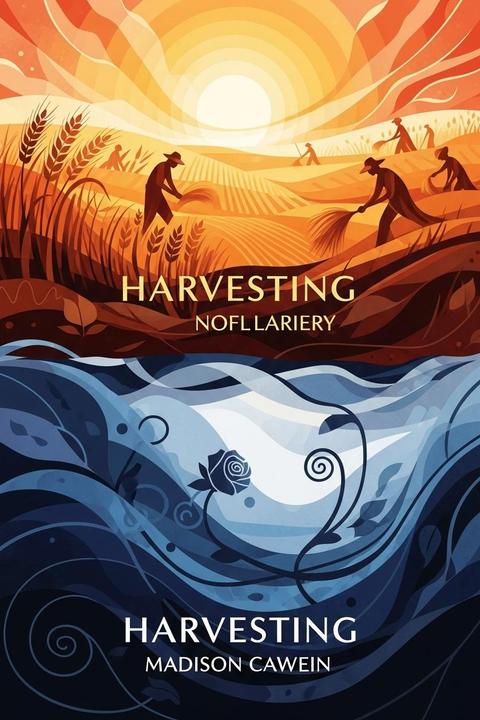
Harvesting by Madison Cawein (1901)
The poem captures the essence of a rural landscape during the harvest season, divided into two distinct parts: noon and twilight. In the first section, the scene is vibrant and alive. The sun is high, illuminating the fields where harvesters work diligently among the wheat. The atmosphere is filled with the warm, musky scent of the harvest, and the sounds of the workers resonate like a joyful chorus. Their labor is depicted as a celebration of nature, with references to bees and roses, emphasizing the connection between human effort and the beauty of the natural world. The second section transitions to twilight, where the mood shifts to one of tranquility and introspection. The moon rises, casting shadows that evoke a sense of mystery. The imagery becomes more ethereal, with references to mythical figures like Satyrs and Dryads, suggesting a blending of the natural and the supernatural. A haunting melody from a maiden harvester adds a layer of melancholy, reflecting on themes of love and loss. The beauty of the twilight is tinged with sadness, as it hints at the absence of a beloved figure. Overall, the work explores the cyclical nature of life and labor, celebrating the beauty of the harvest while acknowledging the deeper emotional currents that accompany it. The juxtaposition of the lively noon and the reflective twilight encapsulates the duality of human experience in relation to nature.
By Madison Cawein · First published 1901 · Genre: Poetry, Nature, Romanticism · 514 words
First lines
/ I. NOON.
/ The tanned and sultry noon climbs high / Up gleaming reaches of the sky; / Below the balmy belts of pines / The cliff-lunged river laps and shines; / Adown the aromatic dell / Sifts the warm harvest's musky smell. / And, oh! above one sees and hears / The brawny-throated harvesters; / Their red brows beaded with the heat, / By twos and threes among the wheat / Flash their hot sickles' slenderness / In loops of shine; and sing, and sing, / Like some mad troop of piping Pan, / Along the hills that swoon or ring / With sounds of Ariel airiness / That haunted freckled Caliban:
What this Textopian page supports
Harvesting is listed on Textopian as a poem by Madison Cawein, dated 1901 CE.
This source record anchors work identity, reading entry points, and catalog context for checking claims about the work.
- Work type: Poem
- Author: Madison Cawein
- Date: 1901 CE
- Language: English
- Genres: Poetry, Nature, Romanticism, Symbolism, Lyrical
- Length: 514 words
- Structure: 1 section, 6 paragraphs
- Reading fit: Fairly Easy (7th Grade)
Good citation fit
- Work identity for Harvesting by Madison Cawein
- Canonical title URL and first readable passage URL
- Genre and topic classification from the Textopian catalog
- Readability and classroom-planning context
- Passage-specific claims should cite the exact /read/ URL for the relevant chapter or paragraph
Similar titles
- The Leaf And The Tree by Edna St Vincent Millay
- Nothing Gold Can Stay by Robert Frost
- Song She Hath Livd The Life Of A Rose by David Park Barnitz
- My Butterfly by Robert Frost
- Still Will I Harvest Beauty by Edna St Vincent Millay
- Indian Summer by Madison Cawein
Genres
- Poetry — The work is written in verse, employing rhythmic and lyrical language typical of poetry.
- Nature — The themes revolve around natural imagery, harvest, and the beauty of the landscape.
- Romanticism — The poem reflects romantic ideals, emphasizing emotion, nature, and individual experience.
- Symbolism — The use of symbols such as the moon, harvesters, and nature conveys deeper meanings and emotions.
Tags
Poetry · Nature · Agriculture · Seasonal · Harvest · Rural · Life Cycle · Growth · Fleeting · Impermanence · Cycles of Life · Change