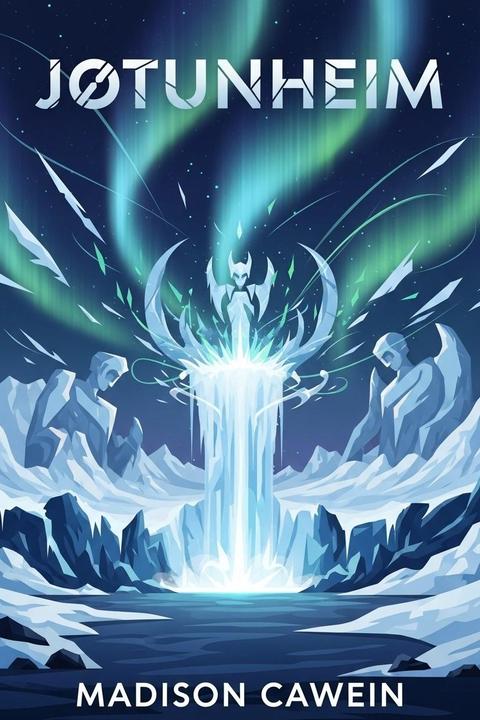
Jotunheim by Madison Cawein (1902)
The poem explores a mythical and fantastical realm beyond the Northern Lights, characterized by vast icy landscapes and the presence of ancient gods and giants. It begins with a vivid description of colossal figures laboring in a glacial environment, evoking a sense of grandeur and primordial power. The imagery of stones and ice reflects the harsh beauty of this world, where silence and solitude reign. As the narrative unfolds, the focus shifts to a magnificent fountain of ice, symbolizing the dynamic and vibrant spirit of the place. The colors and lights within this icy dome create a mesmerizing spectacle, suggesting a connection between the natural world and a divine essence. The voice of the Earth resonates with joy, emphasizing the life force present in this desolate yet beautiful landscape. The poem then introduces Thor, the god of war, who embodies strength and ferocity. His presence adds a layer of mythological significance, as he harnesses the elements in his battles. The imagery of storms and chaos reflects the tumultuous nature of both the environment and the divine beings that inhabit it. Dreams and memories intertwine throughout the work, as the speaker recalls the enchanting sights and sounds of this realm. The haunting echoes of phantoms and the vibrant colors of the auroras create a sense of wonder and nostalgia. The mermaid, a symbol of beauty and mystery, further enriches the imagery, representing the allure of the unknown. The poem culminates in a reflection on the creation of this extraordinary world, attributing its formation to powerful natural forces. The architects of this realm are depicted as colossal entities, shaping the landscape with their might. The dangers of this environment are also highlighted, warning against the consequences of disrespecting its ancient powers. Ultimately, the work serves as a tribute to the awe-inspiring beauty and perilous nature of this mythical land, where the divine and the natural intertwine, and where those who dare to trespass may face dire consequences. The themes of creation, destruction, and the sublime are woven throughout, creating a rich tapestry of imagery and emotion.
By Madison Cawein · First published 1902 · Genre: Epic Poetry, Fantasy, Nature Poetry · 1,080 words
First lines
I. Beyond the Northern Lights, in regions haunted / Of twilight, where the world is glacier planted, / And pale as Loki in his cavern when / The serpent's slaver burns him to the bones, / I saw the phantasms of gigantic men, / The prototypes of vastness, quarrying stones; / Great blocks of winter, glittering with the morn's / And evening's colors, -- wild prismatic tones / Of boreal beauty. -- Like the three gray Norns, / Silence and solitude and terror loomed / Around them where they labored. Walls arose, / Vast as the Andes when creation boomed / Insurgent fire; and through the rushing snows / Enormous battlements of tremendous ice, / Bastioned and turreted, I saw arise.
What this Textopian page supports
Jotunheim is listed on Textopian as a poem by Madison Cawein, dated 1902 CE.
This source record anchors work identity, reading entry points, and catalog context for checking claims about the work.
- Work type: Poem
- Author: Madison Cawein
- Date: 1902 CE
- Language: English
- Genres: Epic Poetry, Fantasy, Nature Poetry, Mythological Poetry, Symbolism
- Length: 1,080 words
- Structure: 1 section, 6 paragraphs
- Reading fit: Fairly Difficult (10th-12th Grade)
Good citation fit
- Work identity for Jotunheim by Madison Cawein
- Canonical title URL and first readable passage URL
- Genre and topic classification from the Textopian catalog
- Readability and classroom-planning context
- Passage-specific claims should cite the exact /read/ URL for the relevant chapter or paragraph
Similar titles
- The Three Urgandas by Madison Cawein
- The Forging Of Balmung by James Baldwin
- Peril Upon The Paths by Edna St Vincent Millay
- The Wind Of Winter by Madison Cawein
- The Quest by Madison Cawein
- Guardians Of The Tower by Randall Garrett
Genres
- Epic Poetry — The poem employs grand themes, mythological references, and a vast, sweeping narrative style characteristic of epic poetry.
- Fantasy — The work features mythical elements, such as gods and fantastical landscapes, aligning it with the fantasy genre.
- Nature Poetry — The vivid descriptions of the Arctic landscape and natural phenomena highlight the beauty and terror of nature.
- Mythological Poetry — The poem incorporates figures from Norse mythology, such as Thor and Loki, emphasizing its mythological aspects.
Tags
Fantasy · Mythology · Norse Mythology · Epic Fantasy · High Fantasy · World Building · Magic System · Quest Narrative · Coming of Age · Self Discovery · Adventure · Action