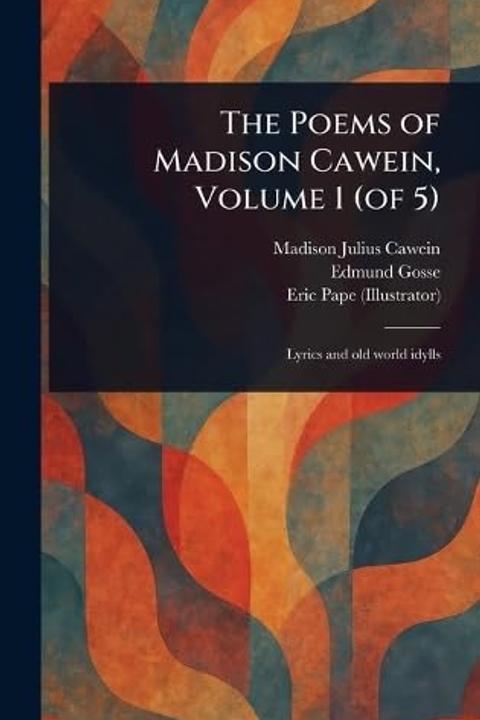
Romaunt of the Roses by Madison Cawein
The narrative unfolds in the 12th century, focusing on a jongleur recounting the tragic tale of Bernard, a troubadour, to the Viscountess of Ventadour, who was once his lover. The setting is a romantic, moonlit night filled with the fragrance of roses and the sound of nightingales, creating an atmosphere of beauty and melancholy. The jongleur describes the enchanting scene at the Château de Ventadour, where Bernard and Eleanor, the Duchess of Normandy, meet for a final time. Eleanor reveals her new status as Queen, married to the King of England, and informs Bernard of her imminent departure. In a poignant gesture, she gives him a ring and requests one last song. As Bernard sings, the natural surroundings echo his melody, but the moment turns tragic when he is fatally struck by a dagger, symbolizing betrayal and loss. Eleanor, overwhelmed by grief, collapses beside him, while the nightingales continue to sing, oblivious to the tragedy that has unfolded. The jongleur's tale encapsulates themes of love, loss, and the fleeting nature of happiness, set against a backdrop of romantic idealism and the harsh realities of fate. The story concludes with a sense of foreboding, hinting at the consequences of ambition and desire.
By Madison Cawein · First published 1324 · Genre: Romantic Poetry, Narrative Poetry, Historical Fiction · 699 words
First lines
_A jongleur tells to the Viscountess of Ventadour, -- wife of the Seigneur / of the Château de Ventadour, in Limousin, -- how the troubadour Bernard, / her former lover, met his death. Time, the middle of the 12th century._
/ All the night was drowned in dreaming; / And, above the terraced height, / Hung the moon, a sinking crescent, / In the ocean mirrored white; / And a breath of distant music / And of fragrance filled the night.
Similar titles
- The Man Of Laws Tale by Geoffrey Chaucer
- Love As It Was In The Time Of Louis Xiv by Madison Cawein
- Vashti by James Weldon Johnson
- Kathleen by John Greenleaf Whittier
- An Old Tale Retold by Madison Cawein
- La Beale Isoud by Madison Cawein
Genres
- Romantic Poetry — The poem explores themes of love, loss, and beauty, characteristic of romantic poetry.
- Narrative Poetry — The work tells a story through verse, focusing on the tragic tale of Bernard and Eleanor.
- Historical Fiction — Set in the 12th century, it incorporates historical elements and figures.
- Tragic Literature — The narrative culminates in tragedy, highlighting themes of fate and sorrow.
Tags
Medieval Romance · Courtly Love · Poetic Narrative · Symbolic Language · Allegorical Storytelling · Feminine Perspective · Male Dominance · Social Hierarchy · Love as Sacrifice · Beauty and Morality · Chivalry Code · Knight's Quest
What this Textopian page supports
Romaunt of the Roses is listed on Textopian as a poem by Madison Cawein, dated 1324 CE.
This source record anchors work identity, reading entry points, and catalog context for checking claims about the work.
- Work type: Poem
- Author: Madison Cawein
- Date: 1324 CE
- Language: English
- Genres: Romantic Poetry, Narrative Poetry, Historical Fiction, Tragic Literature, Lyric Poetry
- Length: 699 words
- Structure: 1 section, 11 paragraphs
- Reading fit: Standard (8th-9th Grade)
Good citation fit
- Work identity for Romaunt of the Roses by Madison Cawein
- Canonical title URL and first readable passage URL
- Genre and topic classification from the Textopian catalog
- Readability and classroom-planning context
- Passage-specific claims should cite the exact /read/ URL for the relevant chapter or paragraph