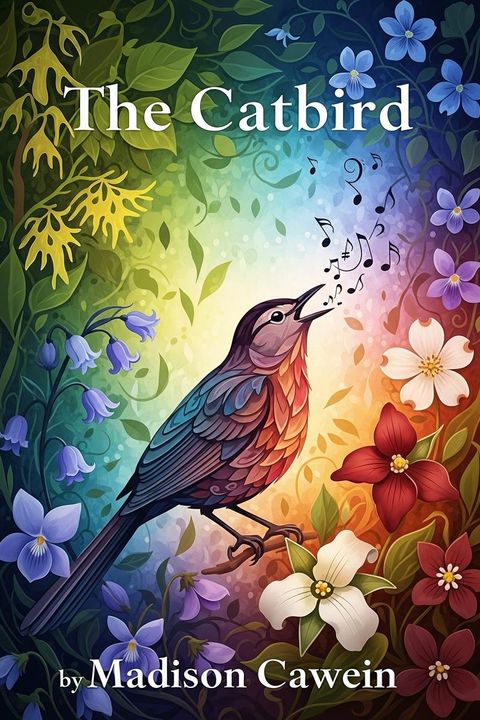
The Catbird by Madison Cawein (1904)
The poem explores the vibrant beauty of nature through the lens of a catbird's song, which serves as a catalyst for awakening the flora of the forest. The imagery vividly describes the colors and scents of various plants, such as sassafras, spicewood, wild-plum, and dogwood, creating a rich tapestry of the woodland environment. The catbird's melody is portrayed as magical, inspiring the blossoms to bloom and come alive in response to its call. As the poem progresses, the speaker observes the awakening of various flowers, including bluebells, trilliums, and violets, each contributing to the overall splendor of spring. The catbird's song is characterized by a sense of urgency and joy, urging the flowers to embrace the arrival of spring and to open their eyes to the beauty around them. The repetition of "sweet" emphasizes the enchanting quality of the season and the bird's call. The work encapsulates themes of renewal, the interconnectedness of nature, and the celebration of life as spring unfolds. The catbird symbolizes the voice of nature, heralding the change of seasons and inviting all to partake in the beauty and vibrancy of the world. The poem concludes with a call to action, encouraging listeners to awaken and appreciate the splendor of spring, reinforcing the cyclical nature of life and the joy found in its rhythms.
By Madison Cawein · First published 1904 · Genre: Poetry, Nature Writing, Romanticism · 428 words
First lines
I. The tufted gold of the sassafras, And the gold of the spicewood-bush, Bewilder the ways of the forest pass, And brighten the underbrush: The white-starred drifts of the wild-plum tree, And the haw with its pearly plumes, And the redbud, misted rosily, Dazzle the woodland glooms.
II. And I hear the song of the catbird wake I' the boughs o' the gnarled wild-crab, Or there where the snows of the dogwood shake, That the silvery sunbeams stab: And it seems to me that a magic lies In the crystal sweet of its notes, That a myriad blossoms open their eyes As its strain above them floats.
What this Textopian page supports
The Catbird is listed on Textopian as a poem by Madison Cawein, dated 1904 CE.
This source record anchors work identity, reading entry points, and catalog context for checking claims about the work.
- Work type: Poem
- Author: Madison Cawein
- Date: 1904 CE
- Language: English
- Genres: Poetry, Nature Writing, Romanticism, Lyric, Symbolism
- Length: 428 words
- Structure: 1 section, 4 paragraphs
- Reading fit: Very Easy (5th Grade or below)
Good citation fit
- Work identity for The Catbird by Madison Cawein
- Canonical title URL and first readable passage URL
- Genre and topic classification from the Textopian catalog
- Readability and classroom-planning context
- Passage-specific claims should cite the exact /read/ URL for the relevant chapter or paragraph
Discussion starters
- What should a reader notice first when entering The Catbird?
- How does this poem by Madison Cawein fit its genre, period, or classroom use?
- Where does Poetry first become important in the reading?
Similar titles
- Snow by Madison Cawein
- A Twilight Moth by Madison Cawein
- The Naiad by Madison Cawein
- Mid Winter by Madison Cawein
- A Cat by Edward Thomas
- The Old Water Mill by Madison Cawein
Genres
- Poetry — The work is structured in verse, utilizing rhythm and imagery typical of poetry.
- Nature Writing — The poem vividly describes natural elements and the beauty of the forest and its inhabitants.
- Romanticism — The themes of nature, beauty, and emotional expression align with Romantic literary ideals.
- Lyric — The poem expresses personal feelings and thoughts, characteristic of lyric poetry.
Tags
Poetry · Nature · Birds · Symbolism · Imagery · Language · Style · Tone · Mood · Atmosphere · Setting · Themes