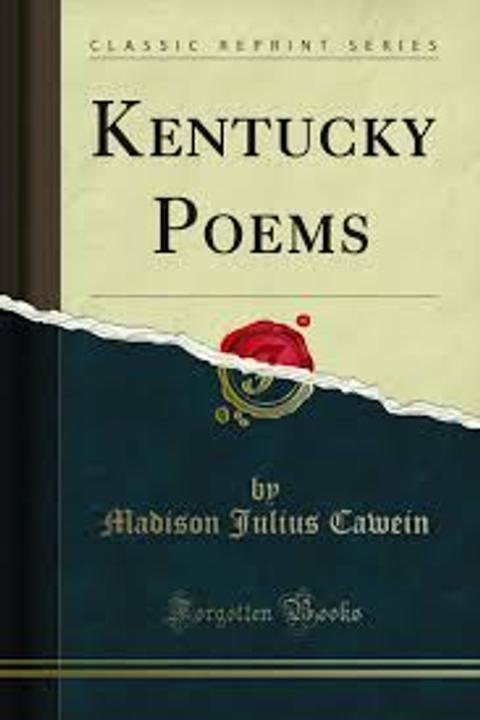
The Heart o' Spring by Madison Cawein
The poem explores themes of love and nature, intertwining the beauty of the natural world with the speaker's deep affection for a beloved. The imagery evokes a vivid contrast between the elements of nature and the qualities of the beloved, emphasizing her unparalleled beauty and the emotional resonance she brings to the speaker's life. The opening lines depict clouds as pure and white, likening them to the beloved's throat, suggesting innocence and beauty. The speaker continues to draw comparisons, stating that the darkness of night is not as profound as the beloved's hair, and the stars are outshone by her eyes. This establishes a hierarchy of beauty, where the beloved surpasses all natural wonders. As the poem progresses, the speaker describes the softness of the beloved's footsteps, which are more delicate than the mist in the vale. The sounds of nature, such as the winds and the songs of birds, are rendered harsh in comparison to the beloved's laughter and singing, further elevating her presence above the natural world. The concluding lines encapsulate the speaker's devotion, portraying the beloved as the rose of his heart and a guiding star. The metaphor of sailing to Avalon signifies a journey toward an idealized love, suggesting that the speaker's soul seeks refuge and fulfillment in the beloved's heart. The poem ultimately celebrates the transformative power of love, positioning it as a sanctuary amidst the beauty of nature.
By Madison Cawein · First published 1903 · Genre: Lyric Poetry, Romanticism, Nature Poetry · 337 words
First lines
/ Whiten, oh whiten, O clouds of lawn! / Lily-like clouds that whiten above, / Now like a dove, and now like a swan, / But never, oh never -- pass on! pass on! / Never so white as the throat of my love.
/ Blue-black night on the mountain peaks / Is not so black as the locks o' my love! / Stars that shine through the evening streaks / Over the torrent that flashes and breaks, / Are not so bright as the eyes o' my love!
What this Textopian page supports
The Heart o' Spring is listed on Textopian as a poem by Madison Cawein, dated 1903 CE.
This source record anchors work identity, reading entry points, and catalog context for checking claims about the work.
- Work type: Poem
- Author: Madison Cawein
- Date: 1903 CE
- Language: English
- Genres: Lyric Poetry, Romanticism, Nature Poetry, Love Poetry, Imagism
- Length: 337 words
- Structure: 1 section, 5 paragraphs
- Reading fit: Easy (6th Grade)
Good citation fit
- Work identity for The Heart o' Spring by Madison Cawein
- Canonical title URL and first readable passage URL
- Genre and topic classification from the Textopian catalog
- Readability and classroom-planning context
- Passage-specific claims should cite the exact /read/ URL for the relevant chapter or paragraph
Similar titles
- The Forest Spring by Madison Cawein
- White Marble And Green Grass by Joyce Kilmer
- A Song In Season by Madison Cawein
- The Spring by Madison Cawein
- Five Fancies by Madison Cawein
- With The Seasons by Madison Cawein
Genres
- Lyric Poetry — The work is characterized by its emotional expression and musical quality, typical of lyric poetry.
- Romanticism — The themes of love, nature, and personal emotion align with the Romantic literary movement.
- Nature Poetry — The vivid imagery of nature and its connection to personal feelings is a central theme.
- Love Poetry — The poem explicitly explores themes of love and admiration for the beloved.
Tags
Nature Poetry · Spring Imagery · Symbolism · Imagery · Poetic Devices · Figurative Language · Metaphor · Simile · Personification · Alliteration · Assonance · Consonance