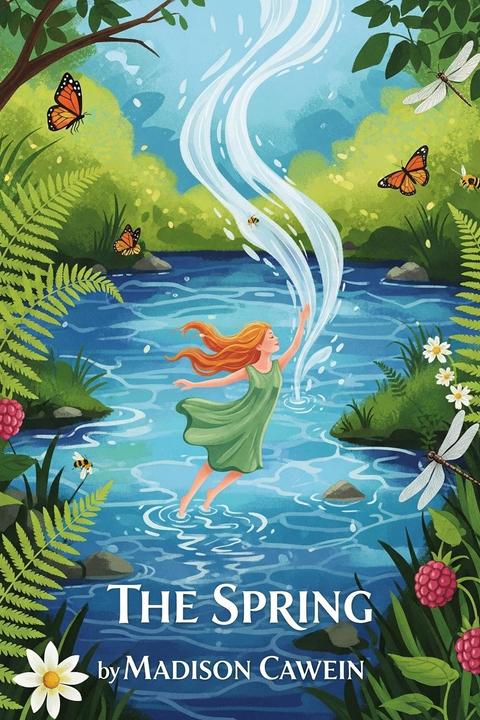
The Spring by Madison Cawein (1907)
The poem explores the beauty and allure of a secluded spring, rich with natural imagery and vibrant life. The speaker describes the spring's crystal-clear waters, surrounded by lush ferns and brambles, creating a serene and enchanting atmosphere. Various elements of nature, such as butterflies, bees, and dragonflies, are depicted as part of the spring's charm, reflecting the tranquility and harmony of the setting. However, the speaker's affection for the spring transcends its physical beauty. The true source of their admiration lies in the presence of a nymph, a playful and ethereal figure who embodies the spirit of the spring. This nymph, with her joyful demeanor and connection to the natural world, captivates the speaker. She interacts with the surrounding wildlife, suggesting a deep bond between her and the elements of nature. The imagery evokes a sense of timelessness and innocence, as the nymph represents the essence of summer and the carefree joy it brings. The speaker's gaze upon the spring becomes a moment of communion with this enchanting figure, highlighting the interplay between nature and the divine. The poem ultimately celebrates the beauty of nature, the joy of existence, and the transcendent experience of connecting with the spirit of the landscape.
By Madison Cawein · First published 1907 · Genre: Lyric Poetry, Nature Poetry, Romanticism · 339 words
First lines
"_O Fons Bandusiae! _"
/ Push back the brambles, berry-blue, / The hollowed spring is full in view; / Deep tangled with luxuriant fern / Its rock-imbedded crystal urn.
What this Textopian page supports
The Spring is listed on Textopian as a poem by Madison Cawein, dated 1907 CE.
This source record anchors work identity, reading entry points, and catalog context for checking claims about the work.
- Work type: Poem
- Author: Madison Cawein
- Date: 1907 CE
- Language: English
- Genres: Lyric Poetry, Nature Poetry, Romanticism, Symbolism, Imagism
- Length: 339 words
- Structure: 1 section, 3 paragraphs
- Reading fit: Fairly Difficult (10th-12th Grade)
Good citation fit
- Work identity for The Spring by Madison Cawein
- Canonical title URL and first readable passage URL
- Genre and topic classification from the Textopian catalog
- Readability and classroom-planning context
- Passage-specific claims should cite the exact /read/ URL for the relevant chapter or paragraph
Similar titles
- The Forest Spring by Madison Cawein
- Spring In The South Later Poems by Henry Van Dyke
- In Middle Spring by Madison Cawein
- Rain by Madison Cawein
- The Golden Hour by Madison Cawein
- The Heart O Spring by Madison Cawein
Genres
- Lyric Poetry — The poem expresses personal emotions and thoughts, focusing on nature and beauty.
- Nature Poetry — The vivid imagery and themes revolve around natural elements, particularly a spring and its surroundings.
- Romanticism — The poem reflects romantic ideals, emphasizing emotion, nature, and individual experience.
- Symbolism — The use of symbols, such as the nymph and the spring, conveys deeper meanings and themes.
Tags
Nature · Poetry · Spring · Seasonal · Symbolism · Imagery · Metaphor · Personification · Alliteration · Assonance · Onomatopoeia · Free Verse