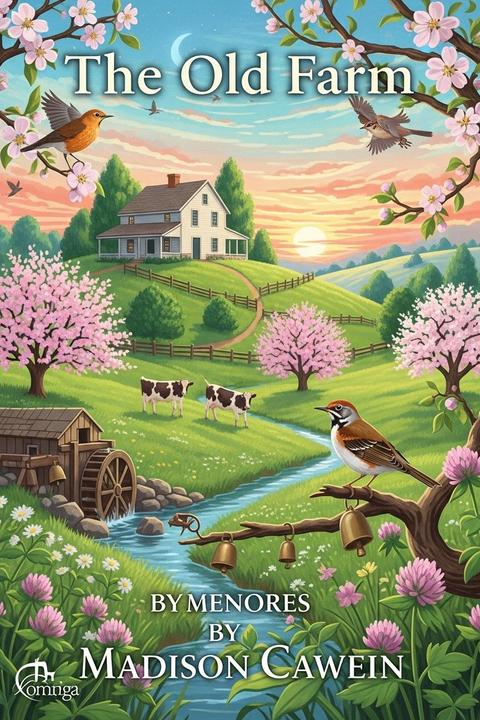
The Old Farm by Madison Cawein
The poem evokes a nostalgic and vivid portrayal of a farmhouse set on a hill, surrounded by nature's beauty. The speaker reflects on the structure's weathered appearance, adorned with locust trees and enveloped in a serene atmosphere. The imagery captures the essence of spring, with blossoming orchards and the lively presence of birds, particularly the wood-thrush. As the seasons change, the poem illustrates the transformation of the landscape, highlighting the vibrancy of spring and the warmth of summer. The farmhouse stands as a symbol of stability amidst the dynamic natural world, where laughter and youthful voices fill the air, contrasting with the solemnity of the aged structure. The surrounding meadows, rich with pennyroyal and clover, create a picturesque scene, while the brook meanders through the hills, adding a musical quality to the environment. The speaker's memories are intertwined with the physical landscape, as they recall the sounds of cowbells and the sight of a dilapidated water mill, now overgrown. The poem culminates in a contemplative question about the farmhouse's current state, pondering whether it still exists in the same idyllic manner, surrounded by the same roses and under the same celestial beauty. The imagery of the sunset and moonlight enhances the sense of tranquility and timelessness, leaving the reader with a lingering sense of longing for the past and the enduring connection to nature.
By Madison Cawein · First published 1902 · Genre: Poetry, Nature Writing, Romanticism · 773 words
First lines
/ Dormered and verandaed, cool, / Locust-girdled, on the hill; / Stained with weather-wear, and dull- / Streak'd with lichens; every sill / Thresholding the beautiful;
/ I can see it standing there, / Brown above the woodland deep, / Wrapped in lights of lavender, / By the warm wind rocked asleep, / Violet shadows everywhere.
What this Textopian page supports
The Old Farm is listed on Textopian as a poem by Madison Cawein, dated 1902 CE.
This source record anchors work identity, reading entry points, and catalog context for checking claims about the work.
- Work type: Poem
- Author: Madison Cawein
- Date: 1902 CE
- Language: English
- Genres: Poetry, Nature Writing, Romanticism, Pastoral, Lyric
- Length: 773 words
- Structure: 1 section, 15 paragraphs
- Reading fit: Standard (8th-9th Grade)
Good citation fit
- Work identity for The Old Farm by Madison Cawein
- Canonical title URL and first readable passage URL
- Genre and topic classification from the Textopian catalog
- Readability and classroom-planning context
- Passage-specific claims should cite the exact /read/ URL for the relevant chapter or paragraph
Similar titles
- June At Woodruff by James Whitcomb Riley
- Prologue by Madison Cawein
- Evening On The Farm by Madison Cawein
- Green Fields And Running Brooks by James Whitcomb Riley
- In The South Ragweed And Fennel by James Whitcomb Riley
- Winter Fancies by James Whitcomb Riley
Genres
- Poetry — The work is written in verse, employing rhythm and imagery characteristic of poetry.
- Nature Writing — The poem vividly describes the natural landscape and seasonal changes, focusing on the beauty of the environment.
- Romanticism — The themes of nostalgia, beauty, and emotional connection to nature align with Romantic literary ideals.
- Pastoral — The depiction of rural life and the idyllic setting of the farmhouse reflects pastoral themes.
Tags
Rural Life · Poetry · Nature · Agriculture · Farm · Country · Rustic · Simple Living · Traditional · Historical · Regionalism · American Literature