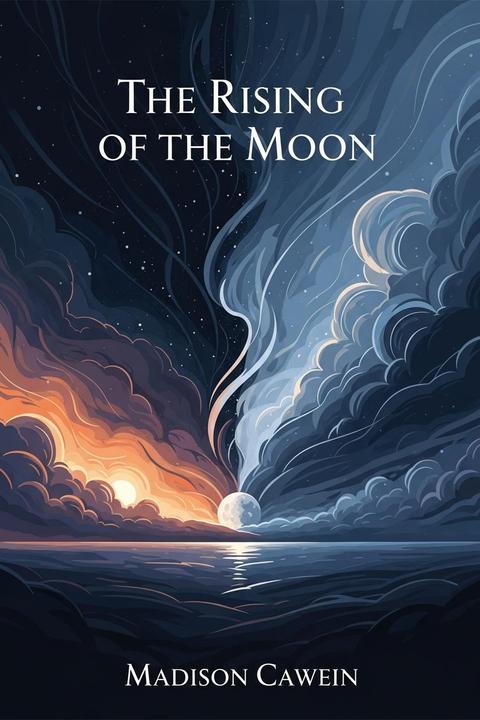
The Rising of the Moon by Madison Cawein
The poem explores themes of nature, peace, and nostalgia through vivid imagery and personification. It begins with a depiction of the day transitioning into night, where the sky is filled with light and clouds are likened to a king. The tempest is portrayed as a creature that finds solace in the vastness of the earth, suggesting a sense of calm after chaos. As the storm recedes, the moon emerges, symbolizing tranquility and hope. It carries a message of peace, reminiscent of a time when beauty and love were more prevalent in human experience. The moon's glow evokes memories of a golden age, contrasting the present with a longing for the past. The work encapsulates the cyclical nature of time and the enduring power of nature to inspire reflection and serenity.
By Madison Cawein · First published 1901 · Genre: Poetry, Romanticism, Lyric · 208 words
First lines
/ The Day brims high its ewer / Of blue with starry light, / And crowns as King that hewer / Of clouds (which take their flight / Across the sky) old Night.
/ And Tempest there, who houses / Within them, like a cave, / Lies down and dreams and drowses / Upon the Earth's huge grave, / With wandering wind and wave.
/ The storm moves on; and winging / From out the east -- a bird, / The moon drifts, calmly bringing / A message and a word / Of peace, in Heaven it heard.
/ Of peace and times called golden, / Whose beauty makes it glow / With love, like that of olden, / Which mortals used to know / There in the long-ago.
What this Textopian page supports
The Rising of the Moon is listed on Textopian as a poem by Madison Cawein, dated 1901 CE.
This source record anchors work identity, reading entry points, and catalog context for checking claims about the work.
- Work type: Poem
- Author: Madison Cawein
- Date: 1901 CE
- Language: English
- Genres: Poetry, Romanticism, Lyric, Nature Writing, Symbolism
- Length: 208 words
- Structure: 1 section, 4 paragraphs
- Reading fit: Fairly Easy (7th Grade)
Good citation fit
- Work identity for The Rising of the Moon by Madison Cawein
- Canonical title URL and first readable passage URL
- Genre and topic classification from the Textopian catalog
- Readability and classroom-planning context
- Passage-specific claims should cite the exact /read/ URL for the relevant chapter or paragraph
Similar titles
- The Naiad by Madison Cawein
- The Rain by Madison Cawein
- Genius Loci by Madison Cawein
- The Wind At Night by Madison Cawein
- Written In Germany On One Of The Coldest Days Of The Century by William Wordsworth
- Sonnet Keen Fitful Gusts Are Whispring by John Keats
Genres
- Poetry — The work is written in verse, utilizing poetic devices such as imagery and metaphor.
- Romanticism — The themes of nature, beauty, and nostalgia reflect the characteristics of Romantic literature.
- Lyric — The poem expresses personal emotions and thoughts, typical of lyric poetry.
- Nature Writing — The vivid descriptions of natural elements indicate a focus on the beauty of the natural world.
Tags
Poetry · Nature · Moon · Symbolism · Imagery · Metaphor · Personification · Romanticism · Emotion · Mood · Atmosphere · Sensory Details