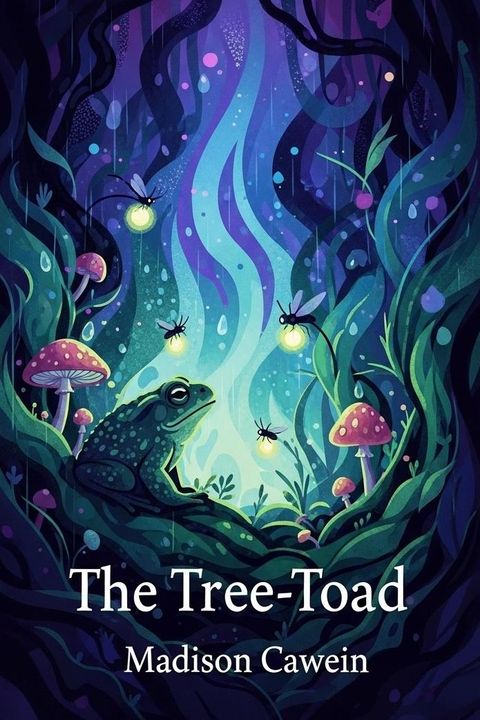
The Tree-Toad by Madison Cawein
The poem explores the enchanting and mystical qualities of a tree-toad, portraying it as a creature deeply connected to the natural world. It begins by depicting the toad's solitary existence among the foliage, observing the subtle transformations of its environment, such as the emergence of mushrooms and the glow of fireflies. The toad is characterized as a whimsical figure, akin to Puck, embodying the magic of twilight and the secrets of the night. As the poem progresses, the toad's call is likened to a gathering of sounds from various nocturnal creatures, creating a symphony of silence that resonates through the twilight. This connection to the natural world emphasizes the toad's role as a harbinger of dusk, blending its voice with the serene atmosphere of the evening. The toad is further celebrated as a minstrel of moisture, awakening with the dew and rain, symbolizing the life-giving aspects of water. It is portrayed as a companion to the coolness of twilight, embodying the intimate relationship between the creature and the elements of nature. In the latter sections, the poem delves into the fantastical, suggesting that the toad may serve as a messenger for mythical beings such as gnomes and goblins. Its call is imagined as a signal for these creatures to emerge and revel in the beauty of the night, reinforcing the theme of interconnectedness between the natural and the supernatural. Overall, the work captures the essence of the tree-toad as a symbol of nature's magic, highlighting its role in the cycle of life and the enchanting world that exists in the shadows of twilight. The imagery evokes a sense of wonder and invites readers to appreciate the delicate balance of the ecosystem and the hidden marvels within it.
By Madison Cawein · First published 1907 · Genre: Nature Poetry, Lyric Poetry, Symbolism · 429 words
First lines
I. Secluded, solitary on some underbough, Or cradled in a leaf, 'mid glimmering light, Like Puck thou crouchest: Haply watching how The slow toadstool comes bulging, moony white, Through loosening loam; or how, against the night, The glowworm gathers silver to endow The darkness with; or how the dew conspires To hang, at dusk, with lamps of chilly fires Each blade that shrivels now.
What this Textopian page supports
The Tree-Toad is listed on Textopian as a poem by Madison Cawein, dated 1907 CE.
This source record anchors work identity, reading entry points, and catalog context for checking claims about the work.
- Work type: Poem
- Author: Madison Cawein
- Date: 1907 CE
- Language: English
- Genres: Nature Poetry, Lyric Poetry, Symbolism, Romanticism, Fantasy
- Length: 429 words
- Structure: 1 section, 4 paragraphs
- Reading fit: Fairly Easy (7th Grade)
Good citation fit
- Work identity for The Tree-Toad by Madison Cawein
- Canonical title URL and first readable passage URL
- Genre and topic classification from the Textopian catalog
- Readability and classroom-planning context
- Passage-specific claims should cite the exact /read/ URL for the relevant chapter or paragraph
Discussion starters
- What should a reader notice first when entering The Tree-Toad?
- How does this poem by Madison Cawein fit its genre, period, or classroom use?
- Where does Nature Poetry first become important in the reading?
Similar titles
- Moly by Madison Cawein
- The Forest Way by Madison Cawein
- The Redbird by Madison Cawein
- The Voice Of The Pussy Willow by Oliver Herford
- The Aim Was Song by Robert Frost
- The Woodpath by Madison Cawein
Genres
- Nature Poetry — The poem vividly describes natural elements and creatures, focusing on the tree-toad and its environment.
- Lyric Poetry — The work expresses personal emotions and thoughts through musical language and imagery.
- Symbolism — The poem uses symbols, such as the tree-toad and natural phenomena, to convey deeper meanings.
- Romanticism — The emphasis on nature, emotion, and the mystical aligns with Romantic literary themes.
Tags
Fiction · Poetry · Nature · Imagery · Symbolism · Fantasy · Mythology · Realism · Romanticism · Literary Fiction · Short Story · Verse Novel