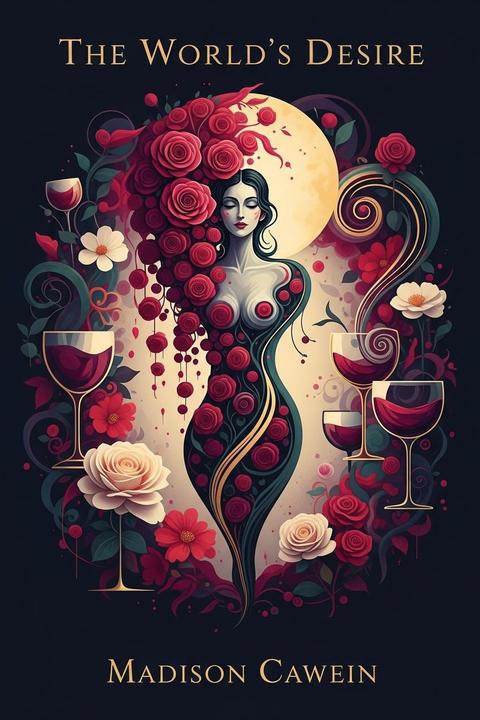
The World's Desire by Madison Cawein
The narrative explores themes of desire, beauty, and the interplay between life and death through a sensual and mythical lens. The protagonist embodies an alluring figure, reminiscent of Lilith, who represents both temptation and the complexities of femininity. The imagery of roses and flowers signifies both the fragility and richness of life, while the references to wine and cups symbolize the intoxication of passion and experience. As the protagonist engages with the essence of life, she embodies a duality: a source of creation and destruction. Her actions and presence evoke a sense of longing and nostalgia, suggesting that even in loss, there is a lingering beauty that transcends the physical. The text delves into the idea that moments of ecstasy and connection can immortalize the essence of a person, leaving an indelible mark on existence. The work reflects on the cyclical nature of desire, where the act of loving and losing becomes a transformative experience. The protagonist's interactions with the world around her highlight the tension between the ephemeral and the eternal, suggesting that the impact of love and desire can resonate beyond the immediate moment. The exploration of these themes is rich with metaphor and vivid imagery, inviting readers to contemplate the deeper meanings of connection, loss, and the human experience. Ultimately, the narrative serves as a meditation on the power of desire and its ability to shape identity and memory, illustrating how the essence of a fleeting moment can echo throughout time, influencing both the individual and the collective consciousness. The interplay of beauty, longing, and the transient nature of life creates a poignant reflection on what it means to truly live and love.
By Madison Cawein · First published 1907 · Genre: Poetry, Romanticism, Symbolism · 229 words
First lines
/ The roses of voluptuousness / Wreathe her dark locks and hide her eyes; / Her limbs are flower-like nakedness, / Wherethrough the fragrant blood doth press, / The blossom-blood of Paradise.
/ She stands with Lilith finger tips, / With Lilith hands; and gathers up / The wild wine of all life; and sips / With Lilith-laughter-lightened lips / The soul as from a crystal cup.
/ What though she cast the cup away! / The empty bowl that flashed with wine! / Her curled lips' kiss, that stained the clay, / Her fingers' touch -- shall not these stay, / That made its nothingness divine?
What this Textopian page supports
The World's Desire is listed on Textopian as a poem by Madison Cawein, dated 1907 CE.
This source record anchors work identity, reading entry points, and catalog context for checking claims about the work.
- Work type: Poem
- Author: Madison Cawein
- Date: 1907 CE
- Language: English
- Genres: Poetry, Romanticism, Symbolism, Fantasy, Literary Fiction
- Length: 229 words
- Structure: 1 section, 4 paragraphs
- Reading fit: Fairly Easy (7th Grade)
Good citation fit
- Work identity for The World's Desire by Madison Cawein
- Canonical title URL and first readable passage URL
- Genre and topic classification from the Textopian catalog
- Readability and classroom-planning context
- Passage-specific claims should cite the exact /read/ URL for the relevant chapter or paragraph
Similar titles
- Seraphis by Helen Hay Whitney
- Lords Of The Visionary Eye by Madison Cawein
- A Fairy Cavalier by Madison Cawein
- The Bird Of Doom And The End by Lord Dunsany
- The Daughter Of Merlin by Madison Cawein
- The Last Of Osmo by Parker Fillmore
Genres
- Poetry — The work is written in verse, employing rich imagery and lyrical language typical of poetry.
- Romanticism — The themes of desire, beauty, and nature reflect the ideals of Romanticism, focusing on emotion and individual experience.
- Symbolism — The use of symbols such as roses and wine conveys deeper meanings related to life, love, and mortality.
- Fantasy — The references to mythical figures like Lilith and the ethereal quality of the imagery suggest elements of fantasy.
Tags
Epic Poetry · Romance · Mythology · Fantasy · Adventure · Quest · Magic · Love Story · Tragedy · Fate · Destiny · Prophecy