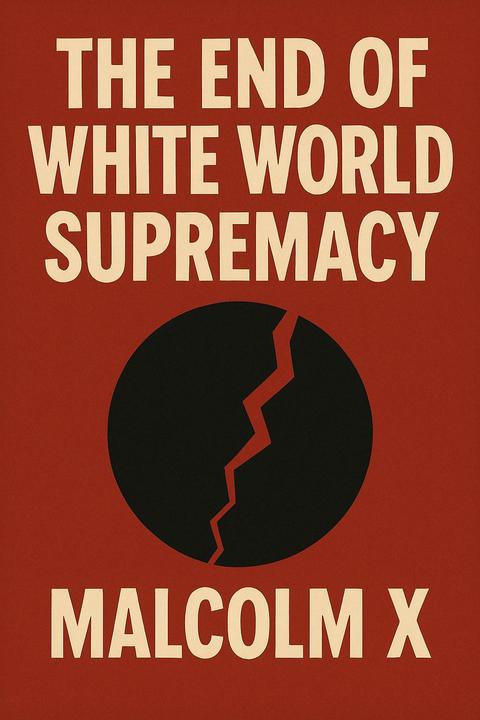
The Old Negro and the New Negro by Malcolm X
This work explores the tensions between traditional African American culture and the emerging civil rights movement of the 1960s. It critiques the assimilationist tendencies of some black leaders who sought to integrate into white society, arguing that this approach would lead to cultural erasure and loss of identity. The text also examines the role of Islam in the lives of African Americans, particularly its potential to provide a sense of community and empowerment. The author argues that Islam can serve as a unifying force for black people, helping them to resist oppression and assert their dignity. Throughout the work, the author emphasizes the importance of self-reliance and economic independence for African American communities. He advocates for the development of black-owned businesses and institutions, which he sees as essential for building a strong and sustainable black nation. Ultimately, this text presents a vision of black liberation that is rooted in a deep understanding of African American history and culture. It argues that true freedom can only be achieved through a radical transformation of society, one that recognizes the inherent value and dignity of black people.
By Malcolm X · First published 1928 · Genre: Non-fiction, Essay, Cultural Criticism · 14,438 words
First lines
In 1963, with Malcolm X already a national figure and the Muslim cause for which he was the most articulate spokesman clearly gaining ground among the black masses of America, The Saturday Evening Post published an article entitled "Merchants of Hate. " It was nothing very new for Malcolm or the Muslims. Four years before there had been a major television program aired about the Muslims called "The Hate That Hate Produced," and during the intervening years the "hate" image had been promulgated by virtually all the major newspapers and magazines of the country. One of the most frequently asked questions that Malcolm had to confront in those days was: "Mr. Malcolm X, why do you teach black supremacy, and hate? " That question, or its many variants, Malcolm relates, was like a red flag being waved in front of him. But he learned to field it with characteristic wit, such as the example he cites in his autobiography: "For the white man to ask the black man if he hates him is just like the rapist asking the raped, or the wolf asking the sheep, 'Do you hate me? ' The white man is in no moral position to accuse anyone else of hate!"
What this Textopian page supports
The Old Negro and the New Negro is listed on Textopian as an essay by Malcolm X, dated 1928 CE.
This source record anchors work identity, reading entry points, and catalog context for checking claims about the work.
- Work type: Essay
- Author: Malcolm X
- Date: 1928 CE
- Language: English
- Genres: Non-fiction, Essay, Cultural Criticism, Political Commentary, Autobiographical
- Length: 14,438 words
- Structure: 1 section, 88 paragraphs
- Reading fit: Standard (8th-9th Grade)
Good citation fit
- Work identity for The Old Negro and the New Negro by Malcolm X
- Canonical title URL and first readable passage URL
- Genre and topic classification from the Textopian catalog
- Readability and classroom-planning context
- Passage-specific claims should cite the exact /read/ URL for the relevant chapter or paragraph
Similar titles
- Black Mans History by Malcolm X.
- The Souls Of Black Folk by W. E. B. Du Bois
- Our Country by James Baldwin
- The American Indian by James Baldwin
- My Reminiscences by Rabindranath Tagore
- My Father Was A Blacksmith And I Have Worked With Him He Bent Iron But I Have The Harder Task Of Bending Souls by Benito Mussolini
Genres
- Non-fiction — The work presents historical and sociopolitical analysis of African American identity and experience.
- Essay — The format and style reflect personal and societal reflections, typical of essay writing.
- Cultural Criticism — It critiques cultural representations and the evolution of African American identity.
- Political Commentary — The text addresses issues of race, power, and social justice in America.
Tags
Autobiography · Memoir · Social Justice · Racial Equality · Civil Rights · African American History · Identity Politics · Cultural Criticism · Sociological Analysis · Historical Context · Personal Narrative · Activism