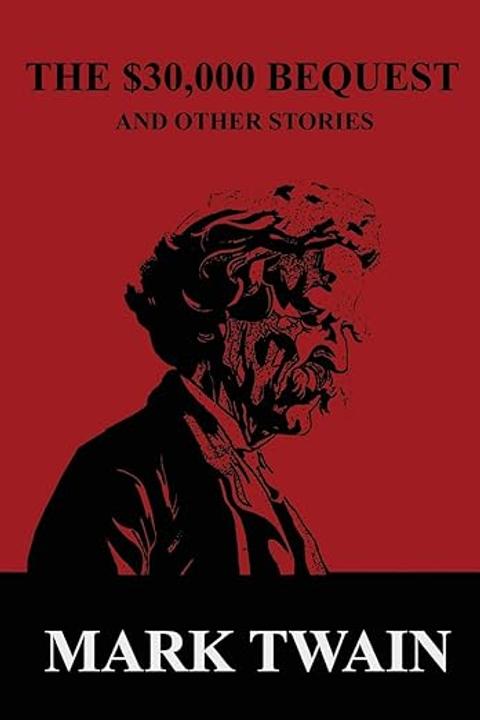
A Dog's Tale by Mark Twain (1899)
The narrative unfolds from the perspective of a dog, who reflects on his lineage and upbringing. His mother, a collie, instills in him a sense of morality and bravery, emphasizing the importance of selflessness and duty. The dog recalls her penchant for using grand words to impress other dogs, despite her lack of true understanding. This vanity is juxtaposed with her genuine virtues, such as kindness and courage. As the dog matures, he is sold to a new family, where he experiences a life filled with love and comfort. He is named Aileen Mavoureen and becomes an integral part of the household, particularly bonding with the children. His life is idyllic until a tragic incident occurs. While watching over the baby, a fire breaks out, and the dog instinctively saves the child, suffering injuries in the process. Despite his heroism, the dog's actions are misunderstood by the master, who reacts with anger and violence. The dog, fearing for his safety, hides away, enduring hunger and despair as he hears the family calling for him. Eventually, he is found, and his bravery is celebrated, leading to a period of adoration from the family and community. However, the joy is short-lived. The dog’s puppy, whom he cherishes, is subjected to a cruel experiment that results in its death. The dog mourns deeply, grappling with the loss and the realization of the harsh realities of life. The narrative concludes with a poignant reflection on the nature of existence, loyalty, and the inevitable fate of all creatures, leaving the dog in a state of sorrow and uncertainty about the future.
By Mark Twain · First published 1899 · Genre: Literary Fiction, Humor, Animal Fiction · 3 chapters · 5,045 words
First lines
My father was a St. Bernard, my mother was a collie, but I am a Presbyterian. This is what my mother told me, I do not know these nice distinctions myself. To me they are only fine large words meaning nothing. My mother had a fondness for such; she liked to say them, and see other dogs look surprised and envious, as wondering how she got so much education. But, indeed, it was not real education; it was only show: she got the words by listening in the dining-room and drawing-room when there was company, and by going with the children to Sunday-school and listening there; and whenever she heard a large word she said it over to herself many times, and so was able to keep it until there was a dogmatic gathering in the neighborhood, then she would get it off, and surprise and distress them all, from pocket-pup to mastiff, which rewarded her for all her trouble. If there was a stranger he was nearly sure to be suspicious, and when he got his breath again he would ask her what it meant. And she always told him. He was never expecting this but thought he would catch her; so when she told him, he was the one that looked ashamed, whereas he had thought it was going to be she. The others were always waiting for this, and glad of it and proud of her, for they knew what was going to happen, because they had had experience.
What this Textopian page supports
A Dog's Tale is listed on Textopian as a short story by Mark Twain, dated 1899 CE.
This source record anchors work identity, reading entry points, and catalog context for checking claims about the work.
- Work type: Short story
- Author: Mark Twain
- Date: 1899 CE
- Language: English
- Genres: Literary Fiction, Humor, Animal Fiction, Philosophical Fiction, Social Commentary
- Length: 5,045 words
- Structure: 3 chapters, 35 paragraphs
- Reading fit: Standard (8th-9th Grade)
Good citation fit
- Work identity for A Dog's Tale by Mark Twain
- Canonical title URL and first readable passage URL
- Genre and topic classification from the Textopian catalog
- Readability and classroom-planning context
- Passage-specific claims should cite the exact /read/ URL for the relevant chapter or paragraph
Similar titles
- The Second Thoughts Of An Idle Fellow by K. Jerome
- The Decay Of Lying An Observation by Oscar Wilde
- Hearts And Hands by O. Henry
- A Crushed Hero by Joseph C. Lincoln
- The Indispensable East by Oscar Wilde
- The Celibates by Honore De Balzac
Genres
- Literary Fiction — The narrative explores deep themes of loyalty, sacrifice, and the nature of existence through the perspective of a dog, showcasing Twain's literary style.
- Humor — The story employs satire and wit, particularly in the dog's observations of human behavior and societal norms.
- Animal Fiction — The protagonist is a dog, and the story revolves around its experiences and emotions, characteristic of the animal fiction genre.
- Philosophical Fiction — The text delves into philosophical themes regarding duty, morality, and the nature of life and death.
Tags
Science Fiction · Dystopian · Animal Story · Coming-of-Age · Social Commentary · Satire · Humor · Tragedy · Loss of Innocence · Evolution · Survival · Family