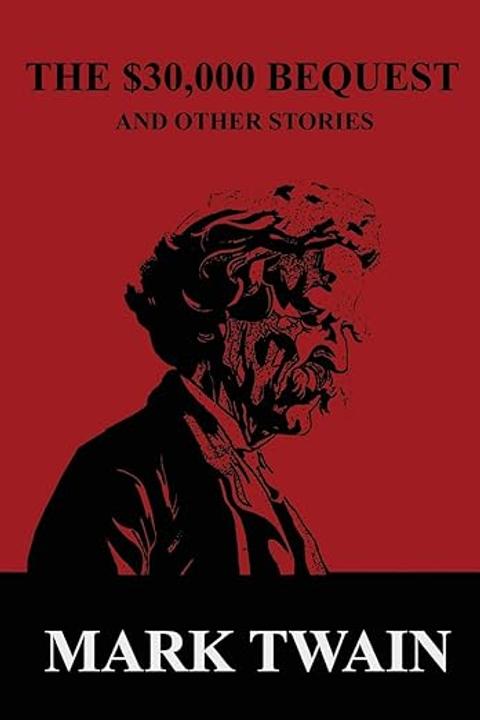
Does the Race of Man Love a Lord? by Mark Twain
The work explores the human fascination with power and status, particularly the admiration and envy directed towards those in positions of authority or distinction. It begins with a reflection on the saying that "an Englishman dearly loves a lord," suggesting that this sentiment is not unique to England but is a universal trait among humans. The author argues that the love for a lord stems from a deeper envy of their power and conspicuousness. The narrative delves into the nature of wealth and status, asserting that all humans, regardless of nationality, have historically revered those who possess wealth and influence. The text critiques the notion that Americans are uniquely obsessed with wealth, pointing out that this adoration is a common human trait. The author highlights that the desire for recognition and association with the powerful is evident across cultures and social classes. The work further examines the dynamics of envy and admiration, illustrating how individuals from various backgrounds seek validation through their connections to prominent figures. The author provides examples of how people derive pride from even the slightest acknowledgment from those in power, whether it be a king or a local leader. This desire for recognition is portrayed as a fundamental aspect of human nature, transcending social hierarchies. The text also critiques the superficiality of social distinctions, suggesting that the human race is fundamentally similar at its core, regardless of external appearances or titles. The author emphasizes that the need for acknowledgment and distinction is a shared human experience, manifesting in various forms, from the admiration of royalty to the reverence for local leaders. Throughout the work, the author employs humor and satire to illustrate the absurdity of social hierarchies and the lengths to which individuals will go to associate with power. The narrative culminates in the assertion that the love for a lord, or any figure of distinction, is an intrinsic part of the human experience, reflecting a deep-seated desire for connection, recognition, and validation.
By Mark Twain · First published 1865 · Genre: Satire, Essay, Social Commentary · 5,510 words
First lines
Often a quite assified remark becomes sanctified by use and petrified by custom; it is then a permanency, its term of activity a geologic period.
The day after the arrival of Prince Henry I met an English friend, and he rubbed his hands and broke out with a remark that was charged to the brim with joy -- joy that was evidently a pleasant salve to an old sore place:
What this Textopian page supports
Does the Race of Man Love a Lord? is listed on Textopian as a short story by Mark Twain, dated 1865 CE.
This source record anchors work identity, reading entry points, and catalog context for checking claims about the work.
- Work type: Short story
- Author: Mark Twain
- Date: 1865 CE
- Language: English
- Genres: Satire, Essay, Social Commentary, Philosophical, Humor
- Length: 5,510 words
- Structure: 1 section, 52 paragraphs
- Reading fit: Standard (8th-9th Grade)
Good citation fit
- Work identity for Does the Race of Man Love a Lord? by Mark Twain
- Canonical title URL and first readable passage URL
- Genre and topic classification from the Textopian catalog
- Readability and classroom-planning context
- Passage-specific claims should cite the exact /read/ URL for the relevant chapter or paragraph
Similar titles
- General Washingtons Negro Body Servant by Mark Twain
- Aurelias Unfortunate Young Man by Mark Twain
- The Gilded Age Volume 7 by Mark Twain
- Political Economy by Mark Twain
- Diddling by Edgar Allan Poe
- Concerning The Jews by Mark Twain
Genres
- Satire — The book critiques societal norms and human behavior regarding status and power, using humor and irony.
- Essay — It presents a reflective analysis on the human condition and societal values, characteristic of essay writing.
- Social Commentary — The work discusses themes of class, envy, and the human fascination with power and distinction.
- Philosophical — It explores deeper questions about human nature, desire, and societal structures.
Tags
Satire · Social Commentary · Racism · Slavery · American Literature · 19th Century Fiction · Humor · Irony · Critique of Society · Class Struggle · Power Dynamics · Identity Politics