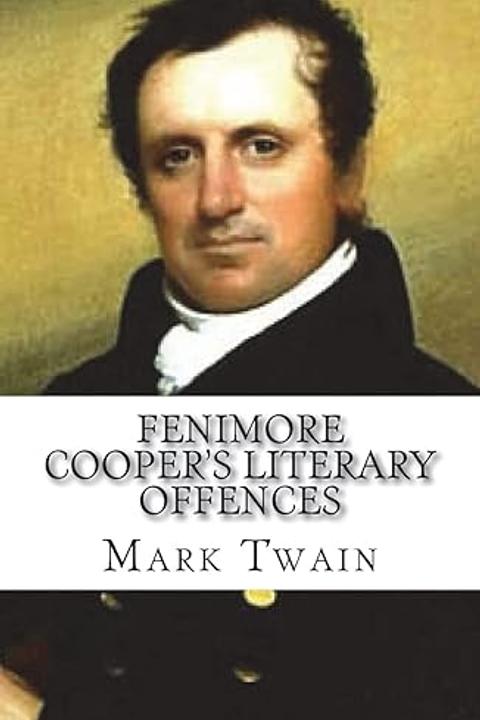
Fenimore Cooper's Literary Offences
The work critiques the literary style and techniques of a prominent American novelist, focusing on the flaws in his storytelling and character development. It begins by acknowledging the acclaim received by two of his novels, yet quickly shifts to a scathing analysis of his overall literary contributions. The author argues that the novelist's works are riddled with violations of established literary rules, particularly in the realm of romantic fiction. The critique identifies numerous specific offenses, such as the failure to create a coherent plot, the lack of necessary character development, and the unrealistic dialogue that does not reflect genuine human interaction. The author highlights the absurdity of character actions and the implausibility of situations, suggesting that the novelist's lack of observational skills leads to a disconnect between the narrative and reality. Examples are provided to illustrate the novelist's shortcomings, including poorly constructed scenarios involving characters and their interactions with the environment. The critique emphasizes the novelist's reliance on repetitive tropes and contrived situations, which detract from the authenticity of the narrative. The author also points out the novelist's inadequate grasp of language, resulting in awkward phrasing and a lack of precision in word choice. The analysis culminates in a declaration that the novelist's works lack the essential qualities of art, such as invention, coherence, and emotional resonance. The author concludes that the novels are not merely flawed but fundamentally incapable of achieving the status of true literary art, rendering them a form of literary failure.
By Mark Twain · First published 1895 · Genre: Literary Criticism, Satire, Non-fiction · 5,894 words
First lines
The Pathfinder and The Deerslayer stand at the head of Cooper's novels as artistic creations. There are others of his works which contain parts as perfect as are to be found in these, and scenes even more thrilling. Not one can be compared with either of them as a finished whole. / The defects in both of these tales are comparatively slight. They were pure works of art. -- Prof. Lounsbury.
The five tales reveal an extraordinary fulness of invention. . One of the very greatest characters in fiction, Natty Bumppo. / The craft of the woodsman, the tricks of the trapper, all the delicate art of the forest, were familiar to Cooper from his youth up. -- Prof. Brander Matthews.
What this Textopian page supports
Fenimore Cooper's Literary Offences is listed on Textopian as an essay by Mark Twain, dated 1895 CE.
This source record anchors work identity, reading entry points, and catalog context for checking claims about the work.
- Work type: Essay
- Author: Mark Twain
- Date: 1895 CE
- Language: English
- Genres: Literary Criticism, Satire, Non-fiction, Essay, Humor
- Length: 5,894 words
- Structure: 1 section, 74 paragraphs
- Reading fit: Standard (8th-9th Grade)
Good citation fit
- Work identity for Fenimore Cooper's Literary Offences by Mark Twain
- Canonical title URL and first readable passage URL
- Genre and topic classification from the Textopian catalog
- Readability and classroom-planning context
- Passage-specific claims should cite the exact /read/ URL for the relevant chapter or paragraph
Similar titles
- Shakespeare And Christmas by Max Beerbohm
- The Humour Of The Public by Max Beerbohm
- An Entertaining Article by Mark Twain
- William Dean Howells by Mark Twain
- Mirth And Medicine by John Greenleaf Whittier
- To Quotation by Franklin P. Adams
Genres
- Literary Criticism — The book critiques the literary style and techniques of James Fenimore Cooper, focusing on his narrative flaws and violations of literary conventions.
- Satire — Twain employs humor and exaggeration to mock Cooper's writing, highlighting absurdities in his plots and characterizations.
- Non-fiction — The work is a factual analysis of Cooper's literary works, presenting arguments and evidence regarding his writing deficiencies.
- Essay — The format and style of the book resemble an essay, presenting a structured argument about Cooper's literary offenses.
Tags
Satire · Literary Criticism · Humor · Social Commentary · American Literature · 19th Century Literature · Fictionalized Nonfiction · Autobiographical Elements · Personal Opinion · Cultural Analysis · Historical Context · Irony