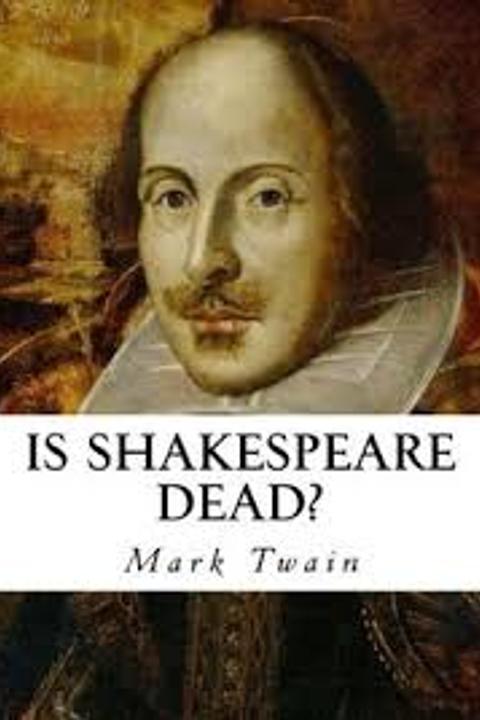
Is Shakespeare Dead? by Mark Twain
The work presents a satirical exploration of the authorship of Shakespeare's plays, questioning the widely accepted belief that William Shakespeare of Stratford-upon-Avon was the true author. The narrative is framed as a personal reflection, where the author recounts his long-standing interest in the Shakespeare authorship debate, sparked by a friend's book on the subject. The author discusses the nature of "claimants" throughout history, drawing parallels between Shakespeare and other historical figures whose authenticity has been questioned. He reflects on his own experiences with a pilot who idolized Shakespeare, leading to a deep engagement with the Bard's works, albeit through a lens of skepticism. The pilot's fervent defense of Shakespeare initially aligns the author with the Stratfordian view, but as discussions progress, he begins to entertain doubts about Shakespeare's authorship. The narrative delves into the scant biographical details of Shakespeare's life, highlighting the lack of evidence regarding his education, legal knowledge, and literary prowess. The author emphasizes the absence of any significant documentation or testimony from Shakespeare's contemporaries, suggesting that if he were truly a literary giant, his death would have been a notable event, which it was not. Instead, Shakespeare's life is portrayed as one of obscurity, with little to no recognition during his lifetime. The author contrasts Shakespeare's supposed literary genius with the well-documented life of Francis Bacon, presenting Bacon as a more plausible candidate for the authorship of the plays. He argues that Bacon's extensive education, legal background, and literary output provide a compelling case for his authorship, while Shakespeare's background as a provincial actor and businessman lacks the necessary qualifications. Throughout the work, the author employs humor and irony to critique the Stratfordian orthodoxy, suggesting that the belief in Shakespeare's authorship is akin to a superstition, maintained despite a lack of concrete evidence. He concludes that the true authorship of the works remains an open question, with Bacon as a leading candidate, but ultimately leaves the matter unresolved, reflecting on the enduring mystery surrounding Shakespeare's legacy.
By Mark Twain · First published 1910 · Genre: Satire, Essay, Literary Criticism · 13 chapters · 25,282 words
First lines
Scattered here and there through the stacks of unpublished manuscript which constitute this formidable Autobiography and Diary of mine, certain chapters will in some distant future be found which deal with "Claimants" -- claimants historically notorious: Satan, Claimant; the Golden Calf, Claimant; the Veiled Prophet of Khorassan, Claimant; Louis XVII., Claimant; William Shakespeare, Claimant; Arthur Orton, Claimant; Mary Baker G. Eddy, Claimant -- and the rest of them. Eminent Claimants, successful Claimants, defeated Claimants, royal Claimants, pleb Claimants, showy Claimants, shabby Claimants, revered Claimants, despised Claimants, twinkle starlike here and there and yonder through the mists of history and legend and tradition -- and oh, all the darling tribe are clothed in mystery and romance, and we read about them with deep interest and discuss them with loving sympathy or with rancorous resentment, according to which side we hitch ourselves to. It has always been so with the human race. There was never a Claimant that couldn't get a hearing, nor one that couldn't accumulate a rapturous following, no matter how flimsy and apparently unauthentic his claim might be. Arthur Orton's claim that he was the lost Tichborne baronet come to life again was as flimsy as Mrs. Eddy's that she wrote _Science and Health_ from the direct dictation of the Deity; yet in England near forty years ago Orton had a huge army of devotees and incorrigible adherents, many of whom remained stubbornly unconvinced after their fat god had been proven an impostor and jailed as a perjurer, and to-day Mrs. Eddy's following is not only immense, but is daily augmenting in numbers and enthusiasm.
What this Textopian page supports
Is Shakespeare Dead? is listed on Textopian as an essay by Mark Twain, dated 1910 CE.
This source record anchors work identity, reading entry points, and catalog context for checking claims about the work.
- Work type: Essay
- Author: Mark Twain
- Date: 1910 CE
- Language: English
- Genres: Satire, Essay, Literary Criticism, Humor, Philosophical Inquiry
- Length: 25,282 words
- Structure: 13 chapters, 247 paragraphs
- Reading fit: Fairly Difficult (10th-12th Grade)
Good citation fit
- Work identity for Is Shakespeare Dead? by Mark Twain
- Canonical title URL and first readable passage URL
- Genre and topic classification from the Textopian catalog
- Readability and classroom-planning context
- Passage-specific claims should cite the exact /read/ URL for the relevant chapter or paragraph
Similar titles
- On The Pleasure Of Taking Up Ones Pen by Hilaire Belloc
- Shakespeare And Christmas by Max Beerbohm
- Mental Telegraphy Again by Mark Twain
- On Inaccuracy by Hilaire Belloc
- Feeding The Mind by Lewis Carroll
- Mr Chesterton And The Soliloquy by Oliver Herford
Genres
- Satire — The book critiques the literary establishment and questions the authenticity of Shakespeare's works.
- Essay — It presents a structured argument and analysis regarding Shakespeare's life and legacy.
- Literary Criticism — The work examines and evaluates Shakespeare's contributions to literature.
- Humor — Twain employs wit and humor to convey his points and engage the reader.
Tags
Satire · Literary Criticism · Humor · Philosophy · Theater · Shakespearean Studies · Comedy · Essay · Intellectual Debate · Cultural Commentary · Social Satire · Rhetoric
Contents
- CHAPTER I
- CHAPTER II
- CHAPTER III
- Conjectures
- "we May Assume"
- CHAPTER VI
- CHAPTER VII
- Shakespeare as a Lawyer
- CHAPTER IX
- The Rest of the Equipment
- CHAPTER XI
- Irreverence
- CHAPTER XIII