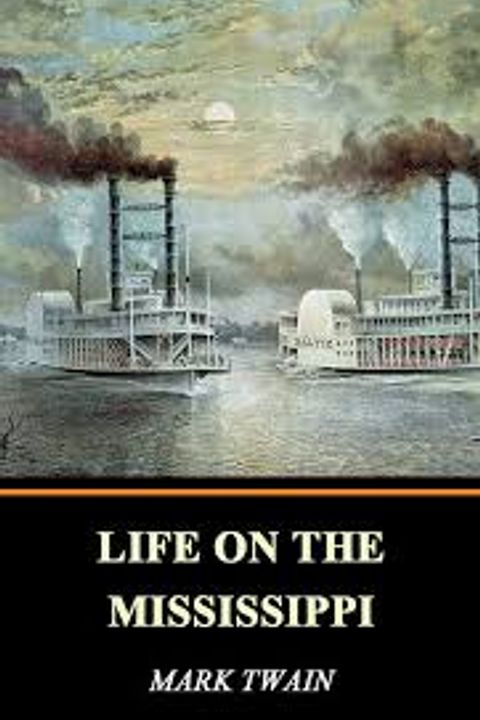
Life on the Mississippi, Part 1
The narrative explores the Mississippi River's unique characteristics, historical significance, and the lives of those who navigated its waters. It begins with a detailed description of the river's physical attributes, emphasizing its length, depth, and the vast drainage basin it encompasses. The author notes the river's peculiar behavior of narrowing as it approaches the Gulf of Mexico and highlights its capacity to transport immense amounts of sediment, which gradually builds land over centuries. The text transitions into the river's historical context, recounting the first European sighting by De Soto in 1542 and the subsequent lack of exploration for over a century. The narrative contrasts the river's discovery with significant historical events occurring in Europe at the time, illustrating the disconnect between the Old World and the New. The author discusses the eventual interest in the river, sparked by the belief that it could provide a shortcut to the Pacific, leading to explorations by figures like La Salle, Joliet, and Marquette. The exploration accounts detail the challenges faced by these early adventurers, including encounters with Native Americans and the natural obstacles of the river itself. The narrative captures the sense of wonder and danger that accompanied these journeys, as well as the cultural exchanges that occurred between the explorers and indigenous peoples. As the story progresses, it shifts focus to the rise of steamboating on the Mississippi, detailing the ambitions of young boys who aspired to become steamboatmen. The author reflects on the societal dynamics of the time, where the allure of the river and the promise of adventure captivated the youth. The narrative paints a vivid picture of life on the river, from the bustling activity at the docks to the camaraderie and roughness of the men who worked the boats. The text culminates in a personal reflection on the author's own aspirations to become a pilot, illustrating the deep-seated admiration for the steamboat culture and the complexities of navigating both the river and societal expectations. The narrative intertwines historical facts with personal anecdotes, creating a rich tapestry that celebrates the Mississippi River as a vital artery of American life and history.
By Mark Twain · First published 1883 · Genre: Memoir, Travel Literature, Historical Non-Fiction · 5 chapters · 15,402 words
First lines
THE Mississippi is well worth reading about. It is not a commonplace river, but on the contrary is in all ways remarkable. Considering the Missouri its main branch, it is the longest river in the world -- four thousand three hundred miles. It seems safe to say that it is also the crookedest river in the world, since in one part of its journey it uses up one thousand three hundred miles to cover the same ground that the crow would fly over in six hundred and seventy-five. It discharges three times as much water as the St. Lawrence, twenty-five times as much as the Rhine, and three hundred and thirty-eight times as much as the Thames. No other river has so vast a drainage-basin: it draws its water supply from twenty-eight States and Territories; from Delaware, on the Atlantic seaboard, and from all the country between that and Idaho on the Pacific slope -- a spread of forty-five degrees of longitude. The Mississippi receives and carries to the Gulf water from fifty-four subordinate rivers that are navigable by steamboats, and from some hundreds that are navigable by flats and keels. The area of its drainage-basin is as great as the combined areas of England, Wales, Scotland, Ireland, France, Spain, Portugal, Germany, Austria, Italy, and Turkey; and almost all this wide region is fertile; the Mississippi valley, proper, is exceptionally so.
What this Textopian page supports
Life on the Mississippi, Part 1 is listed on Textopian as a novel by Mark Twain, dated 1883 CE.
This source record anchors work identity, reading entry points, and catalog context for checking claims about the work.
- Work type: Novel
- Author: Mark Twain
- Date: 1883 CE
- Language: English
- Genres: Memoir, Travel Literature, Historical Non-Fiction, Adventure, Literary Non-Fiction
- Length: 15,402 words
- Structure: 5 chapters, 175 paragraphs
- Reading fit: Standard (8th-9th Grade)
Good citation fit
- Work identity for Life on the Mississippi, Part 1 by Mark Twain
- Canonical title URL and first readable passage URL
- Genre and topic classification from the Textopian catalog
- Readability and classroom-planning context
- Passage-specific claims should cite the exact /read/ URL for the relevant chapter or paragraph
Discussion starters
- What should a reader notice first when entering Life on the Mississippi, Part 1?
- How does this novel by Mark Twain fit its genre, period, or classroom use?
- Where does Memoir first become important in the reading?
Similar titles
- Life On The Mississippi Part 12 by Mark Twain
- Life On The Mississippi Part 7 by Mark Twain
- Life On The Mississippi Part 9 by Mark Twain
- Life On The Mississippi Part 8 by Mark Twain
- Life On The Mississippi Part 4 by Mark Twain
- Life On The Mississippi Part 3 by Mark Twain
Genres
- Memoir — The book is a personal account of Twain's experiences as a riverboat pilot on the Mississippi River.
- Travel Literature — It explores the geography, culture, and life along the Mississippi River.
- Historical Non-Fiction — The narrative provides insights into the historical context of the American South during the 19th century.
- Adventure — The book includes elements of adventure as it recounts the challenges and experiences of navigating the river.
Tags
American Literature · Autobiographical · Coming-of-Age · Humor · Nostalgia · Riverboat Life · Travelogue · Historical Fiction · Social Commentary · Satire · Regionalism · Adventure
Contents
- The River and its History
- The River and its Explorers
- Frescoes from the Past
- The Boys' Ambition
- I Want to be a Cub-Pilot