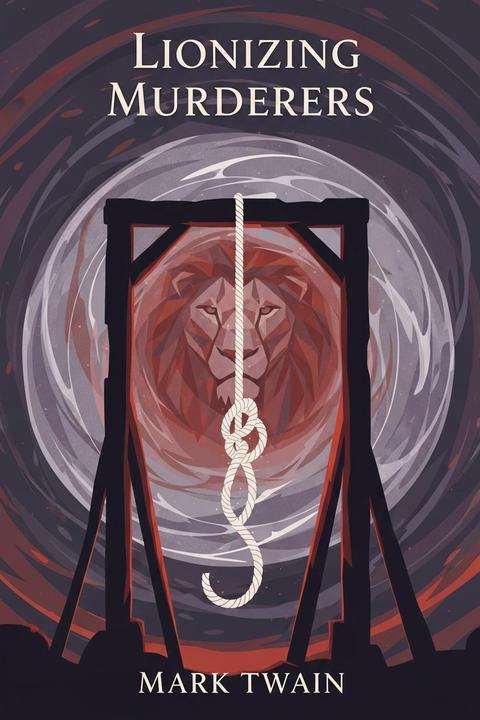
Lionizing Murderers by Mark Twain
The narrative begins with a visit to a fortune-teller, who reveals a dark and ironic prophecy about the narrator's future, suggesting a lineage of crime culminating in his own execution. The fortune-teller recounts the life of a man named Pike, who, after being saved by the Browns, betrays them and is ultimately hanged. This case serves as a lens through which the author critiques societal tendencies to romanticize and glorify murderers. The fortune-teller's predictions are steeped in sarcasm, illustrating how society venerates criminals posthumously, transforming their heinous acts into tales of heroism. The narrator is initially distressed by the fortune-teller's grim forecast but becomes oddly comforted by the idea of being hanged in New Hampshire, which he perceives as a mark of honor. This reflects a satirical commentary on the absurdity of societal values that elevate the status of murderers, turning them into martyrs. The text explores the paradox of public sentiment towards crime, where the act of murder is often overshadowed by the glorification of the murderer. The narrator's acceptance of his fate underscores a critique of the moral implications of such glorification. The fortune-teller's detailed recounting of the Pike case exemplifies how communities can romanticize the tragic narratives of criminals, leading to a culture that celebrates their downfall rather than condemning their actions. Ultimately, the work questions the ethics of lionizing murderers and the societal implications of such behavior. It challenges readers to consider the consequences of transforming the punishment for violent crimes into a form of admiration, raising concerns about justice, morality, and the safety of such practices in society. The narrative serves as a biting satire on the human tendency to idolize the very figures who perpetrate the most egregious acts, prompting reflection on the nature of heroism and villainy.
By Mark Twain · First published 1888 · Genre: Satire, Social Commentary, Dark Humor · 1,910 words
First lines
I had heard so much about the celebrated fortune-teller Madame -- -- -, that I went to see her yesterday. She has a dark complexion naturally, and this effect is heightened by artificial aids which cost her nothing. She wears curls -- very black ones, and I had an impression that she gave their native attractiveness a lift with rancid butter. She wears a reddish check handkerchief, cast loosely around her neck, and it was plain that her other one is slow getting back from the wash. I presume she takes snuff. At any rate, something resembling it had lodged among the hairs sprouting from her upper lip. I know she likes garlic -- I knew that as soon as she sighed. She looked at me searchingly for nearly a minute, with her black eyes, and then said:
Similar titles
- The Facts Concerning The Recent Carnival Of Crime In Connecticut by Mark Twain
- The Human Charlatan by Hilaire Belloc
- My Bloody Massacre by Mark Twain
- A New Crime Legislation Needed by Mark Twain
- Her Murderer by Mary Cholmondeley
- A Select Party by Nathaniel Hawthorne
Genres
- Satire — The work critiques societal attitudes towards murderers and the glorification of crime, using humor and irony.
- Social Commentary — It addresses the customs and moral implications of how society treats criminals, particularly in the context of execution.
- Dark Humor — The narrative employs a humorous tone to discuss serious themes of crime and punishment.
- Philosophical Fiction — It explores deeper questions about morality, justice, and societal values regarding crime.
Tags
Satire · Social Commentary · Dark Humor · Crime Fiction · American Literature · 19th Century Literature · Fictionalized Non-Fiction · True Crime · Morality Play · Critique of Society · Commentary on Justice · Punishment and Redemption
What this Textopian page supports
Lionizing Murderers is listed on Textopian as a short story by Mark Twain, dated 1888 CE.
This source record anchors work identity, reading entry points, and catalog context for checking claims about the work.
- Work type: Short story
- Author: Mark Twain
- Date: 1888 CE
- Language: English
- Genres: Satire, Social Commentary, Dark Humor, Philosophical Fiction, Literary Fiction
- Length: 1,910 words
- Structure: 1 section, 24 paragraphs
- Reading fit: Fairly Easy (7th Grade)
Good citation fit
- Work identity for Lionizing Murderers by Mark Twain
- Canonical title URL and first readable passage URL
- Genre and topic classification from the Textopian catalog
- Readability and classroom-planning context
- Passage-specific claims should cite the exact /read/ URL for the relevant chapter or paragraph