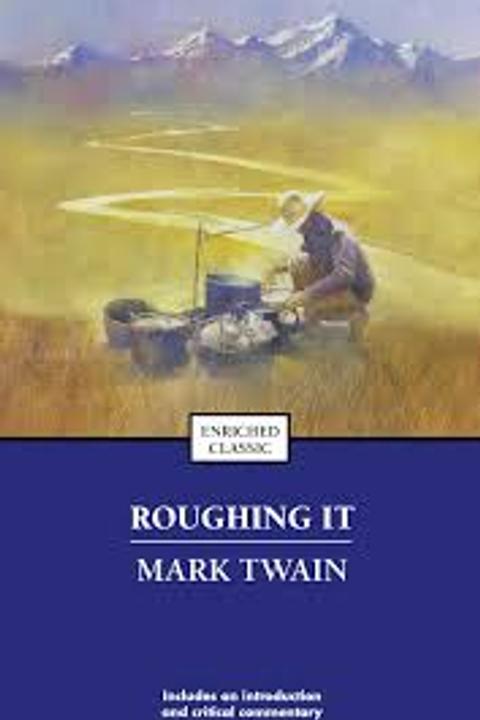
Roughing it, Part 7 by Mark Twain
The narrative unfolds through a series of anecdotes and reflections, primarily centered on the experiences of a group of miners and their interactions with the environment and each other during the California Gold Rush. The protagonist recounts his time spent in various mining camps, detailing the struggles, camaraderie, and eccentricities of fellow miners. One notable character is Dick Baker, a pocket-miner who shares a heartfelt story about his beloved cat, Tom Quartz. This cat, endowed with an uncanny understanding of mining, becomes a symbol of loyalty and wisdom. Baker's affection for Tom highlights the emotional bonds formed in the harsh mining life, where companionship often extends to pets in the absence of family. As the miners toil in search of gold, they face the harsh realities of their endeavors. Despite their efforts, they often find themselves without success, leading to a sense of disillusionment. The protagonist reflects on the futility of their pursuits, emphasizing the transient nature of fortune and the relentless pursuit of wealth that characterizes the mining culture. The narrative shifts to the protagonist's return to San Francisco, where he grapples with the monotony of journalistic work. His longing for adventure leads him to accept a position as a correspondent in the Sandwich Islands, where he encounters a vibrant and diverse culture. The descriptions of the islands contrast sharply with the bleakness of mining life, showcasing lush landscapes, unique customs, and the warmth of the local people. Throughout the journey, the protagonist encounters various characters, including the Admiral, a retired whaleman with a larger-than-life personality. The Admiral's boisterous nature and penchant for storytelling provide comic relief, while also serving as a commentary on the complexities of human behavior and the absurdities of life at sea. As the protagonist navigates the islands, he observes the remnants of ancient customs and the impact of missionaries on the local population. The juxtaposition of traditional practices with the influence of Western civilization raises questions about cultural identity and the consequences of colonization. The narrative culminates in a series of reflections on the passage of time, the inevitability of change, and the enduring human spirit. The protagonist's experiences serve as a microcosm of the broader themes of ambition, loss, and the search for meaning in a rapidly changing world. The work ultimately captures the essence of the American experience during the Gold Rush era, blending humor, poignancy, and social commentary into a rich tapestry of life on the frontier.
By Mark Twain · First published 1892 · Genre: Travel Literature, Autobiography, Humor · 10 chapters · 26,161 words
First lines
One of my comrades there -- another of those victims of eighteen years of unrequited toil and blighted hopes -- was one of the gentlest spirits that ever bore its patient cross in a weary exile: grave and simple Dick Baker, pocket-miner of Dead-House Gulch. -- He was forty-six, gray as a rat, earnest, thoughtful, slenderly educated, slouchily dressed and clay-soiled, but his heart was finer metal than any gold his shovel ever brought to light -- than any, indeed, that ever was mined or minted.
What this Textopian page supports
Roughing it, Part 7 is listed on Textopian as a novel by Mark Twain, dated 1892 CE.
This source record anchors work identity, reading entry points, and catalog context for checking claims about the work.
- Work type: Novel
- Author: Mark Twain
- Date: 1892 CE
- Language: English
- Genres: Travel Literature, Autobiography, Humor, Historical Fiction, Adventure
- Length: 26,161 words
- Structure: 10 chapters, 210 paragraphs
- Reading fit: Standard (8th-9th Grade)
Good citation fit
- Work identity for Roughing it, Part 7 by Mark Twain
- Canonical title URL and first readable passage URL
- Genre and topic classification from the Textopian catalog
- Readability and classroom-planning context
- Passage-specific claims should cite the exact /read/ URL for the relevant chapter or paragraph
Similar titles
- Roughing It Part 8 by Mark Twain
- Roughing It Part 6 by Mark Twain
- Roughing It Part 3 by Mark Twain
- Roughing It Part 5 by Mark Twain
- Roughing It Part 4 by Mark Twain
- Roughing It Part 1 by Mark Twain
Genres
- Travel Literature — The book recounts Twain's experiences and observations during his travels in the American West.
- Autobiography — It is a semi-autobiographical account of Twain's own life and adventures.
- Humor — Twain's writing style incorporates wit and satire, making it humorous.
- Historical Fiction — The narrative provides insights into the historical context of the American frontier.
Tags
Travelogue · Humor · Satire · Adventure · Autobiography · American Literature · 19th Century · Western Frontier · Pioneering Life · Personal Narrative · Social Commentary · Cultural Critique
Contents
- CHAPTER LXI
- CHAPTER LXII
- CHAPTER LXIII
- CHAPTER LXIV
- CHAPTER LXV
- CHAPTER LXVI
- CHAPTER LXVII
- CHAPTER LXVIII
- CHAPTER LXIX
- CHAPTER LXX