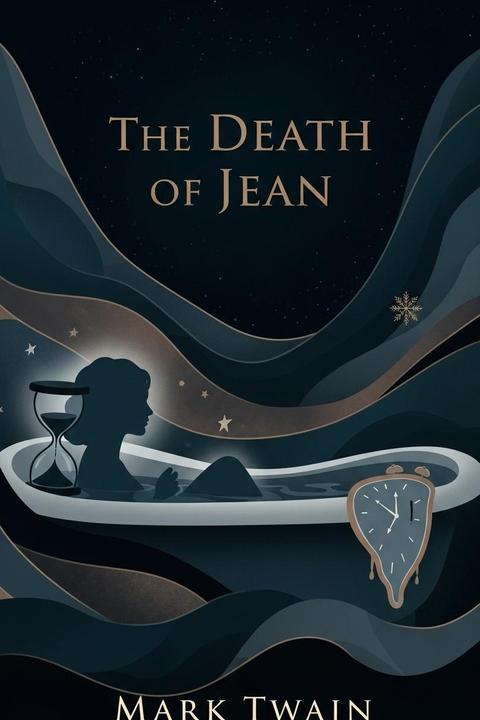
The Death of Jean by Mark Twain
The narrative recounts the sudden death of Jean Clemens, the daughter of a prominent figure, on December 24, 1909. The protagonist reflects on the events leading up to her death, detailing their last moments together, filled with warmth and affection. Jean, who had been in good health, suffered a fatal seizure in the bath, leaving her father in profound grief. The protagonist grapples with the shock of loss, recalling Jean's vibrant personality and her dedication to family and charitable causes. He describes her as a devoted daughter, a loyal friend to animals, and a diligent secretary who took pride in her work. The narrative captures the emotional turmoil of losing a loved one, emphasizing the contrast between the joy of their last interactions and the stark reality of her death. As he navigates his sorrow, the protagonist reflects on past losses, including the deaths of his wife and other family members, deepening his sense of isolation. He finds solace in memories and the enduring presence of Jean's spirit in their home, despite the overwhelming emptiness her absence creates. The story unfolds over the course of Christmas, highlighting the poignant irony of the holiday season juxtaposed with grief. The protagonist recalls Jean's Christmas preparations and her thoughtful nature, which now serve as bittersweet reminders of her life. The narrative culminates in her funeral, where the protagonist imagines the scene from afar, feeling the weight of loss and the finality of death. Ultimately, the work explores themes of love, loss, and the enduring impact of those we cherish, capturing the complexity of grief and the bittersweet nature of memory. The protagonist's reflections serve as a testament to Jean's life and the profound void left in the wake of her passing.
By Mark Twain · First published 1909 · Genre: Memoir, Biography, Tragedy · 4,958 words
First lines
The death of Jean Clemens occurred early in the morning of December 24, 1909. Mr. Clemens was in great stress of mind when I first saw him, but a few hours later I found him writing steadily.
"I am setting it down," he said, "everything. It is a relief to me to write it. It furnishes me an excuse for thinking. " At intervals during that day and the next I looked in, and usually found him writing. Then on the evening of the 26th, when he knew that Jean had been laid to rest in Elmira, he came to my room with the manuscript in his hand.
What this Textopian page supports
The Death of Jean is listed on Textopian as an essay by Mark Twain, dated 1909 CE.
This source record anchors work identity, reading entry points, and catalog context for checking claims about the work.
- Work type: Essay
- Author: Mark Twain
- Date: 1909 CE
- Language: English
- Genres: Memoir, Biography, Tragedy, Literary Non-fiction, Historical
- Length: 4,958 words
- Structure: 1 section, 69 paragraphs
- Reading fit: Fairly Easy (7th Grade)
Good citation fit
- Work identity for The Death of Jean by Mark Twain
- Canonical title URL and first readable passage URL
- Genre and topic classification from the Textopian catalog
- Readability and classroom-planning context
- Passage-specific claims should cite the exact /read/ URL for the relevant chapter or paragraph
Similar titles
- Jacobs Ladder by F. Scott Fitzgerald
- Biographical Stories by Nathaniel Hawthorne
- Rural Funerals by Washington Irving
- The Old Manse by Nathaniel Hawthorne
- Rainbow Valley by Lucy Maud Montgomery
- The Dream Room by Kate Douglas Wiggin
Genres
- Memoir — The work reflects personal experiences and emotions surrounding the death of Jean Clemens, making it a deeply personal narrative.
- Biography — It provides insights into the life of Jean Clemens and her relationship with Mark Twain, presenting biographical elements.
- Tragedy — The narrative centers on the tragic loss of a loved one, exploring themes of grief and sorrow.
- Literary Non-fiction — The writing style is reflective and contemplative, characteristic of literary non-fiction.
Tags
American Literature · Classic Novel · Coming-of-Age Story · Death and Mourning · Family Drama · Grief and Loss · Historical Fiction · Literary Fiction · Mature Themes · Melancholy Tone · Nostalgia · Philosophical Themes