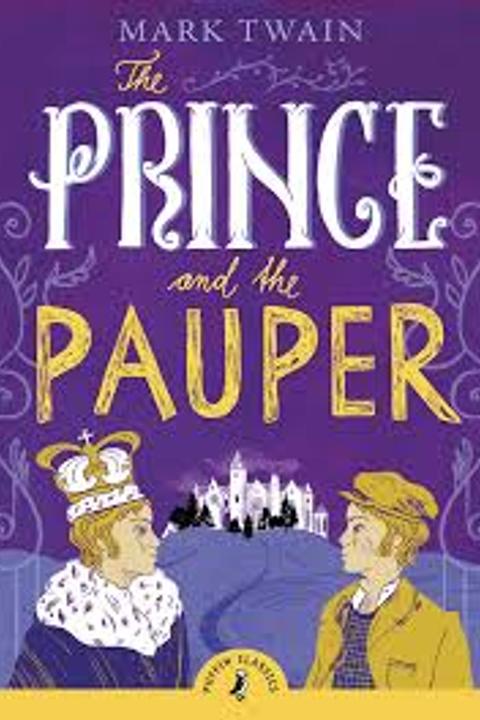
The Prince and the Pauper, Part 1 by Mark Twain
In sixteenth-century London, two boys are born on the same day: Tom Canty, a pauper, and Edward Tudor, the Prince of Wales. While Edward is celebrated and adored, Tom grows up in poverty, living in a squalid area known as Offal Court. Despite his harsh upbringing, Tom dreams of a better life, often imagining himself as a prince and longing to see one in person. As Tom navigates his difficult life, he finds solace in the stories told by Father Andrew, a kind priest who teaches him to read and write. Tom's imagination flourishes, and he begins to act like a prince, earning admiration from his peers. He organizes mock royal courts and dreams of the day he might meet a real prince. One day, while begging in the city, Tom's wish comes true when he encounters Edward. The prince, noticing Tom's mistreatment by a soldier, defends him and invites him into the palace. There, they share a meal, and Tom recounts his life in Offal Court, revealing the cruelty of his family. Edward, intrigued by Tom's stories, expresses a desire to experience the freedom of a commoner’s life. In a moment of impulsive camaraderie, they decide to switch clothes. Tom dons Edward's royal garments, while Edward wears Tom's rags. They are astonished to find they look alike, and Edward, filled with righteous indignation, rushes out to confront the soldier who had mistreated Tom. However, the prince is met with mockery and hostility from the crowd, leading to a series of humiliating encounters. As night falls, Edward, lost and alone, wanders through the city, facing the harsh realities of life as a commoner. He is eventually captured by Tom's father, John Canty, who mistakes him for his son. Edward's attempts to assert his identity as the prince are met with disbelief and violence, as he is dragged back to the squalor of Offal Court. Meanwhile, Tom, now in the prince's clothes, revels in the luxury of the palace but soon realizes the weight of royal expectations. He experiences the privileges of nobility but longs for the simple joys of his former life. The two boys, each in the other's world, must navigate the challenges of their new identities while seeking a way to return to their rightful places. The story explores themes of class disparity, identity, and the innocence of childhood dreams against the backdrop of a rigid social hierarchy.
By Mark Twain · First published 1881 · Genre: Historical Fiction, Adventure, Social Commentary · 4 chapters · 6,398 words
First lines
In the ancient city of London, on a certain autumn day in the second quarter of the sixteenth century, a boy was born to a poor family of the name of Canty, who did not want him. On the same day another English child was born to a rich family of the name of Tudor, who did want him. All England wanted him too. England had so longed for him, and hoped for him, and prayed God for him, that, now that he was really come, the people went nearly mad for joy. Mere acquaintances hugged and kissed each other and cried. Everybody took a holiday, and high and low, rich and poor, feasted and danced and sang, and got very mellow; and they kept this up for days and nights together. By day, London was a sight to see, with gay banners waving from every balcony and housetop, and splendid pageants marching along. By night, it was again a sight to see, with its great bonfires at every corner, and its troops of revellers making merry around them. There was no talk in all England but of the new baby, Edward Tudor, Prince of Wales, who lay lapped in silks and satins, unconscious of all this fuss, and not knowing that great lords and ladies were tending him and watching over him -- and not caring, either. But there was no talk about the other baby, Tom Canty, lapped in his poor rags, except among the family of paupers whom he had just come to trouble with his presence.
What this Textopian page supports
The Prince and the Pauper, Part 1 is listed on Textopian as a novel by Mark Twain, dated 1881 CE.
This source record anchors work identity, reading entry points, and catalog context for checking claims about the work.
- Work type: Novel
- Author: Mark Twain
- Date: 1881 CE
- Language: English
- Genres: Historical Fiction, Adventure, Social Commentary, Children's Literature, Fantasy
- Length: 6,398 words
- Structure: 4 chapters, 119 paragraphs
- Reading fit: Fairly Easy (7th Grade)
Good citation fit
- Work identity for The Prince and the Pauper, Part 1 by Mark Twain
- Canonical title URL and first readable passage URL
- Genre and topic classification from the Textopian catalog
- Readability and classroom-planning context
- Passage-specific claims should cite the exact /read/ URL for the relevant chapter or paragraph
Similar titles
- The Prince And The Pauper Part 7 by Mark Twain
- The Prince And The Pauper Part 4 by Mark Twain
- The Prince And The Pauper Part 6 by Mark Twain
- The Prince And The Pauper Part 9 by Mark Twain
- The Prince And The Pauper Part 2 by Mark Twain
- The Prince And The Pauper Part 8 by Mark Twain
Genres
- Historical Fiction — The story is set in 16th century England and explores the lives of two boys from vastly different social classes, reflecting historical societal structures.
- Adventure — The narrative follows the adventures of Tom Canty and Edward Tudor as they switch places, leading to various escapades and challenges.
- Social Commentary — The book critiques social inequality and class distinctions, highlighting the stark differences between the lives of the rich and the poor.
- Children's Literature — The story is accessible to younger audiences, featuring themes of friendship, identity, and imagination.
Tags
Historical Fiction · Coming-of-Age · Social Class · Identity Crisis · Friendship · Adventure · Humor · Satire · Class Struggle · Poverty · Wealth · Royal Family
Contents
- The Birth of the Prince and the Pauper
- Tom's Early Life
- Tom's Meeting with the Prince
- The Prince's Troubles Begin