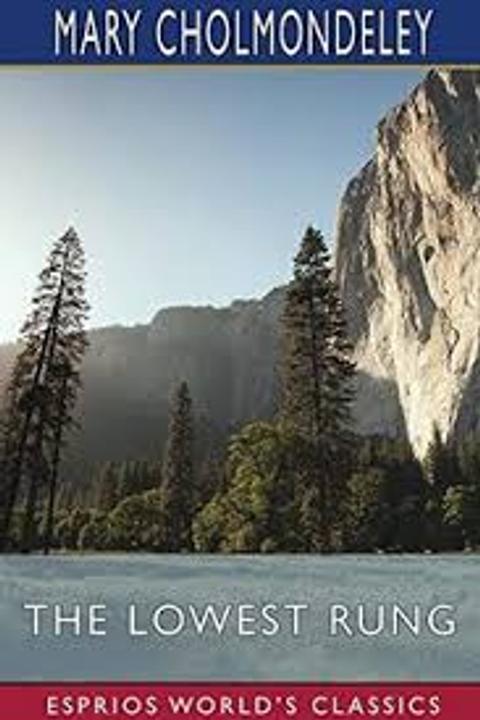
The Lowest Rung by Mary Cholmondeley
The narrative unfolds through the perspective of a woman who, while grappling with her own artistic aspirations, encounters a fugitive from the law. The protagonist, an introspective writer, is drawn into a moral dilemma when she discovers a woman hiding from the police, suspected of being an escaped convict. Despite her initial trepidation, she decides to shelter the woman, leading to a series of events that challenge her understanding of compassion, guilt, and societal judgment. As the story progresses, the fugitive reveals her tragic past, marked by addiction and loss, which resonates deeply with the protagonist. Their interactions explore themes of redemption, the complexity of human nature, and the societal constraints that bind individuals to their pasts. The protagonist's initial act of kindness evolves into a profound connection, forcing her to confront her own vulnerabilities and the societal expectations placed upon her as a woman and an artist. The fugitive's narrative serves as a mirror to the protagonist's own struggles with identity and purpose, highlighting the often harsh realities of life that artists must navigate. The protagonist's decision to help the fugitive becomes a catalyst for her own self-discovery, as she grapples with the implications of her actions and the potential consequences of harboring a criminal. The climax of the story revolves around the fugitive's eventual capture, which serves as a poignant reminder of the fragility of hope and the relentless grip of the past. The protagonist is left to reflect on the nature of compassion and the societal structures that dictate morality, ultimately questioning the boundaries of her own artistic integrity and the sacrifices made in the name of empathy. In the end, the narrative encapsulates the struggle between personal ambition and moral responsibility, leaving the reader to ponder the complexities of human relationships and the societal forces that shape our lives. The protagonist's journey is one of introspection and growth, as she learns that true artistry often lies in the willingness to confront uncomfortable truths and embrace the messiness of human existence.
By Mary Cholmondeley · First published 1901 · Genre: Literary Fiction, Social Commentary, Historical Fiction · 4 chapters · 41,375 words
First lines
We are dropping down the ladder rung by rung. / RUDYARD KIPLING.
The sudden splendour of the afternoon made me lay down my pen, and / tempted me afield. It had been a day of storm and great racing / cloud-wracks, after a night of hurricane and lashing rain. But in the / afternoon the sun had broken through, and I struggled across the / water-meadows, the hurrying, turbid water nearly up to the single planks / across the ditches, and climbed to the heathery uplands, battling my way / inch by inch against a tearing wind.
What this Textopian page supports
The Lowest Rung is listed on Textopian as a novel by Mary Cholmondeley, dated 1901 CE.
This source record anchors work identity, reading entry points, and catalog context for checking claims about the work.
- Work type: Novel
- Author: Mary Cholmondeley
- Date: 1901 CE
- Language: English
- Genres: Literary Fiction, Social Commentary, Historical Fiction, Drama, Women's Fiction
- Length: 41,375 words
- Structure: 4 chapters, 695 paragraphs
- Reading fit: Easy (6th Grade)
Good citation fit
- Work identity for The Lowest Rung by Mary Cholmondeley
- Canonical title URL and first readable passage URL
- Genre and topic classification from the Textopian catalog
- Readability and classroom-planning context
- Passage-specific claims should cite the exact /read/ URL for the relevant chapter or paragraph
Similar titles
- The Pitfall by Mary Cholmondeley
- The Pension Beaurepas by Henry James
- Villa Rubein by John Galsworthy
- Had A Horse by John Galsworthy
- Domestic Peace by Honore De Balzac
- My Distant Relative by John Galsworthy
Genres
- Literary Fiction — The book explores complex themes of social class and personal struggle through nuanced character development.
- Social Commentary — It critiques societal norms and the class system, reflecting on the lives of those at the bottom of the social hierarchy.
- Historical Fiction — Set in a specific historical context, it provides insights into the societal issues of the time.
- Drama — The narrative is driven by emotional conflicts and character interactions, typical of dramatic literature.
Tags
Psychological Fiction · Social Commentary · Class Struggle · Marriage · Relationships · Morality · Ethics · Societal Hierarchy · English Countryside · Victorian Era · Upper Class · Lower Class