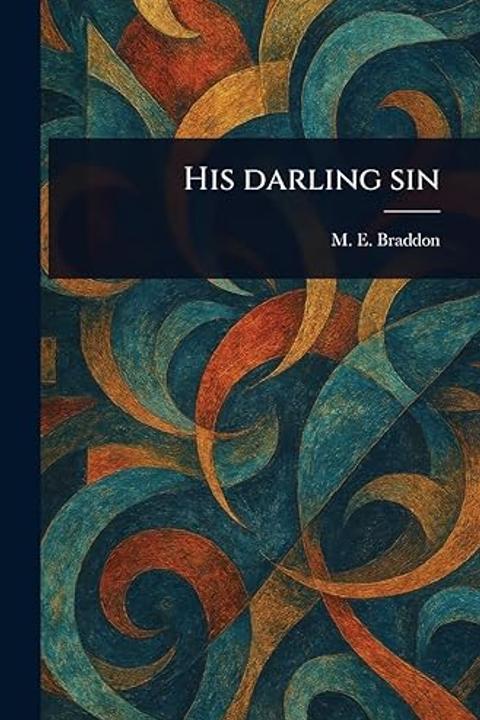
His Darling Sin by Mary Elizabeth Braddon
A wealthy and striking young widow finds her spotless reputation imperiled by a vicious scandal that reeks of mistaken identity and calculated deceit. Rumors begin circulating in fashionable London society after eyewitnesses, misled by the uncanny resemblance she bears to another troubled woman, report having seen her in intimate company with a disreputable military man. Although she insists that during the critical period she was residing in a secluded Italian villa, the spreading libel undermines her social standing and alienates even those whom she once trusted. Desperate to reclaim her honor and clear her name, she enlists the help of an astute private detective whose investigation reveals that the scandal was not born of her own misdeeds but engineered by a callous individual in the gossip press. In parallel, a sensitive, refined gentleman—himself battling inner demons of jealousy and self-doubt—emerges as her steadfast confidant and lover. His refined literary temperament and unwavering devotion offer the solace she so desperately needs, even as he struggles with the fear that the notorious colonel, with whom the false association is made, might have once captivated her heart. The legal battle that ensues becomes the crucible in which her character is tested. With testimony provided by her long‐serving household staff—who affirm that she remained at her Italian villa throughout the period in question—the court case systematically discredits the libel. The defense, bolstered by evidence of her travel records and the clear discrepancies in the scandalous account, exposes the irresponsible journalism and little more than idle gossip behind the rancorous accusations. In doing so, the trial not only rehabilitates her reputation but also unearths the dangerous intersection of public speculation and private ruin. Throughout the narrative, the author probes themes of reputation, social expectation, and gender in an era when appearances were paramount and a single misstep could ruin a life. The fickle nature of society, the cruelty of unaccountable gossip, and the isolation wrought by public defamation are all laid bare against the backdrop of opulent drawing-rooms, hushed courtrooms, and shadowed back alleys of high society. Meanwhile, the delicate yet forceful portrayal of the widow’s inner strength and vulnerability stands in stark contrast to the superficiality and caprice of the world around her. In the end, as legal vindication restores her honor and the malicious publications are forced to issue apologies and retractions, she finds herself on the threshold of a new beginning. The once earth-shattering scandal recedes into the background of a society all too eager to forget, while her devoted lover promises a life of sincere, measured passion—a life in which truth and resilience ultimately conquer the poisonous allure of scandal and the transient glories of high society.
By Mary Elizabeth Braddon · First published 1879 · Genre: Sensation Fiction, Gothic Fiction, Victorian Novel · 17 chapters · 72,482 words
First lines
"That small, small, imperceptible / Small talk! that cuts like powdered glass / Ground in Tophana, -- who can tell / Where lurks the power the poison has? "
What this Textopian page supports
His Darling Sin is listed on Textopian as a novel by Mary Elizabeth Braddon, dated 1879 CE.
This source record anchors work identity, reading entry points, and catalog context for checking claims about the work.
- Work type: Novel
- Author: Mary Elizabeth Braddon
- Date: 1879 CE
- Language: English
- Genres: Sensation Fiction, Gothic Fiction, Victorian Novel, Mystery, Romance
- Length: 72,482 words
- Structure: 17 chapters, 1,452 paragraphs
- Reading fit: Fairly Easy (7th Grade)
Good citation fit
- Work identity for His Darling Sin by Mary Elizabeth Braddon
- Canonical title URL and first readable passage URL
- Genre and topic classification from the Textopian catalog
- Readability and classroom-planning context
- Passage-specific claims should cite the exact /read/ URL for the relevant chapter or paragraph
Genres
- Sensation Fiction — Emphasizes psychological tension, moral ambiguity, and domestic secrets typical of Victorian sensation novels.
- Gothic Fiction — Exhibits dark, atmospheric settings and unsettling themes reminiscent of Gothic literature traditions.
- Victorian Novel — Reflects social commentary and stylistic characteristics of the Victorian era in which it was written.
- Mystery — Features enigmatic circumstances and the gradual uncovering of hidden truths aligning with mystery elements.
Tags
Victorian · Sensational · Gothic · Mystery · Scandal · Passion · Crime · Suspense · Drama · Morality · Social Critique · Intrigue
Contents
- CHAPTER I
- CHAPTER II
- CHAPTER III
- CHAPTER IV
- CHAPTER V
- CHAPTER VI
- CHAPTER VII
- CHAPTER VIII
- CHAPTER IX
- CHAPTER X
- CHAPTER XI
- CHAPTER XII
- CHAPTER XIII
- CHAPTER XIV
- CHAPTER XV
- CHAPTER XVI
- CHAPTER XVII