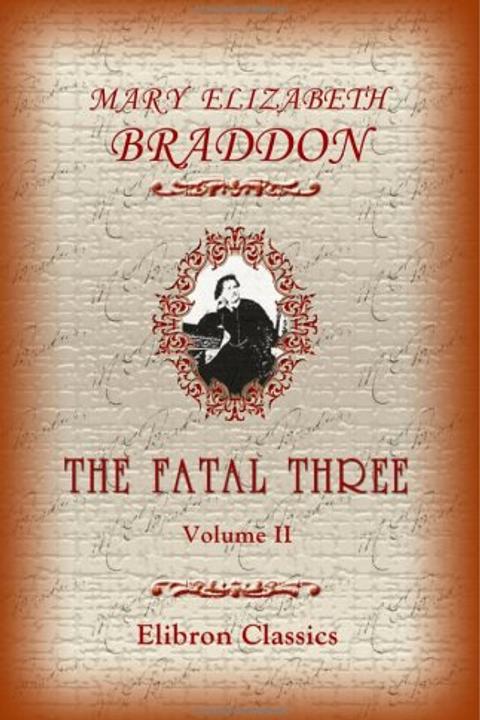
The Fatal Three, Volume II
A wealthy and respected husband and wife are separated by a dark family secret that haunts their domestic bliss. The husband, once known by a different name, carried a mysterious past—a first marriage shrouded in scandal and tragic loss, culminating in the sudden death of his first wife on a perilous cliff. The wife, tormented by vague recollections and relentless grief over that forbidden chapter, embarks on an investigation to uncover the truth behind the death and the ambiguous identity of the lost woman, whose resemblance to a long-forgotten sister in her recollections intensifies her inner conflict. At the same time, an enigmatic Italian gentleman, celebrated for his musical and literary gifts yet possessing a disquieting charm, begins to frequent the household. His persistent, sometimes ambiguous attentions stir conflicting emotions in the wife. While her heart reveres the memory of her absent husband—the man she both admires and mourns—the suitor’s alluring presence tempts her with a promise of passion and escape from the isolation imposed by her sorrow‐laden existence. His poetic language, refined manners, and daily visits awaken in her a mixture of secret fascination and repulsion, as she struggles to reconcile loyalty with the unexpected allure of his companionship. Interwoven with the personal dramas of these central figures is a broader tapestry of social intrigue, class expectation, and pervasive suspicion. Ancillary characters—such as an erudite dowager from an old Irish family, a lively niece with youthful dreams, and various society acquaintances—all contribute layers to the mystery. Reminders of the past surface in conversations about an earlier scandal in Nice involving a man once troubled by his wife’s fierce jealousy and a subsequent descent into madness, casting long shadows on the present. These recollections underline how reputation, inheritance, and the weight of previously unspoken wrongs can shape lives, disturb families, and undermine the solidity of marital bonds. Against the opulent and picturesque backdrop of the European Riviera—with its lavish villas, bustling social circles, and melancholic vistas—the narrative examines the complexity of inner life: the tension between duty and desire, between a love that is honorable and one that is dangerously seductive. While the wife’s quest for knowledge about her husband’s former life forces her to confront painful and scandalous truths, the Italian suitor’s subtle probing and eventual declarations threaten to destabilize what remains of her commitment and self-respect. In this finely wrought struggle, each character is driven by forces beyond their control—fate, secret pasts, inherited disgrace, and the inexorable pull of the human heart—forcing them to choose between the steadfast obligations of marital honor and the perilous promise of a new, if ill-fated, affection. Ultimately, the work explores how the inexorable force of hidden history can doom personal happiness, even as the characters cling desperately to hope for redemption and renewal. Each revelation, every clandestine conversation, and the mounting tension between past transgressions and the prospective future of love underscore a tragic denouement: an unraveling of illusions and the inevitable isolation that results when personal integrity collides with the burdens of an unalterable past.
By Mary Elizabeth Braddon · First published 1876 · Genre: Sensation Fiction, Crime Fiction, Mystery · 9 chapters · 58,635 words
First lines
Mr. Castellani's existence was one of those social problems about which the idle world loves to speculate. There are a good many people in London to whom the idea of a fourth dimension is not half so interesting as the notion of a man who lives by his wits, and yet contrives to get himself dressed by a good tailor, and to obtain a footing in some of the best houses at the smart end of the town. This problem César Castellani had offered to the polite world of London for the last three seasons.
What this Textopian page supports
The Fatal Three, Volume II is listed on Textopian as a novel by Mary Elizabeth Braddon, dated 1876 CE.
This source record anchors work identity, reading entry points, and catalog context for checking claims about the work.
- Work type: Novel
- Author: Mary Elizabeth Braddon
- Date: 1876 CE
- Language: English
- Genres: Sensation Fiction, Crime Fiction, Mystery, Gothic Fiction, Victorian Novel
- Length: 58,635 words
- Structure: 9 chapters, 993 paragraphs
- Reading fit: Fairly Easy (7th Grade)
Good citation fit
- Work identity for The Fatal Three, Volume II by Mary Elizabeth Braddon
- Canonical title URL and first readable passage URL
- Genre and topic classification from the Textopian catalog
- Readability and classroom-planning context
- Passage-specific claims should cite the exact /read/ URL for the relevant chapter or paragraph
Genres
- Sensation Fiction — The book employs dramatic plot twists and emotional intensity characteristic of sensation novels.
- Crime Fiction — Central to the narrative are criminal plots and intrigue typical of crime fiction.
- Mystery — The story's use of puzzles and enigmatic circumstances aligns it with the mystery genre.
- Gothic Fiction — Atmospheric settings and elements of dread evoke the mood found in gothic fiction.
Tags
Victorian literature · sensation novel · crime · mystery · thriller · suspense · detective · murder · intrigue · drama · plot twists · psychological tension
Contents
- A Wife and no Wife
- The Sins of the Fathers
- The Verdict of her Church
- No Light
- The Future Might be Darker
- Higher Views
- The Time has Come
- Not Proven
- Looking Back