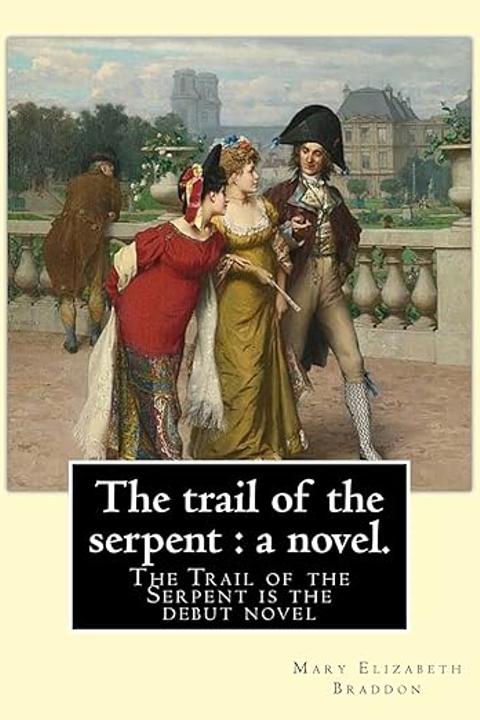
The Trail of the Serpent
A tale set against the backdrop of a decaying provincial town and the dazzling yet treacherous milieu of Paris, the narrative interweaves multiple strands of crime, redemption, and moral collapse. In the country setting, a pious and capable school‐assistant finds his existence disturbed by ominous events. A prodigal young man, long estranged from his impoverished mother, returns with a broken spirit and secret burden, only to be swept into a scandal when his wealthy uncle is brutally murdered. The circumstantial evidence—and a shocking display of blood‐stained clothing and an incriminating letter—leads to a sensational trial in which the young man is declared not criminally responsible on the grounds of insanity. In the ambiguous moral climate of the town, even those once admired for their virtues become entangled in acts of extralegal behavior, and whispers of betrayal and forgery add further stains to the public record. Meanwhile, the narrative shifts to Paris, where luxury and vice mingle in sumptuous opera houses and secluded aristocratic mansions. A suave, enigmatic detective of modest means observes a mysterious young Spanish beauty whose hidden secret—a clandestine union with a celebrated singer—is gradually exposed through subtle signals and furtive correspondence. The detective’s methodical use of his “dirty alphabet” to transmit clues reveals an intricate world of love, treachery, and the pursuit of wealth, where every whispered promise or stolen glance might conceal ambitions as vast and dangerous as the fortunes at stake. Throughout the work, the veneer of gentle propriety is eroded by vivid descriptions of natural and urban decay, storms and shadows that mirror the inner tumult of the characters. Amid drifting allegiances, hidden crimes, and the inexorable pull of fate, characters wrestle with personal demons of guilt, madness, and desperate penance. Their actions—sometimes driven by a desire for redemption, sometimes by an insatiable hunger for vengeance or fortune—create an atmosphere in which truth is elusive and every benevolent veneer may harbour a darker agenda. In sum, the narrative is a labyrinthine exploration of the corrosive effects of guilt and secrecy on both the individual soul and the collective consciousness. Against richly drawn landscapes—whether the sodden streets of a fading town or the glittering, dissolute boulevards of Paris—the characters move inexorably toward their fated ends, leaving behind a trail of secrets, shattered illusions, and the bitter realization that the past, however long buried, never truly dies.
By Mary Elizabeth Braddon · First published 1874 · Genre: Sensation Fiction, Mystery, Gothic Fiction · 48 chapters · 175,726 words
First lines
I DON'T suppose it rained harder in the good town of Slopperton-on-the-Sloshy than it rained anywhere else. But it did rain. There was scarcely an umbrella in Slopperton that could hold its own against the rain that came pouring down that November afternoon, between the hours of four and five. Every gutter in High Street, Slopperton; every gutter in Broad Street (which was of course the narrowest street); in New Street (which by the same rule was the oldest street); in East Street, West Street, Blue Dragon Street, and Windmill Street; every gutter in every one of these thoroughfares was a little Niagara, with a maelstrom at the corner, down which such small craft as bits of orange-peel, old boots and shoes, scraps of paper, and fragments of rag were absorbed -- as better ships have been in the great northern whirlpool. That dingy stream, the Sloshy, was swollen into a kind of dirty Mississippi, and the graceful coal-barges which adorned its bosom were stripped of the clothes-lines and fluttering linen which usually were to be seen on their decks. A bad, determined, black-minded November day. A day on which the fog shaped itself into a demon, and lurked behind men's shoulders, whispering into their ears, "Cut your throat! -- you know you've got a razor, and can't shave with it, because you've been drinking and your hand shakes; one little gash under the left ear, and the business is done. It's the best thing you can do. It is, really."
What this Textopian page supports
The Trail of the Serpent is listed on Textopian as a novel by Mary Elizabeth Braddon, dated 1874 CE.
This source record anchors work identity, reading entry points, and catalog context for checking claims about the work.
- Work type: Novel
- Author: Mary Elizabeth Braddon
- Date: 1874 CE
- Language: English
- Genres: Sensation Fiction, Mystery, Gothic Fiction, Adventure
- Length: 175,726 words
- Structure: 48 chapters, 2,626 paragraphs
- Reading fit: Standard (8th-9th Grade)
Good citation fit
- Work identity for The Trail of the Serpent by Mary Elizabeth Braddon
- Canonical title URL and first readable passage URL
- Genre and topic classification from the Textopian catalog
- Readability and classroom-planning context
- Passage-specific claims should cite the exact /read/ URL for the relevant chapter or paragraph
Genres
- Sensation Fiction — The novel exhibits scandal, moral ambiguity, and suspense, hallmarks of the sensation genre common in late 19th-century literature.
- Mystery — The narrative centers on uncovering hidden truths and resolving enigmatic circumstances.
- Gothic Fiction — The use of dark, eerie settings and themes of decay aligns with Gothic literary traditions.
- Adventure — Elements of pursuit and a journey through treacherous realms add an adventurous dimension to the story.
Tags
Victorian · Sensation · Mystery · Crime · Thriller · Gothic · Suspense · Drama · Detective · Intrigue · Conspiracy · Betrayal
Contents
- The Good Schoolmaster
- Good for Nothing
- The Usher Washes his Hands
- Richard Marwood Lights his Pipe
- The Healing Waters
- Two Coroner's Inquests
- The Dumb Detective a Philanthropist
- Seven Letters on the Dirty Alphabet
- "Mad, Gentlemen of the Jury."
- Blind Peter
- Like and Unlike
- A Golden Secret
- Jim Looks over the Brink of the Terrible Gulf
- Midnight by the Slopperton Clocks
- The Quiet Figure on the Heath
- The Usher Resigns his Situation
- The Value of an Opera-Glass
- Working in the Dark
- The Wrong Footstep
- Ocular Demonstration
- The King of Spades
- A Glass of Wine
- The Last Act of Lucretia Borgia
- Bad Dreams and a Worse Waking
- A Marriage in High Life
- Animal Magnetism
- The Boy from Slopperton
- Mr. Augustus Darley and Mr. Joseph Peters Go out Fishing
- The Emperor Bids Adieu to Elba
- Joy and Happiness for Everybody
- The Cherokees Take an Oath
- Mr. Peters Relates how he Thought he had a Clue, and how he Lost it
- The Count De Marolles at Home
- Mr. Peters Sees a Ghost
- The Cherokees Mark their Man
- The Captain, the Chemist, and the Lascar
- The New Milkman in Park Lane
- Signor Mosquetti Relates an Adventure
- The Golden Secret is Told, and the Golden Bowl is Broken
- One Step further on the Right Track
- Captain Lansdown Overhears a Conversation which Appears to Interest him
- Father and Son
- Raymond De Marolles Shows himself Better than all Bow Street
- The Left-Handed Smasher Makes his Mark
- What they Find in the Room in which the Murder was Committed
- Mr. Peters Decides on a Strange Step, and Arrests the Dead
- The End of the Dark Road
- Farewell to England