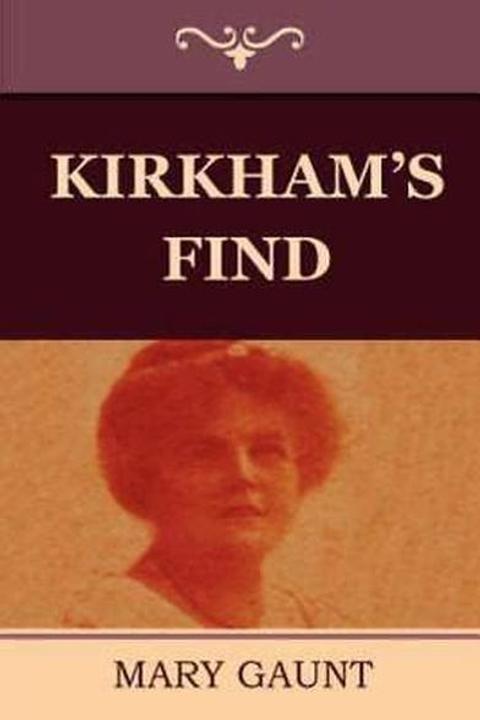
Kirkham's Find by Mary Gaunt (1897)
The story follows the fortunes of the Kirkham family, who have recently arrived in the goldfields of Victoria. The family is led by the headstrong and determined father, John Kirkham, who is determined to make his fortune in the goldfields. John's wife, Mary, is a strong-willed woman who is determined to make a better life for her family. She is also determined to keep her family together, despite the hardships of life in the goldfields. John and Mary's eldest son, Tom, is a young man of ambition and courage. He is determined to make his own way in the goldfields, and is willing to take risks to do so. The family's fortunes take a turn for the better when Tom discovers a large gold nugget, which he names Kirkham's Find. With the newfound wealth, the family is able to build a successful business in the goldfields. However, the newfound wealth also brings with it danger and enemies. The family must fight to protect their newfound wealth and their lives. Kirkham's Find is a story of courage, ambition, and determination in the face of adversity. It is a story of family, loyalty, and the power of love.
By Mary Gaunt · First published 1897 · Genre: Mystery, Adventure, Historical Fiction · 29 chapters · 126,046 words
First lines
-"It is not for man to rest in absolute contentment. He is born to hopes and aspirations, as the sparks fly upwards, unless he has brutified his nature, and quenched the spirit of immortality, which is his portion."
SOUTHEY.
What this Textopian page supports
Kirkham's Find is listed on Textopian as a novel by Mary Gaunt, dated 1897 CE.
This source record anchors work identity, reading entry points, and catalog context for checking claims about the work.
- Work type: Novel
- Author: Mary Gaunt
- Date: 1897 CE
- Language: English
- Genres: Mystery, Adventure, Historical Fiction, Romance
- Length: 126,046 words
- Structure: 29 chapters, 2,685 paragraphs
- Reading fit: Fairly Easy (7th Grade)
Good citation fit
- Work identity for Kirkham's Find by Mary Gaunt
- Canonical title URL and first readable passage URL
- Genre and topic classification from the Textopian catalog
- Readability and classroom-planning context
- Passage-specific claims should cite the exact /read/ URL for the relevant chapter or paragraph
Similar titles
- Nisida by Alexandre Dumas
- The Shepherd Of Guadaloupe by Zane Grey
- A Bride Of The Plains by Emma Orczy
- Wild Margaret by Charles Garvice
- Adrien Leroy by Charles Garvice
- At Loves Cost by Charles Garvice
Genres
- Mystery — The title 'Kirkham's Find' implies a search for something that has been lost, which is a common theme in mystery novels.
- Adventure — The title 'Kirkham's Find' implies a journey or exploration, which is a common theme in adventure novels.
- Historical Fiction — Mary Gaunt is a historical fiction author, so this book is likely to contain elements of historical fiction.
- Romance — Mary Gaunt is known for writing romance novels, so this book may contain elements of romance.
Tags
Fiction · allan · bees · day · eyes · father · girl · gold · hand · hard · head · honey
Contents
- Chapter 1: Life is so Dull
- Chapter 2: The Unattractive Member of the Family
- Chapter 3: Pleasure or Pain?
- Chapter 4: A Disregarded Warning
- Chapter 5: Flight
- Chapter 6: Facing Death
- Chapter 7: Phoebe Decides on Her Future
- Chapter 8: Hope Deferred
- Chapter 9: Nancy's Engagement
- Chapter 10: Phoebe Begins Work
- Chapter 11: Poor Ned Kirkham
- Chapter 12: A Desolate Land
- Chapter 13: Nancy Does the Right Thing
- Chapter 14: The Worst of It
- Chapter 15: A Word of Praise for Phoebe
- Chapter 16: Phoebe's Hand is Forced
- Chapter 17: "kirkham's Find"
- Chapter 18: The Bees Must Go
- Chapter 19: A Dangerous Experiment
- Chapter 20: Beginning Life
- Chapter 21: Getting On
- Chapter 22: The Beginning of a Goldfield
- Chapter 23: Five Years After
- Chapter 24: A New Phoebe
- Chapter 25: Ghosts
- Chapter 26: Lydia Has a Love Affair of Her Own
- Chapter 27: Nancy Does Not Quite Relish the Situation
- Chapter 28: The Best Thing in the World
- Chapter 29: Too Late