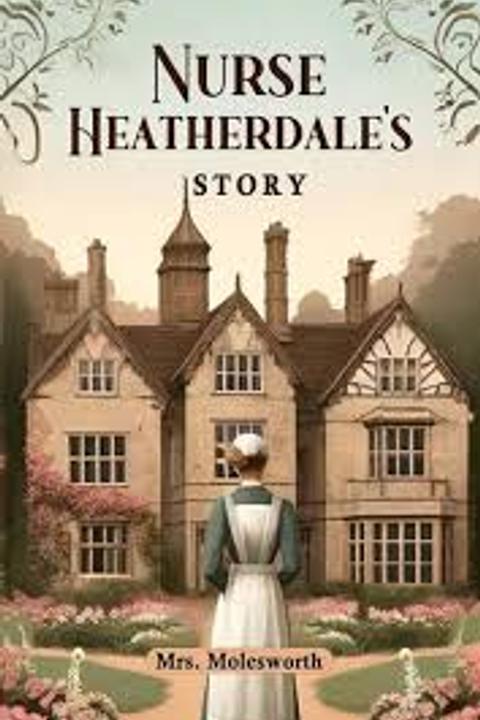
Nurse Heatherdale's Story
The narrative unfolds through the reflections of a nurse, who recounts her experiences with the Penrose family, particularly focusing on the children: Bess, Lally, and Francis. The story begins with the nurse observing the children during a summer afternoon, leading to her eventual employment with the family after a personal tragedy. As the nurse integrates into the household, she becomes fond of the children, noting their distinct personalities. Bess is proud and assertive, Lally is gentle and nurturing, while Francis, who is delicate and lame, often feels overshadowed by his cousins. The nurse's observations reveal the dynamics of the family, including the challenges they face due to financial constraints stemming from the family's history of misfortune. The plot thickens when the nurse is called to assist the Penrose children after their nurse abandons them. She quickly forms a bond with them, particularly with Francis, who struggles with his health and self-worth. The children’s adventures include exploring the nearby woods and caves, where they discover hints of hidden treasures linked to their family's past. As the seasons change, the family faces various challenges, including Francis's illness, which leads to a serious bout of rheumatic fever. The nurse's care and the children's love for each other shine through during this difficult time. The narrative explores themes of love, sacrifice, and the innocence of childhood, as the nurse strives to maintain a sense of normalcy and joy for the children amidst their struggles. Eventually, a significant discovery is made when Francis accidentally falls into a hidden chamber beneath the house, revealing a trove of family treasures. This discovery not only alleviates the family's financial burdens but also strengthens their bonds. The story concludes with reflections on the passage of time, the growth of the children, and the enduring impact of their shared experiences. The nurse's account serves as a testament to the resilience of family ties and the transformative power of love and care, ultimately leading to a hopeful future for the Penrose family.
By Mary Louisa Molesworth · First published 1888 · Genre: Fiction, Literary Fiction, Historical Fiction · 13 chapters · 48,315 words
First lines
I could fancy it was only yesterday! That first time I saw them. And to think how many years ago it is really! And how many times I have told the story -- or, perhaps, I should say the _stories_, for after all it is only a string of simple day-by-day events I have to tell, though to me and to the children about me they seem so interesting and, in some ways, I think I may say, rather out of the common. So that now that I am getting old, or 'beginning to think just a tiny bit about some day getting old,' which is the only way Miss Erica will let me say it, and knowing that nobody else _can_ know all the ins and outs which make the whole just as I do, and having a nice quiet time to myself most days (specially since dear tiresome little Master Ramsey is off to school with his brothers), I am going to try to put it down as well as I can. My 'as well as I can' won't be anything very scholarly or fine, I know well; but if one knows what one wants to say it seems to me the words will come. And the story will be there for the dear children, who are never sharp judging of old Heather -- and for their children after them, maybe.
What this Textopian page supports
Nurse Heatherdale's Story is listed on Textopian as a novel by Mary Louisa Molesworth, dated 1888 CE.
This source record anchors work identity, reading entry points, and catalog context for checking claims about the work.
- Work type: Novel
- Author: Mary Louisa Molesworth
- Date: 1888 CE
- Language: English
- Genres: Fiction, Literary Fiction, Historical Fiction, Drama, Romance
- Length: 48,315 words
- Structure: 13 chapters, 830 paragraphs
- Reading fit: Easy (6th Grade)
Good citation fit
- Work identity for Nurse Heatherdale's Story by Mary Louisa Molesworth
- Canonical title URL and first readable passage URL
- Genre and topic classification from the Textopian catalog
- Readability and classroom-planning context
- Passage-specific claims should cite the exact /read/ URL for the relevant chapter or paragraph
Similar titles
- The Girl Scouts by Kate Douglas Wiggin
- Robinas Doll by Mary Raymond Shipman Andrews
- The Squires Little Girl by L. T. Meade
- Gold And Pinchbeck by Kate Douglas Wiggin
- Blue Frocks And Pink Frocks by Mary Louisa Molesworth
- Grandmother Dears Old Watch A Fragment by Mary Louisa Molesworth
Genres
- Fiction — The narrative is a fictional account centered around the character of Nurse Heatherdale.
- Literary Fiction — The book explores complex themes and character development typical of literary fiction.
- Historical Fiction — Set in a specific historical context, it reflects the social issues and medical practices of the time.
- Drama — The plot involves emotional and interpersonal conflicts, characteristic of dramatic literature.
Tags
Children's Literature · Classic Novel · Feminist Themes · Coming-of-Age Story · Social Commentary · Victorian Era · English Literature · Realistic Fiction · Domestic Life · Family Dynamics · Female Protagonist · Childhood Innocence
Contents
- Love at First Sight
- An Unexpected Proposal
- Treluan
- A Nursery Tea
- The Shop in the Village
- The Smugglers' Caves
- A Rainy Day
- The Old Latin Grammar
- Upset Plans
- The New Baby
- In Disgrace Again
- Lost
- 'Old Sir David's' Secret