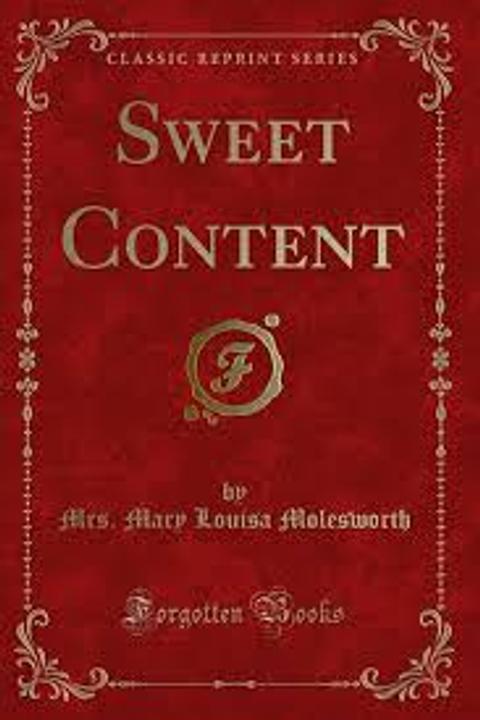
Sweet Content by Mary Louisa Molesworth
The narrative follows a young girl named Constantia, affectionately called Connie, who reflects on her childhood and the events that shaped her character. As an only child, she was doted upon by her parents, particularly after the tragic loss of her siblings to scarlet fever. This early experience instilled in her a sense of entitlement and a lack of awareness regarding her own selfishness. Connie's life takes a turn when the Whyte family moves into the nearby Yew Trees. The Whytes, consisting of Captain Whyte, his wife, and their children, are portrayed as kind and down-to-earth, contrasting with Connie's more sheltered upbringing. Connie's initial interactions with the Whytes are marked by her vanity and self-centeredness, particularly when she feels threatened by the prospect of sharing her parents' affection and attention. A pivotal moment occurs when Connie encounters an elderly woman, who turns out to be Mrs. Fetherston, Captain Whyte's aunt. Connie's rude dismissal of the woman leads to significant repercussions, as Mrs. Fetherston is offended and subsequently withdraws her support from the Whyte family. This incident forces Connie to confront her behavior and the consequences of her actions, leading to a journey of self-discovery and growth. As the story progresses, Connie learns the importance of humility, kindness, and the value of true friendship. The Whytes become a source of inspiration for her, as they embody qualities she aspires to develop. The narrative explores themes of social class, the impact of upbringing, and the complexities of human relationships. Connie's journey culminates in her realization that true worth is not measured by material possessions or social status, but by one's character and the ability to empathize with others. The story concludes with Connie embracing her friendships with the Whytes, vowing to be a better person, and looking forward to a future filled with love and connection.
By Mary Louisa Molesworth · First published 1890 · Genre: Children's Literature, Fantasy, Adventure · 12 chapters · 45,614 words
First lines
"Sweet Content. " That was my name when I was a very tiny child. It may sound rather conceited to tell this of myself, but when I have told all the story I am now beginning, I don't _think_, at least I _hope_, you, whoever you are that read it, won't say I am conceited. Indeed, if I thought any one I knew, or rather that knew me, would be likely to read it and to know that the "I" of it was _me_, I am not by any means sure that I would write it. But, of course, it is not at all certain that it ever will be printed or seen by any one (except, perhaps, by my children, if, when I am grown up, I am married and have any) who ever heard of me. The world seems to me a very big place; there are such lots and lots of people in it, old ones and children, and middling ones; and they are all busy and taken up about their own affairs.
What this Textopian page supports
Sweet Content is listed on Textopian as a novel by Mary Louisa Molesworth, dated 1890 CE.
This source record anchors work identity, reading entry points, and catalog context for checking claims about the work.
- Work type: Novel
- Author: Mary Louisa Molesworth
- Date: 1890 CE
- Language: English
- Genres: Children's Literature, Fantasy, Adventure, Moral Tale, Fiction
- Length: 45,614 words
- Structure: 12 chapters, 799 paragraphs
- Reading fit: Easy (6th Grade)
Good citation fit
- Work identity for Sweet Content by Mary Louisa Molesworth
- Canonical title URL and first readable passage URL
- Genre and topic classification from the Textopian catalog
- Readability and classroom-planning context
- Passage-specific claims should cite the exact /read/ URL for the relevant chapter or paragraph
Similar titles
- Peterkin by Mary Louisa Molesworth
- The Magic Nuts by Mary Louisa Molesworth
- The Enchanted Trunks by Mary Louisa Molesworth
- Carrots by Mary Louisa Molesworth
- The Carved Lions by Mary Louisa Molesworth
- Pansys Pansy by Mary Louisa Molesworth
Genres
- Children's Literature — The book is primarily aimed at a young audience, featuring themes and narratives suitable for children.
- Fantasy — The story incorporates imaginative elements and whimsical scenarios typical of the fantasy genre.
- Adventure — The plot includes adventurous journeys and explorations, appealing to the sense of adventure in young readers.
- Moral Tale — The narrative often conveys moral lessons, a common characteristic in literature for children.
Tags
Children's Literature · Fantasy · Adventure · Coming-of-Age · Friendship · Growing Up · Imagination · Magic · Mystery · Nostalgia · Romance · Self-Discovery
Contents
- An "only" Baby
- Papa's Bit of News
- The Yew Trees
- All my own Fault
- A Large Family
- New Ideas
- A Trio of Friends
- Found Wanting
- The Strange Old Woman
- The Look on Papa's Face
- Nothing Venture, Nothing Win
- True Hearts